After three years, it looks like everyone has finally caught themselves on in Belfast and decided to resume sitting as a government at the Assembly in Stormont. See https://www.rte.ie/news/ireland/2020/0110/1105463-northern-ireland-politics/. It's good news for democracy and for Northern Ireland.
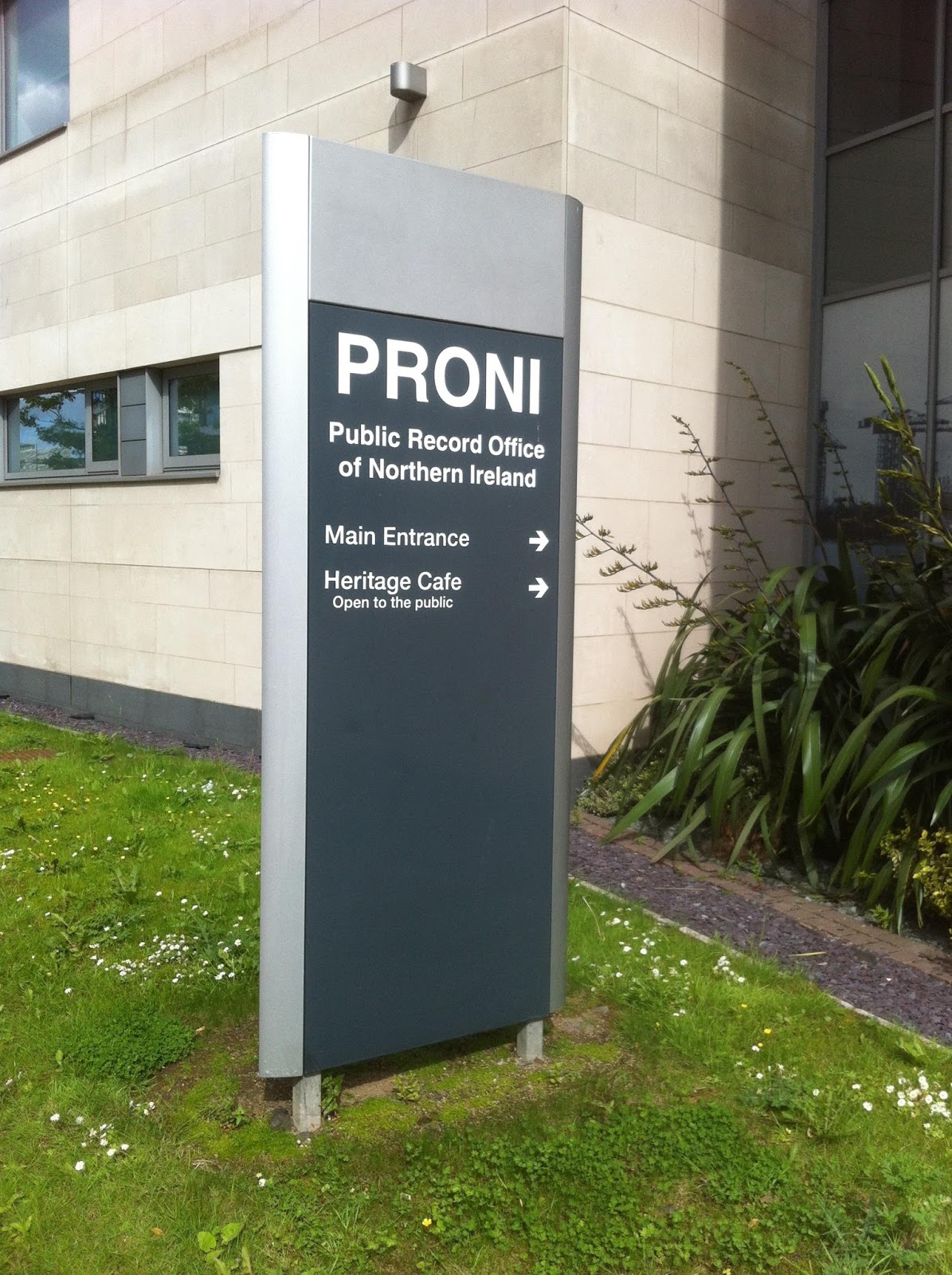
Quite apart from the very serious issues that have been left to drift through the suspension, there is, of course, always a genealogy angle to such developments! In this case, the suspension of Stormont had led to a cessation of Freedom of Information enquiries being dealt with by government agencies, as the legislation requires there to be a sitting minister (see https://www.communities-ni.gov.uk/temporary-suspension-foi-requests-proni-faqs). This has impacted on the ability of agenices such as PRONI (www.nidirect.gov.uk/proni) to deal with applications, for example, concerning enquiries into Northern Ireland's 1939 National Identity Register, a major census substitute.
Fingers crossed for things to go smoothly, and a for a resumption of normal service soon!
UPDATE: Deirdre Hargey of Sinn Féin has been appointed the new Communities minister, the ministry which oversees PRONI. Congratulations to her.
Chris
Order Tracing Your Irish Family History on the Internet (2nd ed) at https://www.pen-and-sword.co.uk/Tracing-Your-Irish-Family-History-on-the-Internet-Paperback/p/16483. and Tracing Your Scottish Ancestry Through Church and State Records at https://www.pen-and-sword.co.uk/Tracing-Your-Scottish-Ancestry-through-Church-and-State-Records-Paperback/p/16848. Further news published daily on The GENES Blog Facebook page, and on Twitter @genesblog.
The GENES Blog (GEnealogy News and EventS) ceased publication on 14 FEB 2020. You will now find all the latest genealogy news and views on Scottish GENES at https://scottishgenes.blogspot.com. The GENES Blog archive will remain live, with a record of the genealogy news for Britain and Ireland from 2013-2020. Thank you!
Showing posts with label Government. Show all posts
Friday, 10 January 2020
Monday, 18 February 2019
Scottish Government consults on inheritance law shake up
The Scottish Government has launched a consultation into proposed changes to inheritance law in Scotland. The following is the ministerial forward from the Government's Community Safety Minister, Ash Denham:
While the law of succession affects everyone, it can also divide opinion.
It is precisely because it affects everyone that there must be some consensus on what reforms will deliver outcomes that are appropriate for the majority of modern day Scots and in line with their expectations. This is no easy task.
We consulted in 2015 on recommendations made by the Scottish Law Commission in their Report on Succession published in 2009. It was clear from the responses that there was insufficient consensus on a significant number of the recommendations to progress them further.
On testate succession, whilst the current scheme of legal rights attracts criticism, the Scottish Government has concluded from the responses that it does have the benefit of striking a balance between testamentary freedom and limited protections for spouses/civil partners and children and so will not bring forward reforms to the law on testate succession.
This paper focuses on intestacy. The key area which remained unresolved in the 2015 consultation was how an estate should be split where there are both a surviving spouse/civil partner and children. This paper therefore seeks views on a fresh approach to reform of the law of intestacy with reference to regimes which operate elsewhere.
Given that the current rules on intestacy have been in place for over half a century, the approaches explored in this paper may seem novel. Nevertheless I would urge you to consider them and would be grateful for your views. The paper also seeks views on extending an alternative approach to cohabitants to test whether views on what cohabitants' rights on intestacy should be, have shifted.
There are a number of other discrete succession issues in the final chapter on which we would welcome views
I am pleased therefore to publish this consultation paper and I look forward to considering the responses which will inform our policy in this area.
For more on the story visit https://www.holyrood.com/articles/news/scottish-government-consider-reform-inheritance-law.
Details of the consultation are available at https://www.gov.scot/publications/consultation-law-succession/.
Chris
For more information on the historic laws on inheritance in Scotland, consult my book Discover Scottish Land Records - details at https://britishgenes.blogspot.com/p/my-books.html.
Chris
My next Scottish Research Online course starts March 11th 2019 - see www.pharostutors.com/details.php?coursenumber=102. Details of my genealogical research service are available at www.ScotlandsGreatestStory.co.uk. For my Scottish and Irish themed books, visit https://britishgenes.blogspot.com/p/my-books.html. Further news published daily on The GENES Blog Facebook page, and on Twitter @genesblog.
While the law of succession affects everyone, it can also divide opinion.
It is precisely because it affects everyone that there must be some consensus on what reforms will deliver outcomes that are appropriate for the majority of modern day Scots and in line with their expectations. This is no easy task.
We consulted in 2015 on recommendations made by the Scottish Law Commission in their Report on Succession published in 2009. It was clear from the responses that there was insufficient consensus on a significant number of the recommendations to progress them further.
This paper focuses on intestacy. The key area which remained unresolved in the 2015 consultation was how an estate should be split where there are both a surviving spouse/civil partner and children. This paper therefore seeks views on a fresh approach to reform of the law of intestacy with reference to regimes which operate elsewhere.
Given that the current rules on intestacy have been in place for over half a century, the approaches explored in this paper may seem novel. Nevertheless I would urge you to consider them and would be grateful for your views. The paper also seeks views on extending an alternative approach to cohabitants to test whether views on what cohabitants' rights on intestacy should be, have shifted.
There are a number of other discrete succession issues in the final chapter on which we would welcome views
I am pleased therefore to publish this consultation paper and I look forward to considering the responses which will inform our policy in this area.
For more on the story visit https://www.holyrood.com/articles/news/scottish-government-consider-reform-inheritance-law.
Details of the consultation are available at https://www.gov.scot/publications/consultation-law-succession/.
Chris
For more information on the historic laws on inheritance in Scotland, consult my book Discover Scottish Land Records - details at https://britishgenes.blogspot.com/p/my-books.html.
Chris
My next Scottish Research Online course starts March 11th 2019 - see www.pharostutors.com/details.php?coursenumber=102. Details of my genealogical research service are available at www.ScotlandsGreatestStory.co.uk. For my Scottish and Irish themed books, visit https://britishgenes.blogspot.com/p/my-books.html. Further news published daily on The GENES Blog Facebook page, and on Twitter @genesblog.
Saturday, 2 July 2016
UK Parliamentary Papers website regenerates
The House of Commons Parliamentary Papers website, which hosts online records dating back to 1688, has been given a facelift by hosts Proquest. Now known as the Proquest U.K. Parliamentary Papers site (http://parlipapers.proquest.com), it can be accessed for free through many subscribing universities and libraries, including the National Library of Scotland's Licensed Digital Collections (subscribe via www.nls.uk if you have a residential address in Scotland).
Here's the official blurb regarding the differences to be found with the new version of the site (accessible via http://proquest.libguides.com/parliamentary):
New and Better
• Faster, more intuitive searching
• Post-search faceting to get to relevant documents
• Full-text PDFs (rather than individual page images)
• Bookmarking of search forms
• Dedicated Search by Number form including searches for bills, Command Papers, and Sessional Paper numbers
• Dedicated Member search form including search by office, party affiliation, and nation (England, Wales, Scotland etc)
• On the document results page, users will also see relevant results from historical newspapers and Congressional (based on institutional purchases)
Different
• Search prioritized over browse (Usage and focus groups proved that few people use the browse functionality)
• 4 search forms: basic; advanced; search by number; and members, offices and constituencies
• Basic search from includes links to highlight search functionality for new users
Usage Statistics
• Legacy usage statistics will not be migrated but will be available as they currently are through at least 2016
• Usage statistics for the new application will be available through the ProQuest Administrator Module (PAM)
MARC Records
• Legacy site MARCs available at item/paper level from 19th century forward
• Also includes 17 18th century collection level MARC records
• Hansard has a collection level MARC record
• HCPP contains non-serial content; we will load updated MARCs to FTP site, and link to it from PAM.
• Existing (legacy site) record links will be redirected after cutover.
I've not had a chance to play with it properly, so would be very interested in user's experiences with the new site - and thanks to Janet Mackay from the University of Aberdeen's Library for flagging up the new edition of the site when I mentioned the previous version in a talk on Friday morning in Glasgow (in which I flagged up its usefulness for its tables of poor law returns from Scotland to Ireland in the late 19th Century)!!!
Chris
For details on my genealogy guide books, including A Decade of Irish Centenaries: Researching Ireland 1912-1923, Discover Scottish Church Records (2nd edition), Discover Irish Land Records and Down and Out in Scotland: Researching Ancestral Crisis, please visit http://britishgenes.blogspot.co.uk/p/my-books.html.
Here's the official blurb regarding the differences to be found with the new version of the site (accessible via http://proquest.libguides.com/parliamentary):
New and Better
• Faster, more intuitive searching
• Post-search faceting to get to relevant documents
• Full-text PDFs (rather than individual page images)
• Bookmarking of search forms
• Dedicated Search by Number form including searches for bills, Command Papers, and Sessional Paper numbers
• Dedicated Member search form including search by office, party affiliation, and nation (England, Wales, Scotland etc)
• On the document results page, users will also see relevant results from historical newspapers and Congressional (based on institutional purchases)
Different
• Search prioritized over browse (Usage and focus groups proved that few people use the browse functionality)
• 4 search forms: basic; advanced; search by number; and members, offices and constituencies
• Basic search from includes links to highlight search functionality for new users
Usage Statistics
• Legacy usage statistics will not be migrated but will be available as they currently are through at least 2016
• Usage statistics for the new application will be available through the ProQuest Administrator Module (PAM)
MARC Records
• Legacy site MARCs available at item/paper level from 19th century forward
• Also includes 17 18th century collection level MARC records
• Hansard has a collection level MARC record
• HCPP contains non-serial content; we will load updated MARCs to FTP site, and link to it from PAM.
• Existing (legacy site) record links will be redirected after cutover.
I've not had a chance to play with it properly, so would be very interested in user's experiences with the new site - and thanks to Janet Mackay from the University of Aberdeen's Library for flagging up the new edition of the site when I mentioned the previous version in a talk on Friday morning in Glasgow (in which I flagged up its usefulness for its tables of poor law returns from Scotland to Ireland in the late 19th Century)!!!
Chris
For details on my genealogy guide books, including A Decade of Irish Centenaries: Researching Ireland 1912-1923, Discover Scottish Church Records (2nd edition), Discover Irish Land Records and Down and Out in Scotland: Researching Ancestral Crisis, please visit http://britishgenes.blogspot.co.uk/p/my-books.html.
Wednesday, 15 June 2016
Claiming an Irish passport - Part 1
Many of you who have attended talks that I have given over the last few years might have heard me refer to the identity crisis that first led me to start researching my family history in 1999. As a child of both Irish and Scottish stock who grew up in the Northern Ireland of the Troubles, I was never comfortable with my description of 'British' or its alternative of 'Irish' - the idea that I was being labelled with an identity simply because of an accident of birth and history, which society dictated that I must adhere to, to become loyal to the ideals of one 'tribe', and not the other. Indeed, I've often jokingly referred to myself as suffering from something called Sruth na Maoile syndrome, the Gaelic phrase for the Straits of Moyle, which is the waterway that divides Scotland from Ireland - the inference being that my true identity is all at sea somewhere in between! (You can hear me discuss this in a talk I gave at St. Catherine's Ontario 2 years ago, at https://soundcloud.com/chrismpaton/genealogy-without-borders-lecture-in-niagara-may-2014).
Obviously since carrying out my ancestral research I have been able to throw all that baggage away, and discover from scratch my true identity for myself, which derives from the sum of all my ancestral parts, and not some politician's pen. As I have lived in the UK for all of my life to date, I currently have a British passport, issued by the government of the United Kingdom of Great Britain and Northern Ireland. To me, my British passport does not indicate my identity - my family history reveals that - but it does permit me certain rights and protections as someone who has grown up in the UK when travelling. It is more than a British passport, though, in that a holder of a British passport is currently also a member of the European Union, and has the same rights in law as any other EU citizen when so doing - it's why all EU passports are the same shape, size, colour, and with similar wording. However, as you may be aware, next week we are having a referendum on whether the UK retains its membership of the European Union. As a consequence, these rights and protections as an EU citizen may soon be withdrawn.
I do not wish to give up my EU rights when travelling - and I have a way to bypass this eventuality. As someone who was born in Northern Ireland, on the island of Ireland, under the current rules in the Republic of Ireland I can also claim an Irish passport - indeed, so too can my children, as even though they were born in Scotland, under Irish law, they are automatically considered to be Irish citizens simply because they have Irish parents, irrespective of whether we are from the north or south (we come from each end of the island!). The Republic of Ireland is also a member of the European Union, and isn't planning on going anywhere on that front. Now, partly because of the entirely negative nature of the current UK referendum campaign, on both sides, and partly because I now feel comfortable in the fact that my true identity lies embedded across the islands of both Ireland and Britain, I have finally decided that I am going to exercise my right to claim dual citizenship.
The ability to claim an Irish passport and hold dual citizenship is something that many people in Britain, and further afield, have enjoyed for decades. But what are the rules on eligibility? Well, it all depends on whether you have a connection to Ireland - and this is where the genealogy bit comes in! The Irish Government's Citizens Information site neatly outlines the criteria that must be fulfilled for qualification at http://www.citizensinformation.ie/en/moving_country/irish_citizenship/irish_citizenship_through_birth_or_descent.html. This is the key part - for clarification, the use of the term 'Ireland' here refers to the island, encompassing both Northern Ireland and the Republic of Ireland (the 'Irish state'):
Citizenship through birth in Ireland
If you were born in Ireland and your parent(s) were Irish citizens, then you are also an Irish citizen.
However, in certain circumstances some people born in Ireland have to claim Irish citizenship. You can find more details about claiming Irish citizenship through special declaration in 'Further information' below.
Children of foreign national parents
A child born in the island of Ireland on or after 1 January 2005 is entitled to Irish citizenship if they have a British parent or a parent who is entitled to live in Northern Ireland or the Irish State without restriction on their residency. A child born in Ireland to a parent who has been granted refugee status is also automatically entitled to Irish citizenship.
Under the provisions of the Irish Nationality and Citizenship Act 2004, children born of other foreign national parents in the island of Ireland on or after 1 January 2005 are not automatically entitled to Irish citizenship. These parents must prove that they have a genuine link to Ireland. This will be evidenced by their having 3 out of the previous 4 years reckonable residence in the island of Ireland immediately before the birth of the child. On proof of a genuine link to Ireland their child will be entitled to Irish citizenship and can apply for a certificate of nationality - see 'How to apply' below.
Children born outside Ireland to Irish citizen parents
If either of your parents was an Irish citizen who was born in Ireland, then you are automatically an Irish citizen, irrespective of your place of birth.
Irish citizen parents born outside Ireland
If you were born outside Ireland to an Irish citizen who was himself or herself born outside Ireland, then you are entitled to become an Irish citizen. If your parent derived Irish citizenship in another manner, for example, through marriage, adoption or naturalisation, and was an Irish citizen at the time of your birth, you can become an Irish citizen.
However before you can claim Irish citizenship, you must have your birth registered in the Foreign Births Register, which is maintained by the Irish Department of Foreign Affairs and Trade - see 'How to apply' below. If you are entitled to register, your Irish citizenship is effective from the date of registration - not from the date when you were born.
If the parent through whom you derive Irish citizenship was deceased at the time of your birth, but would have been an Irish citizen if alive at that time, you are also an Irish citizen. Also, you derive citizenship through an Irish parent whether or not your parents were married to each other at the time of your birth.
Citizenship through descent from Irish grandparents
If one of your grandparents is an Irish citizen who was born in Ireland, but none of your parents was born in Ireland, you may become an Irish citizen. You will need to have your birth registered in the Foreign Births Register.
If you are entitled to register, your Irish citizenship is effective from the date of registration. The Irish citizenship of successive generations may be maintained in this way by each generation ensuring their registration in the Foreign Births Register before the birth of the next generation.
Since 1 July 1986, a person registered in the Foreign Births Entry Book after 1986 is deemed to be an Irish citizen only from the date of his/her entry in the Register and not from the date of birth. This means that children born to that person before his/her date of entry in the Register are not entitled to citizenship.
People registered before July 1986 are deemed Irish citizens either from the date the original Irish Nationality and Citizenship Act came into force, that is, 17 July 1956, or their date of birth, whichever is later. Only children born after 17 July 1956 can claim citizenship in such cases.
Other Irish ancestors
Unless at least one parent or an Irish-born grandparent was an Irish citizen at the time of your birth, you cannot claim Irish citizenship on the basis of extended previous ancestry (that is, ancestors other than your parents or grandparents). In addition, you cannot claim Irish citizenship on the basis that relation such as a cousin, aunt or uncle was an Irish citizen if none of your parents or grandparents was an Irish citizen at the time of your birth.
In case it should provide some assistance to anyone else who may be interested in doing likewise, I've decided I will share my experience in claiming an Irish passport over the next few weeks.
The first stage will be to initiate the application process, and to get a copy of my birth certificate, the processes for which I will outline in due course!
NB:
PART 2 at http://britishgenes.blogspot.co.uk/2016/06/claiming-irish-passport-part-2.html
PART 3 at http://britishgenes.blogspot.co.uk/2016/07/claiming-irish-passport-part-3.html
PART 4 at http://britishgenes.blogspot.co.uk/2016/09/claiming-irish-passport-part-4-claimed.html
Chris
For details on my genealogy guide books, including A Decade of Irish Centenaries: Researching Ireland 1912-1923, Discover Scottish Church Records (2nd edition), Discover Irish Land Records and Down and Out in Scotland: Researching Ancestral Crisis, please visit http://britishgenes.blogspot.co.uk/p/my-books.html.
Obviously since carrying out my ancestral research I have been able to throw all that baggage away, and discover from scratch my true identity for myself, which derives from the sum of all my ancestral parts, and not some politician's pen. As I have lived in the UK for all of my life to date, I currently have a British passport, issued by the government of the United Kingdom of Great Britain and Northern Ireland. To me, my British passport does not indicate my identity - my family history reveals that - but it does permit me certain rights and protections as someone who has grown up in the UK when travelling. It is more than a British passport, though, in that a holder of a British passport is currently also a member of the European Union, and has the same rights in law as any other EU citizen when so doing - it's why all EU passports are the same shape, size, colour, and with similar wording. However, as you may be aware, next week we are having a referendum on whether the UK retains its membership of the European Union. As a consequence, these rights and protections as an EU citizen may soon be withdrawn.I do not wish to give up my EU rights when travelling - and I have a way to bypass this eventuality. As someone who was born in Northern Ireland, on the island of Ireland, under the current rules in the Republic of Ireland I can also claim an Irish passport - indeed, so too can my children, as even though they were born in Scotland, under Irish law, they are automatically considered to be Irish citizens simply because they have Irish parents, irrespective of whether we are from the north or south (we come from each end of the island!). The Republic of Ireland is also a member of the European Union, and isn't planning on going anywhere on that front. Now, partly because of the entirely negative nature of the current UK referendum campaign, on both sides, and partly because I now feel comfortable in the fact that my true identity lies embedded across the islands of both Ireland and Britain, I have finally decided that I am going to exercise my right to claim dual citizenship.
The ability to claim an Irish passport and hold dual citizenship is something that many people in Britain, and further afield, have enjoyed for decades. But what are the rules on eligibility? Well, it all depends on whether you have a connection to Ireland - and this is where the genealogy bit comes in! The Irish Government's Citizens Information site neatly outlines the criteria that must be fulfilled for qualification at http://www.citizensinformation.ie/en/moving_country/irish_citizenship/irish_citizenship_through_birth_or_descent.html. This is the key part - for clarification, the use of the term 'Ireland' here refers to the island, encompassing both Northern Ireland and the Republic of Ireland (the 'Irish state'):
Citizenship through birth in Ireland
If you were born in Ireland and your parent(s) were Irish citizens, then you are also an Irish citizen.
However, in certain circumstances some people born in Ireland have to claim Irish citizenship. You can find more details about claiming Irish citizenship through special declaration in 'Further information' below.
Children of foreign national parents
A child born in the island of Ireland on or after 1 January 2005 is entitled to Irish citizenship if they have a British parent or a parent who is entitled to live in Northern Ireland or the Irish State without restriction on their residency. A child born in Ireland to a parent who has been granted refugee status is also automatically entitled to Irish citizenship.
Under the provisions of the Irish Nationality and Citizenship Act 2004, children born of other foreign national parents in the island of Ireland on or after 1 January 2005 are not automatically entitled to Irish citizenship. These parents must prove that they have a genuine link to Ireland. This will be evidenced by their having 3 out of the previous 4 years reckonable residence in the island of Ireland immediately before the birth of the child. On proof of a genuine link to Ireland their child will be entitled to Irish citizenship and can apply for a certificate of nationality - see 'How to apply' below.
Children born outside Ireland to Irish citizen parents
If either of your parents was an Irish citizen who was born in Ireland, then you are automatically an Irish citizen, irrespective of your place of birth.
Irish citizen parents born outside Ireland
If you were born outside Ireland to an Irish citizen who was himself or herself born outside Ireland, then you are entitled to become an Irish citizen. If your parent derived Irish citizenship in another manner, for example, through marriage, adoption or naturalisation, and was an Irish citizen at the time of your birth, you can become an Irish citizen.
However before you can claim Irish citizenship, you must have your birth registered in the Foreign Births Register, which is maintained by the Irish Department of Foreign Affairs and Trade - see 'How to apply' below. If you are entitled to register, your Irish citizenship is effective from the date of registration - not from the date when you were born.
If the parent through whom you derive Irish citizenship was deceased at the time of your birth, but would have been an Irish citizen if alive at that time, you are also an Irish citizen. Also, you derive citizenship through an Irish parent whether or not your parents were married to each other at the time of your birth.
Citizenship through descent from Irish grandparents
If one of your grandparents is an Irish citizen who was born in Ireland, but none of your parents was born in Ireland, you may become an Irish citizen. You will need to have your birth registered in the Foreign Births Register.
If you are entitled to register, your Irish citizenship is effective from the date of registration. The Irish citizenship of successive generations may be maintained in this way by each generation ensuring their registration in the Foreign Births Register before the birth of the next generation.
Since 1 July 1986, a person registered in the Foreign Births Entry Book after 1986 is deemed to be an Irish citizen only from the date of his/her entry in the Register and not from the date of birth. This means that children born to that person before his/her date of entry in the Register are not entitled to citizenship.
People registered before July 1986 are deemed Irish citizens either from the date the original Irish Nationality and Citizenship Act came into force, that is, 17 July 1956, or their date of birth, whichever is later. Only children born after 17 July 1956 can claim citizenship in such cases.
Other Irish ancestors
Unless at least one parent or an Irish-born grandparent was an Irish citizen at the time of your birth, you cannot claim Irish citizenship on the basis of extended previous ancestry (that is, ancestors other than your parents or grandparents). In addition, you cannot claim Irish citizenship on the basis that relation such as a cousin, aunt or uncle was an Irish citizen if none of your parents or grandparents was an Irish citizen at the time of your birth.
In case it should provide some assistance to anyone else who may be interested in doing likewise, I've decided I will share my experience in claiming an Irish passport over the next few weeks.
The first stage will be to initiate the application process, and to get a copy of my birth certificate, the processes for which I will outline in due course!
NB:
PART 2 at http://britishgenes.blogspot.co.uk/2016/06/claiming-irish-passport-part-2.html
PART 3 at http://britishgenes.blogspot.co.uk/2016/07/claiming-irish-passport-part-3.html
PART 4 at http://britishgenes.blogspot.co.uk/2016/09/claiming-irish-passport-part-4-claimed.html
Chris
For details on my genealogy guide books, including A Decade of Irish Centenaries: Researching Ireland 1912-1923, Discover Scottish Church Records (2nd edition), Discover Irish Land Records and Down and Out in Scotland: Researching Ancestral Crisis, please visit http://britishgenes.blogspot.co.uk/p/my-books.html.
Sunday, 12 June 2016
The Treaty of Perth commemorated
The Treaty of Perth was signed in the aftermath of the indecisive Scottish engagement with Norway at the Battle of Largs three years earlier in 1263, and formally noted Norway's recognition of the sovereignty of Scotland over the Hebrides and the Isle of Man, whilst Scotland recognised Norway's rights over Orkney and Shetland (there were a few further changes in subsequent years!). In terms of international significance, it's up there with the 1237 Treaty of York in terms of helping to define the modern borders of Scotland.
To view the debate, visit https://youtu.be/yPY99U7IU_I or see below - my local MSP Kenneth Gibson makes a contribution about the impact of the battle in Largs and its legacy today, at 7 mins 47 seconds in (we have an annual Viking Festival to celebrate the connection to the battle, and a much loved monument in place in the town which is colloquially called 'the Pencil' - see right), whilst our Minister for International Development and Europe, Dr Alasdair Allan, makes an impressive contribution in the Norwegian language from 26 minutes in, and discusses the impact it had on the Western Isles and their relationship with Scotland.
(With thanks to Kenny Gibson)
Chris
For details on my genealogy guide books, including A Decade of Irish Centenaries: Researching Ireland 1912-1923, Discover Scottish Church Records (2nd edition), Discover Irish Land Records and Down and Out in Scotland: Researching Ancestral Crisis, please visit http://britishgenes.blogspot.co.uk/p/my-books.html.
Saturday, 14 May 2016
TROVE newspapers database will add no more content
This is a story with a few weeks history under its belt already in Australia, but for those outside the continent who may not be aware, the National Library of Australia's world envied TROVE database (http://trove.nla.gov.au), which provides free access to Australian newspaper content (amongst other materials), is currently facing a major budget crisis, due to Australian government cuts to funding. Potential job losses are to come, and no further content is to be added to the site for the foreseeable future. For more on the story, visit http://www.abc.net.au/news/2016-03-12/future-of-national-librarys-trove-online-database-in-doubt/7242182 and http://www.abc.net.au/news/2016-05-05/national-library-trove-project-not-funded-to-add-to-collection/7377634.TROVE is a world class resource - when family historians beyond Australia are asked to name a database from down under, it is usually the one that most folk will name first. The Australian government has clearly taken leave of its senses. Here's hoping they have a change of heart, and very soon, before they let one of their most prized international collections fall to ruin.
Chris
My next Scotland 1750-1850: Beyond the OPRs course starts Monday 17th May - see http://pharostutors.com/details.php?coursenumber=302. For details on my genealogy guide books, including A Decade of Irish Centenaries: Researching Ireland 1912-1923, Discover Scottish Church Records (2nd edition), Discover Irish Land Records and Down and Out in Scotland: Researching Ancestral Crisis, please visit http://britishgenes.blogspot.co.uk/p/my-books.html.
Tuesday, 1 March 2016
Westminster rules out FOI fees
The UK Government at Westminster has ruled out imposing fees on Freedom of Information requests. The legislation passed in 2000 occasionally comes in handy for genealogical purposes - for example, FOI requests can be used to secure access to the 1939 National Identity Register in Northern Ireland at no cost. For further details on the story see http://www.bbc.co.uk/news/uk-35693236.(Note that this applies to the 2000 Act passed by Westminster, for matters under its competency. A separate FOI (Scotland) Act was also passed in 2002 for issues specifically under the remit of our government here in Holyrood.)
Chris
For details on my genealogy guide books, including A Decade of Irish Centenaries: Researching Ireland 1912-1923, Discover Scottish Church Records (2nd edition), Discover Irish Land Records and Down and Out in Scotland: Researching Ancestral Crisis, please visit http://britishgenes.blogspot.co.uk/p/my-books.html. My Pinterest account is at https://www.pinterest.com/chrismpaton/.
Monday, 29 February 2016
Proposals on access to post-WW1 military service personnel records
The UK's Ministry of Defence has outlined a series of proposals concerning the preservation of military service personnel records from 1920-1963, which it is presumed will be managed by the National Archives in England, due to the numbers involved. How these records might be accessed by the public, including their possible digitisation, is explored in the proposals (although the MoD and TNA have outlined in the document that they would not be able to fund such a programme). These proposals could see significant access granted to military records for genealogical purposes, including for veterans who served in the army beyond the First World War, and as such, views are sought concerning such proposals from interested genealogical and historical communities.To read the proposals, please visit http://www.nationalarchives.gov.uk/documents/20160216-mod-service-record-study-tna-uf-briefing-note.pdf
Justin Nash, who contacted me to ask if I could share this news, states "these proposals would vastly open up the world of post 1920 military genealogy (plus hundreds of thousands of WW1 service records from veterans who decided to serve on post WW1).... I know that the more interest the MoD have the more likely they are to happen".
Please do take time to read through these proposals - if carried through, and a suitable platform can be found for their provision, this could be one of the most significant records releases for some time.
(With thanks to Justin Nash)
Chris
For details on my genealogy guide books, including A Decade of Irish Centenaries: Researching Ireland 1912-1923, Discover Scottish Church Records (2nd edition), Discover Irish Land Records and Down and Out in Scotland: Researching Ancestral Crisis, please visit http://britishgenes.blogspot.co.uk/p/my-books.html. My Pinterest account is at https://www.pinterest.com/chrismpaton/.
Friday, 8 January 2016
Official Irish 1916 commemoration programme
The Irish Government's official programme for commemorations of the 1916 Easter Rising is outlined on a website at www.ireland.ie, which includes a short 8 minute video outlining some of the highlights. Amongst these are contributions from some well known faces from the National Library of Ireland and the National Archives of Ireland, with announcements of exhibitions and digitisation projects, as well as an ancestry project for school children to try to work out how to trace back to ancestors alive at the period. The video is on YoutTube at https://youtu.be/1RKER4WYl2I and also reproduced here for convenience:
I am currently working hell for leather to produce a short introductory genealogy guide book for Unlock the Past (www.unlockthepast.com.au) on the subject of the Decade of Centenaries from 1912-23, looking at everything from the Ulster Covenant to the Irish Civil War. This will not only examine how to research ancestors connected to the constitutional struggle, but also the First World War, women's suffrage, the Dublin Lockout, and more. One hundred years ago there was no Northern Ireland or Republic of Ireland, it was all a single constituent part of the United Kingdom. It's a period which until now has been tantalisingly close to us in ancestral terms, but rarely talked about. The governments north and south, and others, are to be commended for the programmes being put together this year, whether commemorating the Rising or the Somme, and everything else in between and beyond in the period.
The BBC also has a feature on the commemorations programme at http://www.bbc.co.uk/news/world-europe-35247856, and a feature on 1916 itself at http://www.bbc.co.uk/timelines/z2c4j6f, including the interesting detail that in 1916 Ireland's time zone was aligned with that of London - prior to this the island actually had a time zone that was 25 minutes behind England. You learn something new every day.
Irish family history never got so interesting...!
Chris
For details on my genealogy guide books, including my recently released Discover Irish Land Records and Down and Out in Scotland: Researching Ancestral Crisis, please visit http://britishgenes.blogspot.co.uk/p/my-books.html. My Pinterest account is at https://www.pinterest.com/chrismpaton/.
The BBC also has a feature on the commemorations programme at http://www.bbc.co.uk/news/world-europe-35247856, and a feature on 1916 itself at http://www.bbc.co.uk/timelines/z2c4j6f, including the interesting detail that in 1916 Ireland's time zone was aligned with that of London - prior to this the island actually had a time zone that was 25 minutes behind England. You learn something new every day.
Irish family history never got so interesting...!
Chris
For details on my genealogy guide books, including my recently released Discover Irish Land Records and Down and Out in Scotland: Researching Ancestral Crisis, please visit http://britishgenes.blogspot.co.uk/p/my-books.html. My Pinterest account is at https://www.pinterest.com/chrismpaton/.
Labels:
archives,
Easter,
Government,
Ireland,
libraries,
museums,
NAI,
NLI,
Northern Ireland
Tuesday, 22 December 2015
English and Welsh BMD deregulation bill only deals with GRO
It would seem that the deregulation bill recently passed to facilitate the eventual digitisation and upload of English and Welsh birth, marriage and death certificates (see http://britishgenes.blogspot.co.uk/2015/03/progress-towards-making-englishwelsh.html) will only apply to the records of the General Register Office at Southport, and not those from local registration offices in both countries (mirroring what has already happened in Scotland and Northern Ireland). Locally sourced certificates, however, whilst being a tad more expensive, can sometimes contain additional information not available in the GRO equivalents, which are derivative copies from the originals, and which can occasionally contain transcription errors or omissions.Ian Hartas of the UKBMD project (www.ukbmd.org.uk) attended a meeting on Friday 18th December to hear about the plans, and has written up an account which can be read on Tony Proctor's Google + account at https://plus.google.com/u/0/+TonyProctor/posts/EfbLTzwEuJL. In this he outlines concerns that the availability of cheap GRO images could provide financial pressures on local registration services struggling to compete.
(With thanks to Ian and Tony)
Chris
For details on my genealogy guide books, including my recently released Discover Irish Land Records and Down and Out in Scotland: Researching Ancestral Crisis, please visit http://britishgenes.blogspot.co.uk/p/my-books.html. My Pinterest account is at https://www.pinterest.com/chrismpaton/.
Thursday, 10 December 2015
Changes to the law on Fatal Accident Inquiries in Scotland
For those outside of Scotland, we don't have a system of coroners as in other parts of the UK here, so FAIs are an important alternative in certain cases and have been since the 1890s (the majority of sudden deaths are investigated by the procurator fiscal):
SCOTTISH PARLIAMENT PASS FATAL ACCIDENT INQUIRY BILL
New laws to modernise the Fatal Accident Inquiry (FAI) process have been passed by the Scottish Parliament.
Changes introduced by the Inquiries into Fatal Accidents and Sudden Deaths etc. (Scotland) Bill will ensure a system which is effective, efficient and fair.
Discretionary FAIs into the deaths of Scots abroad will also be introduced for the first time.
Other aspects of the incoming laws include:
• Mandatory FAIs for new categories of deaths, including the deaths of children in secure accommodation and deaths under police arrest, regardless of location.
• The power to reopen an FAI if new evidence arises, and to hold a fresh FAI if the new evidence is substantial enough.
• Flexibility on the locations and accommodation for FAIs.
• A requirement on individuals or organisations to explain how they have implemented recommendations placed on them by a sheriff after an FAI, or why none have been implemented.
Following efforts by the SNP Government, the UK Government has agreed, in principle, for mandatory FAIs to be held into the deaths of service personnel in Scotland. FAIs into the death of service personnel in Scotland could not be included in the Bill as it relates to defence, which is reserved to the UK Government.
The Crown Office will also introduce a family liaison charter, to stand alongside the Bill, to keep bereaved families fully informed of the progress of a death investigation and the likelihood of criminal proceedings or a fatal accident inquiry.
Local MSP Kenneth Gibson said:
“This new legislation will strengthen Fatal Accident Inquiry legislation and bring it into the 21st century, ensuring that inquiries are effective, efficient and fair through implementing the recommendations of Lord Cullen. In particular, the introduction of the possibility of an FAI for deaths abroad is a hugely important step.
“I also welcome the UK Government agreement, in principle that the death of service personnel in Scotland, be subject to a mandatory inquiry.
“Requiring participants at FAIs to respond to recommendations made by sheriffs will improve compliancy, accountability and transparency in the process. I have no doubt this will particularly welcomed by residents of Fairlie with regard to the Catherine Bonnar case.”
-Ends-
Notes:
Around 11,000 deaths are reported to the Crown Office and Procurator Fiscal Service (COPFS) each year, and an average of 50 – 60 of these result in an FAI being held. In around a third of those inquiries, the sheriff recommends precautions which could prevent deaths in similar circumstances in the future.
A review of Fatal Accident Inquiry legislation was carried out by Lord Cullen in 2009. Lord Cullen made 36 recommendations for review of the system. Some of the recommendations were addressed to the COPFS and have already been implemented.
The Bill ensures that FAIs remain as inquisitorial fact-finding hearings which do not apportion blame or guilt in a criminal or civil sense. FAIs are held in the public interest to establish the circumstances of sudden, suspicious or unexplained death which have caused serious public concern. The sheriff considers what steps (if any) might be taken to prevent other deaths in similar circumstances.
Any changes to the law around FAIs into the death of service personnel in Scotland will not be part of the Bill, but enacted by a UK Order under section 104 of the Scotland Act 1998.
In the cases of deaths of Scots abroad, the Lord Advocate must still consider that the death abroad has not been sufficiently established in any investigation already carried out and there must be a real prospect that the full circumstances would be established at an inquiry.
The Bill introduces the possibility of an FAI into a death abroad, even where the body is not repatriated. This is not the case in the rest of the UK.
(With thanks to Kenneth Gibson MSP)
Chris
For details on my genealogy guide books, including my recently released Discover Irish Land Records and Down and Out in Scotland: Researching Ancestral Crisis, please visit http://britishgenes.blogspot.co.uk/p/my-books.html. My Pinterest account is at https://www.pinterest.com/chrismpaton/.
Tuesday, 25 August 2015
All Scottish children to be issued with library cards
Scottish children are to be automatically issued with library cards from birth, aged three, or upon entry to Primary One, in several pilot schemes being set up across the country, including the Mitchell Library in Glasgow. The aim is to promote better literacy within children at a younger age. The full story is available at https://www.commonspace.scot/articles/2243/children-to-be-given-library-cards-in-drive-to-promote-early-years-literacy and http://www.bbc.co.uk/news/uk-scotland-scotland-politics-34048868.
Comment: This is just another reason for arguing why library services should be retained across the UK (they are not just for genealogists!). Those seeking to cut library funding anywhere in the UK should beware of the damage they are creating in the process. Libraries lie at the very heart of our communities.
Chris
For details on my genealogy guide books, including my recently released Discover Irish Land Records and Down and Out in Scotland: Researching Ancestral Crisis, please visit http://britishgenes.blogspot.co.uk/p/my-books.html.
Comment: This is just another reason for arguing why library services should be retained across the UK (they are not just for genealogists!). Those seeking to cut library funding anywhere in the UK should beware of the damage they are creating in the process. Libraries lie at the very heart of our communities.
Chris
For details on my genealogy guide books, including my recently released Discover Irish Land Records and Down and Out in Scotland: Researching Ancestral Crisis, please visit http://britishgenes.blogspot.co.uk/p/my-books.html.
Wednesday, 19 August 2015
The Dublin Gazette from 1750-1800 is online
I've just made a discovery concerning the Dublin Gazette, the official newspaper of record in Ireland prior to January 1922, which I was not previously aware of. Until now I was aware that some editions of the newspaper were available online via the British Library's 1700-1800 Burney Collection, sourced mainly from 1708-1712, 1724-1725 and 1797, whilst 47 issues between 1707 and 1909 are available via the subscription based Newspaper Archive (http://newspaperarchive.com).
I'm giving a talk on newspapers this coming Saturday at the Lanarkshire Family History Show in Motherwell (see http://lfhsshow.weebly.com), and whilst updating the Powerpoint for my talk I decided to have a quick look at the Wikipedia entry for the title at https://en.wikipedia.org/wiki/The_Dublin_Gazette. Imagine my surprise when this appeared at the bottom of the entry:
Fifty years worth of Dublin Gazettes, from the 1750s to 1800 are linked to from the site, with the originals hosted at the Oireachtas library website at http://opac.oireachtas.ie. The Houses of the Oireachtas contain the two institutions of the Republic's national parliament, Dáil Éireann (the House of Representatives) and Seanad Éireann (the Senate).
The editions are those held by the Oireachtas in bound volumes, which have been digitised into hefty sized PDF files of about 1GB each. I've just downloaded the file from 1800, and it was 1.1GB and took about 25 minutes to download - thank God I upgraded to a new computer last weekend, as I don't think my previous one would have liked it! Nevertheless the quality is superb, and the good news is that the newspapers are keyword searchable, the editions having been OCRed.
It may take a while for me to download these, but I suspect they are going to prove to be useful!
Chris
For details on my genealogy guide books, including my recently released Discover Irish Land Records and Down and Out in Scotland: Researching Ancestral Crisis, please visit http://britishgenes.blogspot.co.uk/p/my-books.html.
I'm giving a talk on newspapers this coming Saturday at the Lanarkshire Family History Show in Motherwell (see http://lfhsshow.weebly.com), and whilst updating the Powerpoint for my talk I decided to have a quick look at the Wikipedia entry for the title at https://en.wikipedia.org/wiki/The_Dublin_Gazette. Imagine my surprise when this appeared at the bottom of the entry:
Fifty years worth of Dublin Gazettes, from the 1750s to 1800 are linked to from the site, with the originals hosted at the Oireachtas library website at http://opac.oireachtas.ie. The Houses of the Oireachtas contain the two institutions of the Republic's national parliament, Dáil Éireann (the House of Representatives) and Seanad Éireann (the Senate).
The editions are those held by the Oireachtas in bound volumes, which have been digitised into hefty sized PDF files of about 1GB each. I've just downloaded the file from 1800, and it was 1.1GB and took about 25 minutes to download - thank God I upgraded to a new computer last weekend, as I don't think my previous one would have liked it! Nevertheless the quality is superb, and the good news is that the newspapers are keyword searchable, the editions having been OCRed.
It may take a while for me to download these, but I suspect they are going to prove to be useful!
Chris
For details on my genealogy guide books, including my recently released Discover Irish Land Records and Down and Out in Scotland: Researching Ancestral Crisis, please visit http://britishgenes.blogspot.co.uk/p/my-books.html.
Tuesday, 18 August 2015
Certificate of Irish Heritage scheme to end
The Republic of Ireland's Certificate of Irish Heritage scheme (www.heritagecertificate.ie) is to end after August 24th 2015, due to the fact that very few people have wanted to buy them. Since its launch in 2011, just 3000 of the certificates have been sold.
Despite its noble aim to allow those with Irish ancestry to register their family connection to Ireland - similar to our Book of Scottish Connections here (http://www.nrscotland.gov.uk/registration/book-of-scottish-connections) - the scheme became something of a shambles after it changed its levels of proof in 2012 which were required to establish such an Irish connection. This was done in a bid to reverse the low take up back then, but as is clear, even this did not work.
My blog post from the time can be read at http://britishgenes.blogspot.co.uk/2012/08/certificate-of-irish-heritage-shambles.html - it ends with my take on it back then: "I can't help feeling that if it looks like a dead duck, makes no noise like a dead duck, contributes to world peace as much as a dead duck, and swims as badly as a dead duck, then in all probability it is really very likely to be a dead duck...".
The BBC has the story at http://www.bbc.co.uk/news/world-europe-33973972.
Chris
For details on my genealogy guide books, including my recently released Discover Irish Land Records and Down and Out in Scotland: Researching Ancestral Crisis, please visit http://britishgenes.blogspot.co.uk/p/my-books.html.
Despite its noble aim to allow those with Irish ancestry to register their family connection to Ireland - similar to our Book of Scottish Connections here (http://www.nrscotland.gov.uk/registration/book-of-scottish-connections) - the scheme became something of a shambles after it changed its levels of proof in 2012 which were required to establish such an Irish connection. This was done in a bid to reverse the low take up back then, but as is clear, even this did not work.
My blog post from the time can be read at http://britishgenes.blogspot.co.uk/2012/08/certificate-of-irish-heritage-shambles.html - it ends with my take on it back then: "I can't help feeling that if it looks like a dead duck, makes no noise like a dead duck, contributes to world peace as much as a dead duck, and swims as badly as a dead duck, then in all probability it is really very likely to be a dead duck...".
The BBC has the story at http://www.bbc.co.uk/news/world-europe-33973972.
Chris
For details on my genealogy guide books, including my recently released Discover Irish Land Records and Down and Out in Scotland: Researching Ancestral Crisis, please visit http://britishgenes.blogspot.co.uk/p/my-books.html.
Monday, 11 May 2015
Latest FindmyPast additions
FindmyPast (www.findmypast.co.uk) has added the following new record collections:
Gravestone records indexes added from the www.BillionGraves.com website:
Over 408,000 England Billion Graves Cemetery Index records
Over 55,000 Scotland BillionGraves Cemetery Index records
Over 48,000 Wales BillionGraves Cemetery Index records
Over 4,000 Ireland BillionGraves Cemetery Index records
Over 877,000 Australia BillionGraves Cemetery Index records
Over 88,000 New Zealand BillionGraves Cemetery Index records
Britain, Country Apprentices 1710-1808
Britain, Country Apprentices 1710-1808, contain over 1 million records taken from original registers kept by the Board of Stamps. These registers recorded the money received in payment of the tax on apprentices’ indentures. An apprenticeship was a system where an artisan or craftsman took on a young apprentice to teach him/her skills of their profession. In Great Britain, the Statute of Apprentices of 1563 (sometimes called the Statute of Artificers) stated that no one could set up a trade without completing an apprenticeship. An apprentice was placed with or bound to a master for at least seven years.
(Sourced from the Society of Genealogists in London)
Victoria Parliamentary Papers 1852-1899
Over 186,000 records have been added to the Victoria Parliamentary Papers 1852-1899. This index includes Volumes 1-3 from 1852 to 1879 and enables family historians to search the previously unindexed Parliamentary Papers. The Papers are a wonderful source for the broader social history of the early days of the Colony of Victoria covering land, mining, occupations, etc.
(Sourced from the Australian Institute of Genealogical Studies Inc)
Chris
For details on my latest book Down and Out in Scotland: Researching Ancestral Crisis, and my other genealogy guide books please visit http://britishgenes.blogspot.co.uk/p/my-books.html. To commission me for genealogical research, please visit my research site at www.scotlandsgreateststory.co.uk.
Gravestone records indexes added from the www.BillionGraves.com website:
Over 408,000 England Billion Graves Cemetery Index records
Over 55,000 Scotland BillionGraves Cemetery Index records
Over 48,000 Wales BillionGraves Cemetery Index records
Over 4,000 Ireland BillionGraves Cemetery Index records
Over 877,000 Australia BillionGraves Cemetery Index records
Over 88,000 New Zealand BillionGraves Cemetery Index records
Britain, Country Apprentices 1710-1808
Britain, Country Apprentices 1710-1808, contain over 1 million records taken from original registers kept by the Board of Stamps. These registers recorded the money received in payment of the tax on apprentices’ indentures. An apprenticeship was a system where an artisan or craftsman took on a young apprentice to teach him/her skills of their profession. In Great Britain, the Statute of Apprentices of 1563 (sometimes called the Statute of Artificers) stated that no one could set up a trade without completing an apprenticeship. An apprentice was placed with or bound to a master for at least seven years.
(Sourced from the Society of Genealogists in London)
Victoria Parliamentary Papers 1852-1899
Over 186,000 records have been added to the Victoria Parliamentary Papers 1852-1899. This index includes Volumes 1-3 from 1852 to 1879 and enables family historians to search the previously unindexed Parliamentary Papers. The Papers are a wonderful source for the broader social history of the early days of the Colony of Victoria covering land, mining, occupations, etc.
(Sourced from the Australian Institute of Genealogical Studies Inc)
Chris
For details on my latest book Down and Out in Scotland: Researching Ancestral Crisis, and my other genealogy guide books please visit http://britishgenes.blogspot.co.uk/p/my-books.html. To commission me for genealogical research, please visit my research site at www.scotlandsgreateststory.co.uk.
Tuesday, 3 February 2015
UK to allow the creation of three parent babies
Wow. This is one for the genealogy community to get its head around in the future... The UK's MPs in the House of Commons have just voted for the possibility of the creation of three parent babies - yes, you read that right - although a further vote is still required in the House of Lords, the UK's upper chamber, before it becomes law.
A new technique developed in Newcastle will allow for a woman to give birth using her egg, her partner's or donor's sperm, and the mitochondrial DNA of a donor woman. The technique will help women for whom issues with their own mitochondrial DNA have led to problems in the past when it comes to having a child. The full story is available at www.bbc.co.uk/news/health-31069173.
This sounds like something that could raises all sorts of interesting issues down the line for the genealogists of the future. How will such babies have their parentage recorded, and what about the validity in future of genealogy tests involving mitochondrial DNA? I have absolutely no idea about the implications, but this is definitely a fascinating development to watch in the months and years ahead.
UPDATE: There's a useful article in the Guardian also - see www.theguardian.com/science/2015/jan/30/experts-urge-uk-permit-ivf-procedure-prevent-fatal-genetic-diseases-mitochondrial (with thanks to Debbie Kennett for the link)
Chris
For details on my range of genealogy guide books please visit http://britishgenes.blogspot.co.uk/p/my-books.html. To commission me for genealogical research, please visit my research site at www.scotlandsgreateststory.co.uk.
A new technique developed in Newcastle will allow for a woman to give birth using her egg, her partner's or donor's sperm, and the mitochondrial DNA of a donor woman. The technique will help women for whom issues with their own mitochondrial DNA have led to problems in the past when it comes to having a child. The full story is available at www.bbc.co.uk/news/health-31069173.
This sounds like something that could raises all sorts of interesting issues down the line for the genealogists of the future. How will such babies have their parentage recorded, and what about the validity in future of genealogy tests involving mitochondrial DNA? I have absolutely no idea about the implications, but this is definitely a fascinating development to watch in the months and years ahead.
UPDATE: There's a useful article in the Guardian also - see www.theguardian.com/science/2015/jan/30/experts-urge-uk-permit-ivf-procedure-prevent-fatal-genetic-diseases-mitochondrial (with thanks to Debbie Kennett for the link)
Chris
For details on my range of genealogy guide books please visit http://britishgenes.blogspot.co.uk/p/my-books.html. To commission me for genealogical research, please visit my research site at www.scotlandsgreateststory.co.uk.
Tuesday, 27 January 2015
Imperial War Museum anti-cuts petition
I've been asked to flag up a petition to Urgently reverse current and future cuts to the UK Imperial War Museum's annual operating grant in aid so that it can maintain services and preserve its standing as an international centre for study, research and education. No problem.
Here's the full blurb:
One hundred years after the outbreak of the First World War, the Imperial War Museum is under threat.
The Museum is facing an annual deficit of £4m because of cuts in government funding.
It has drawn up proposals to:
• close its unique library and dispose of the majority of its collection
• cut important education services
• cut 60-80 jobs
• close the widely emulated ‘Explore History’ facility in London.
The Museum’s library gives ordinary people access to research materials on all aspects of British and Commonwealth involvement in conflict since 1914.
Prospect trade union believes the world's leading authority on conflict will be irreparably damaged by the £4m deficit.
It has launched this petition to help ensure that the Imperial War Museum continues to provide for, and encourage, the study and understanding of the history of modern war and ‘wartime experience'.
Please show your support by signing today.
Imperial War Museum Library
The Imperial War Museum Library is a collecting department in its own right and plays a key role in helping IWM staff do their jobs - curating exhibitions, helping to identify and understand artefacts and furthering their own knowledge.
IWM aspires to be a highly-respected authority on its subject matter, but this will be impossible without a library.
Once the Library and its professional staff are gone, the damage will be done.
It will be impossible to replace this unique collection of primary and secondary printed materials and the dedicated people who care for them and make them available to the public - remotely or in person.
The Library acquired its first item in April 1917 - a programme for a 'Dick Whittington' pantomime staged by the 85th Field Ambulance in Salonika - and has been a vital part of the Museum ever since.
The Research Room
The Research Room, available to all for more in-depth research, will continue to operate but at a reduced level, and without access to library materials.
These materials are vital for providing context to personal papers and interviews and are the most commonly used items in the Research Room.
Education
IWM attracted 433,000 learners in 2013-14 and 256,000 children took part in its on and off-site education programmes.
School educational visits to the paying branches at Duxford, HMS Belfast and Churchill War Rooms, with on-site teaching sessions led by museum and education professionals, are under threat.
The Museum is justifying the cuts at these original historic sites because of changes to the national curriculum and their ‘narrower exhibition focus’.
Formal education bookings at Duxford are steady and IWM London is already full to capacity.
‘Explore History’ attracted 55,000 visitors in 2013. It is a popular resource open to all, seven days a week, allowing the public to explore IWM’s collections and find out about objects or subjects not on display.
Westminster government funding
IWM was founded in 1917 as a place of study and memorial. Its London museum was refurbished at a cost of £40m and re-opened in July 2014. Demand for its services has never been higher.
IWM is successful in generating its own revenue - less than 50 per cent of its funding comes from the Westminster government, but that income is vital to the organisation's future.
IWM has faced funding cuts over several years but has not yet suffered the mass redundancies and reorganisations that have occurred in other national museums and galleries.
But the cuts announced in November 2014 will put the Museum’s educational and research functions in danger and experienced professional staff will be forced to leave.
Prospect fears that this is only the start and that further damaging cuts are likely unless there is widespread public support to maintain adequate levels of funding.
Please sign our petition and consider making a donation to IWM here: https://www.justgiving.com/iwm/ highlighting that your donation is a response to Prospect's petition.
The petition is available to sign at https://www.change.org/p/rt-hon-george-osborne-mp-urgently-reverse-current-and-future-cuts-to-the-uk-imperial-war-museum-s-annual-operating-grant-in-aid-so-that-it-can-maintain-services-and-preserve-its-standing-as-an-international-centre-for-study-research-and-education
(With thanks to @Save_IWMLibrary)
Chris
For details on my range of genealogy guide books please visit http://britishgenes.blogspot.co.uk/p/my-books.html. To commission me for genealogical research, please visit my research site at www.scotlandsgreateststory.co.uk.
Here's the full blurb:
One hundred years after the outbreak of the First World War, the Imperial War Museum is under threat.
The Museum is facing an annual deficit of £4m because of cuts in government funding.
It has drawn up proposals to:
• close its unique library and dispose of the majority of its collection
• cut important education services
• cut 60-80 jobs
• close the widely emulated ‘Explore History’ facility in London.
The Museum’s library gives ordinary people access to research materials on all aspects of British and Commonwealth involvement in conflict since 1914.
Prospect trade union believes the world's leading authority on conflict will be irreparably damaged by the £4m deficit.
It has launched this petition to help ensure that the Imperial War Museum continues to provide for, and encourage, the study and understanding of the history of modern war and ‘wartime experience'.
Please show your support by signing today.
Imperial War Museum Library
The Imperial War Museum Library is a collecting department in its own right and plays a key role in helping IWM staff do their jobs - curating exhibitions, helping to identify and understand artefacts and furthering their own knowledge.
IWM aspires to be a highly-respected authority on its subject matter, but this will be impossible without a library.
Once the Library and its professional staff are gone, the damage will be done.
It will be impossible to replace this unique collection of primary and secondary printed materials and the dedicated people who care for them and make them available to the public - remotely or in person.
The Library acquired its first item in April 1917 - a programme for a 'Dick Whittington' pantomime staged by the 85th Field Ambulance in Salonika - and has been a vital part of the Museum ever since.
The Research Room
The Research Room, available to all for more in-depth research, will continue to operate but at a reduced level, and without access to library materials.
These materials are vital for providing context to personal papers and interviews and are the most commonly used items in the Research Room.
Education
IWM attracted 433,000 learners in 2013-14 and 256,000 children took part in its on and off-site education programmes.
School educational visits to the paying branches at Duxford, HMS Belfast and Churchill War Rooms, with on-site teaching sessions led by museum and education professionals, are under threat.
The Museum is justifying the cuts at these original historic sites because of changes to the national curriculum and their ‘narrower exhibition focus’.
Formal education bookings at Duxford are steady and IWM London is already full to capacity.
‘Explore History’ attracted 55,000 visitors in 2013. It is a popular resource open to all, seven days a week, allowing the public to explore IWM’s collections and find out about objects or subjects not on display.
Westminster government funding
IWM was founded in 1917 as a place of study and memorial. Its London museum was refurbished at a cost of £40m and re-opened in July 2014. Demand for its services has never been higher.
IWM is successful in generating its own revenue - less than 50 per cent of its funding comes from the Westminster government, but that income is vital to the organisation's future.
IWM has faced funding cuts over several years but has not yet suffered the mass redundancies and reorganisations that have occurred in other national museums and galleries.
But the cuts announced in November 2014 will put the Museum’s educational and research functions in danger and experienced professional staff will be forced to leave.
Prospect fears that this is only the start and that further damaging cuts are likely unless there is widespread public support to maintain adequate levels of funding.
Please sign our petition and consider making a donation to IWM here: https://www.justgiving.com/iwm/ highlighting that your donation is a response to Prospect's petition.
The petition is available to sign at https://www.change.org/p/rt-hon-george-osborne-mp-urgently-reverse-current-and-future-cuts-to-the-uk-imperial-war-museum-s-annual-operating-grant-in-aid-so-that-it-can-maintain-services-and-preserve-its-standing-as-an-international-centre-for-study-research-and-education
(With thanks to @Save_IWMLibrary)
Chris
For details on my range of genealogy guide books please visit http://britishgenes.blogspot.co.uk/p/my-books.html. To commission me for genealogical research, please visit my research site at www.scotlandsgreateststory.co.uk.
Sunday, 4 January 2015
Files from reconvened Scottish Government in 1999 now accessible
Under the new 15 years closure policy now in operation in Scotland, files from the first Scottish cabinet, following the reconvening of the Scottish Government in 1999, have now been released, along with other government records from that year, and have been made available for consultation by the National Records of Scotland.
For more on the story visit http://www.nrscotland.gov.uk/news/2015/first-scottish-cabinet-records-are-opened-to-the-public
(Files from Northern Ireland from 1986 now also available from PRONI in Belfast are detailed at http://www.proni.gov.uk/index/proni_news_archive/annual_release_1986_files.htm)
Chris
For details on my range of genealogy guide books please visit http://britishgenes.blogspot.co.uk/p/my-books.html. To commission me for genealogical research, please visit my research site at www.scotlandsgreateststory.co.uk.
For more on the story visit http://www.nrscotland.gov.uk/news/2015/first-scottish-cabinet-records-are-opened-to-the-public
(Files from Northern Ireland from 1986 now also available from PRONI in Belfast are detailed at http://www.proni.gov.uk/index/proni_news_archive/annual_release_1986_files.htm)
Chris
For details on my range of genealogy guide books please visit http://britishgenes.blogspot.co.uk/p/my-books.html. To commission me for genealogical research, please visit my research site at www.scotlandsgreateststory.co.uk.
Monday, 17 November 2014
Petition to save Imperial War Museum
A petition has been launched online to help save the Imperial War Museum (www.iwm.org.uk), which is being forced to find savings to stop an annual £4 million deficit due to funding cuts to be implemented as part of the UK Government's austerity agenda. The museum's services at London, Manchester and Duxford are all likely to be affected.
Here's the initial part of the petition:
One hundred years after the outbreak of the First World War, the Imperial War Museum is under threat.
The Museum is facing an annual deficit of £4m because of cuts in government funding.
It has drawn up proposals to:
• close its unique library and dispose of the majority of its collection
• cut important education services
• cut 60-80 jobs
• close the widely emulated ‘Explore History’ facility in London.
The Museum’s library gives ordinary people access to research materials on all aspects of British and Commonwealth involvement in conflict since 1914.
Prospect trade union believes the world's leading authority on conflict will be irreparably damaged by the £4m deficit.
It has launched this petition to help ensure that the Imperial War Museum continues to provide for, and encourage, the study and understanding of the history of modern war and ‘wartime experience'.
For more information, to sign the petition and/or make a donation to the museum, visit https://www.change.org/p/rt-hon-george-osborne-mp-urgently-reverse-current-and-future-cuts-to-the-uk-imperial-war-museum-s-annual-operating-grant-in-aid-so-that-it-can-maintain-services-and-preserve-its-standing-as-an-international-centre-for-study-research-and-education.
There's also more on the cuts in a Financial Times story at www.ft.com/cms/s/0/2c1d49f8-6bfa-11e4-b939-00144feabdc0.html#axzz3JLAmfmbV.
(With thanks to @wdytyamagazine via Twitter)
Chris
Stuck for a Christmas gift?! I have a series of genealogy books available in the UK, Australia and Canada, on Scottish, Irish and British based subject areas. Further details at http://britishgenes.blogspot.co.uk/p/my-books.html. Santa approves!
Here's the initial part of the petition:
One hundred years after the outbreak of the First World War, the Imperial War Museum is under threat.
The Museum is facing an annual deficit of £4m because of cuts in government funding.
It has drawn up proposals to:
• close its unique library and dispose of the majority of its collection
• cut important education services
• cut 60-80 jobs
• close the widely emulated ‘Explore History’ facility in London.
The Museum’s library gives ordinary people access to research materials on all aspects of British and Commonwealth involvement in conflict since 1914.
Prospect trade union believes the world's leading authority on conflict will be irreparably damaged by the £4m deficit.
It has launched this petition to help ensure that the Imperial War Museum continues to provide for, and encourage, the study and understanding of the history of modern war and ‘wartime experience'.
For more information, to sign the petition and/or make a donation to the museum, visit https://www.change.org/p/rt-hon-george-osborne-mp-urgently-reverse-current-and-future-cuts-to-the-uk-imperial-war-museum-s-annual-operating-grant-in-aid-so-that-it-can-maintain-services-and-preserve-its-standing-as-an-international-centre-for-study-research-and-education.
There's also more on the cuts in a Financial Times story at www.ft.com/cms/s/0/2c1d49f8-6bfa-11e4-b939-00144feabdc0.html#axzz3JLAmfmbV.
(With thanks to @wdytyamagazine via Twitter)
Chris
Stuck for a Christmas gift?! I have a series of genealogy books available in the UK, Australia and Canada, on Scottish, Irish and British based subject areas. Further details at http://britishgenes.blogspot.co.uk/p/my-books.html. Santa approves!
Wednesday, 29 October 2014
Library hours cuts in Northern Ireland
The current budget crisis in Northern Ireland, if not resolved soon, is likely to see an impact on services for family historians in the very near future, with some cost-saving changes in public sector institutions already implemented. A proposed budget cut is currently being proposed of some £872 million, with some 13% of departmental budgets being proposed for the Departments of Culture, Arts and Leisure, and the Department of Employment and Learning - the two departments responsible for libraries and archives. If the budget is not agreed by this Friday, Stormont will lose a £100 million emergency loan from the Westminster government.
The Public Record Office of Northern Ireland (www.proni.gov.uk) has yet to announce how or if it may be affected, but the Libraries NI website has announced a new timetable of revised opening hours for the Province's libraries, effective from November 3rd 2014, designed to save £1.4 million in running costs (its required budget cut being 4.4% of its previous budget).
The full announcement is available at www.librariesni.org.uk/News/Pages/Temporary-changes-to-library-opening-hours.aspx, with the revised temporary opening hours for each library now listed at www.librariesni.org.uk/News/Documents/24_Oct_2014/LNI_Opening_Hours_from_03Nov2014.pdf - in many cases the opening hours have been cut, or will be operated on a different pattern.
Chris
Now available for UK research is the new second edition of the best selling Tracing Your Family History on the Internet: A Guide for Family Historians, whilst my new book British and Irish Newspapers is also now out. And please consider purchasing the great new version of Caledonia by The Libations at 79p via www.caledonia2014.com - all profits go to help fund Scottish foodbanks
The Public Record Office of Northern Ireland (www.proni.gov.uk) has yet to announce how or if it may be affected, but the Libraries NI website has announced a new timetable of revised opening hours for the Province's libraries, effective from November 3rd 2014, designed to save £1.4 million in running costs (its required budget cut being 4.4% of its previous budget).
The full announcement is available at www.librariesni.org.uk/News/Pages/Temporary-changes-to-library-opening-hours.aspx, with the revised temporary opening hours for each library now listed at www.librariesni.org.uk/News/Documents/24_Oct_2014/LNI_Opening_Hours_from_03Nov2014.pdf - in many cases the opening hours have been cut, or will be operated on a different pattern.
Chris
Now available for UK research is the new second edition of the best selling Tracing Your Family History on the Internet: A Guide for Family Historians, whilst my new book British and Irish Newspapers is also now out. And please consider purchasing the great new version of Caledonia by The Libations at 79p via www.caledonia2014.com - all profits go to help fund Scottish foodbanks
Subscribe to:
Posts (Atom)


