For further information on this coming Transcription Tuesday's four projects, including the Scottish project to find the names of those interned at Stobs Military Camp in the First World War, please visit https://scottishgenes.blogspot.com/2020/02/transcription-tuesday-stobs-military.html.
* This blog will cease to carry news from February 14th, with Scottish GENES (https://scottishgenes.blogspot.com) taking over from then. You can subscribe to Scottish GENES for a daily email feed in the right hand column on the page, at the top.
Chris
You can pre-order my new book, Tracing Your Scottish Family History on the Internet, at http://bit.ly/ChrisPaton-Scottish2 (out April). Also available, Tracing Your Irish Family History on the Internet (2nd ed) at http://bit.ly/ChrisPaton-Irish1 and Tracing Your Scottish Ancestry Through Church and State Records at http://bit.ly/ChrisPaton-Scotland1. Further news published daily on The GENES Blog Facebook page, and on Twitter @genesblog.
The GENES Blog (GEnealogy News and EventS) ceased publication on 14 FEB 2020. You will now find all the latest genealogy news and views on Scottish GENES at https://scottishgenes.blogspot.com. The GENES Blog archive will remain live, with a record of the genealogy news for Britain and Ireland from 2013-2020. Thank you!
Showing posts with label magazines. Show all posts
Sunday, 2 February 2020
Friday, 31 January 2020
WDYTYA announces Transcription Tuesday on Feb 4th
From Who Do You Think You Are? magazine (www.whodoyouthinkyouaremagazine.com):
For the fourth year running, Who Do You Think You Are? Magazine will be running its Transcription Tuesday event, encouraging family historians to take part in a transcription project and give something back to the hobby they love. Transcription Tuesday 2020 will be held on Tuesday 4th February.
Four projects have been chosen this year including projects transcribing West Midlands police records, Royal Navy service records from the First World War and German internees at a British internment camp. This year, FamilySearch are uploading a range of non-conformist registers specifically for Transcription Tuesday. Thousands of family historians took part last year and it is hoped that even more will join in this year for a global ‘transcribathon’.
Although most transcribers will be working from home, this year, for the first time, volunteers will be able to join others and get support in their work at various sites. The National Archives in Kew, Surrey, will be hosting the Royal Navy First World War project (free ticketed event) while the Internment Research Centre, based at the Heritage Hub in Hawick will be open to transcribers all day. Some Family History Centers will also be hosting Transcription Tuesday events.
To find out more information, visit: http://www.whodoyouthinkyouaremagazine.com/transcriptiontuesday
(With thanks to Sarah Williams)
Chris
You can pre-order my new book, Tracing Your Scottish Family History on the Internet, at http://bit.ly/ChrisPaton-Scottish2 (out April). Also available, Tracing Your Irish Family History on the Internet (2nd ed) at http://bit.ly/ChrisPaton-Irish1 and Tracing Your Scottish Ancestry Through Church and State Records at http://bit.ly/ChrisPaton-Scotland1. Further news published daily on The GENES Blog Facebook page, and on Twitter @genesblog.
For the fourth year running, Who Do You Think You Are? Magazine will be running its Transcription Tuesday event, encouraging family historians to take part in a transcription project and give something back to the hobby they love. Transcription Tuesday 2020 will be held on Tuesday 4th February.
Four projects have been chosen this year including projects transcribing West Midlands police records, Royal Navy service records from the First World War and German internees at a British internment camp. This year, FamilySearch are uploading a range of non-conformist registers specifically for Transcription Tuesday. Thousands of family historians took part last year and it is hoped that even more will join in this year for a global ‘transcribathon’.
Although most transcribers will be working from home, this year, for the first time, volunteers will be able to join others and get support in their work at various sites. The National Archives in Kew, Surrey, will be hosting the Royal Navy First World War project (free ticketed event) while the Internment Research Centre, based at the Heritage Hub in Hawick will be open to transcribers all day. Some Family History Centers will also be hosting Transcription Tuesday events.
To find out more information, visit: http://www.whodoyouthinkyouaremagazine.com/transcriptiontuesday
(With thanks to Sarah Williams)
Chris
You can pre-order my new book, Tracing Your Scottish Family History on the Internet, at http://bit.ly/ChrisPaton-Scottish2 (out April). Also available, Tracing Your Irish Family History on the Internet (2nd ed) at http://bit.ly/ChrisPaton-Irish1 and Tracing Your Scottish Ancestry Through Church and State Records at http://bit.ly/ChrisPaton-Scotland1. Further news published daily on The GENES Blog Facebook page, and on Twitter @genesblog.
Tuesday, 21 January 2020
Family Tree Live returns April 2020
From Family Tree magazine:
NEWS RELEASE | 20 January 2020 | Family Tree Live 17-18 April 2020, Alexandra Palace, London
www.familytreelive.co.uk
Trace your WW2 family to mark the VE Day 75th anniversary
In May 2020 people across the globe will mark the 75th anniversary of VE (Victory in Europe) Day. And at the Family Tree Live family history show – coming to London’s stunning Alexandra Palace this spring – you’ll be able to learn how to research and remember your WW2 kin and heroes.
VE Day took place on 8 May 1945 and saw the end of World War II in Europe after the Nazis surrendered to the Allies. For millions, there was dancing, street parties and revelry but also, of course, memories of those who had paid the ultimate price, were imprisoned or displaced.
This historic day marked the end of six years of war, separation, hardship, death and destruction although, in fact, the conflict was to continue until August 1945, when Japan finally surrendered. This is known as VJ Day.
Research & remember
With these 75th anniversaries on the horizon, now is the perfect time to research and remember our WW2 family, whose lives would have been changed forever by the war.
And there’s no better place to start learning about wartime kin than at Family Tree Live 2020, where visitors will find a host of exhibitors, lectures and workshops to help them piece together their families’ past. All the family are welcome at the show, which will be marking VE Day to kick off this year’s commemorative events and help visitors find out about their WW2 families.
Organised by UK family history magazine Family Tree in partnership with genealogy experts from the Family History Federation, Family Tree Live takes place at London’s Alexandra Palace on 17 and 18 April 2020.
Family Tree Editor Helen Tovey said: ‘There can hardly be a family on the globe whose lives weren’t impacted by the Second World War in some way. Now, 75 years on from the end of the conflict, the war is on the edge of living memory – many of those who lived, fought and endured those years are no longer with us. So it’s more important than ever that we take the time to trace and remember the sacrifices they made, and cherish the peace they worked so hard for.’
Learning & entertainment
This unique show boasts family and military history lectures, workshops, one-to-one advice sessions, exhibition stands, living history and family fun, all included in the price of your ticket.
Lectures ideal for those tracing relatives during the 1940s include Keith Gregson’s Family records for Second World War service in which the stalwart genealogist and archivist will be looking at the kinds of records that might have been kept by both males and females who served in WW2.
Military historian Graham Bandy will be presenting Identifying your ancestors’ Second World War military photos, giving a fascinating look at the clues to spot to help you trace your World War II service personnel, while fellow military researcher Simon Fowler will talk on Sources for World War 2 Army ancestors, looking at the essential paper trail resources to help you trace your family heroes.
Tragically, many with Jewish ancestry will have family members affected by the Holocaust. If you have Jewish ancestors, then Michael Tobias’s Researching your Jewish ancestry on the internet lecture will be a perfect place to start tracing your family.
The workshop programme will also appeal to those tracing the stories of WW2 relatives. The varied topics include Why is the 1939 Register invaluable? with Dr Penny Walters, Jewish ancestors with Jeanette Rosenberg and How to use newspapers for family history with Keith Gregson. The workshops are small groups led by a tutor and places go quickly, so organisers advise booking them as early as possible.
These lectures and workshops are just a few of those taking place over the two days. Show-goers can browse them all and book when they buy their tickets online.
Military experts, living historians & more!
Graham Bandy will also be hosting a Second World War-themed stand, where visitors will be able to ask him expert questions about the period and get old family military photos dated.
In addition, a team from the Ministry of Defence, which holds WW2 service records and medals, will be exhibiting and answering specific queries. And living historians from Basingstoke’s Milestones Museum will also be there with treasures and handling boxes from its collections to explore.
Exhibitors also include the British Library and National Library of Wales, Royal British Legion, Jersey Heritage, the Jewish Genealogical Society of Great Britain, Families in British India Society and a wonderful array of other family history organisations to help visitors trace their roots.
The Association of Genealogists and Researchers in Archives (AGRA) will be running bookable advice sessions while show sponsors FamilySearch and FamilyTreeDNA (look out for the special DNA lectures and workshops if this is your interest area) will have plenty to offer family history enthusiasts of all levels of experience.
Tickets to the event that celebrates all things family history cost only £13 a day (children free), including all lectures, workshops, one-to-one advice sessions, exhibitions and living history entertainment. It is ideal for everyone interested in their heritage, so head to Family Tree Live this April to learn and treasure your family’s story.
Find out more and book tickets at www.familytreelive.co.uk
• Everyone has a story... discover yours at Family Tree Live. Watch the video at https://familytr.ee/ftlivestory
(With thanks to Karen Clare)
Chris
Order Tracing Your Irish Family History on the Internet (2nd ed) at https://www.pen-and-sword.co.uk/Tracing-Your-Irish-Family-History-on-the-Internet-Paperback/p/16483. and Tracing Your Scottish Ancestry Through Church and State Records at https://www.pen-and-sword.co.uk/Tracing-Your-Scottish-Ancestry-through-Church-and-State-Records-Paperback/p/16848. Further news published daily on The GENES Blog Facebook page, and on Twitter @genesblog.
NEWS RELEASE | 20 January 2020 | Family Tree Live 17-18 April 2020, Alexandra Palace, London
www.familytreelive.co.uk
Trace your WW2 family to mark the VE Day 75th anniversary
In May 2020 people across the globe will mark the 75th anniversary of VE (Victory in Europe) Day. And at the Family Tree Live family history show – coming to London’s stunning Alexandra Palace this spring – you’ll be able to learn how to research and remember your WW2 kin and heroes.
VE Day took place on 8 May 1945 and saw the end of World War II in Europe after the Nazis surrendered to the Allies. For millions, there was dancing, street parties and revelry but also, of course, memories of those who had paid the ultimate price, were imprisoned or displaced.
This historic day marked the end of six years of war, separation, hardship, death and destruction although, in fact, the conflict was to continue until August 1945, when Japan finally surrendered. This is known as VJ Day.
Research & remember
With these 75th anniversaries on the horizon, now is the perfect time to research and remember our WW2 family, whose lives would have been changed forever by the war.
And there’s no better place to start learning about wartime kin than at Family Tree Live 2020, where visitors will find a host of exhibitors, lectures and workshops to help them piece together their families’ past. All the family are welcome at the show, which will be marking VE Day to kick off this year’s commemorative events and help visitors find out about their WW2 families.
Organised by UK family history magazine Family Tree in partnership with genealogy experts from the Family History Federation, Family Tree Live takes place at London’s Alexandra Palace on 17 and 18 April 2020.
Family Tree Editor Helen Tovey said: ‘There can hardly be a family on the globe whose lives weren’t impacted by the Second World War in some way. Now, 75 years on from the end of the conflict, the war is on the edge of living memory – many of those who lived, fought and endured those years are no longer with us. So it’s more important than ever that we take the time to trace and remember the sacrifices they made, and cherish the peace they worked so hard for.’
Learning & entertainment
This unique show boasts family and military history lectures, workshops, one-to-one advice sessions, exhibition stands, living history and family fun, all included in the price of your ticket.
Lectures ideal for those tracing relatives during the 1940s include Keith Gregson’s Family records for Second World War service in which the stalwart genealogist and archivist will be looking at the kinds of records that might have been kept by both males and females who served in WW2.
Military historian Graham Bandy will be presenting Identifying your ancestors’ Second World War military photos, giving a fascinating look at the clues to spot to help you trace your World War II service personnel, while fellow military researcher Simon Fowler will talk on Sources for World War 2 Army ancestors, looking at the essential paper trail resources to help you trace your family heroes.
Tragically, many with Jewish ancestry will have family members affected by the Holocaust. If you have Jewish ancestors, then Michael Tobias’s Researching your Jewish ancestry on the internet lecture will be a perfect place to start tracing your family.
The workshop programme will also appeal to those tracing the stories of WW2 relatives. The varied topics include Why is the 1939 Register invaluable? with Dr Penny Walters, Jewish ancestors with Jeanette Rosenberg and How to use newspapers for family history with Keith Gregson. The workshops are small groups led by a tutor and places go quickly, so organisers advise booking them as early as possible.
These lectures and workshops are just a few of those taking place over the two days. Show-goers can browse them all and book when they buy their tickets online.
Military experts, living historians & more!
Graham Bandy will also be hosting a Second World War-themed stand, where visitors will be able to ask him expert questions about the period and get old family military photos dated.
In addition, a team from the Ministry of Defence, which holds WW2 service records and medals, will be exhibiting and answering specific queries. And living historians from Basingstoke’s Milestones Museum will also be there with treasures and handling boxes from its collections to explore.
Exhibitors also include the British Library and National Library of Wales, Royal British Legion, Jersey Heritage, the Jewish Genealogical Society of Great Britain, Families in British India Society and a wonderful array of other family history organisations to help visitors trace their roots.
The Association of Genealogists and Researchers in Archives (AGRA) will be running bookable advice sessions while show sponsors FamilySearch and FamilyTreeDNA (look out for the special DNA lectures and workshops if this is your interest area) will have plenty to offer family history enthusiasts of all levels of experience.
Tickets to the event that celebrates all things family history cost only £13 a day (children free), including all lectures, workshops, one-to-one advice sessions, exhibitions and living history entertainment. It is ideal for everyone interested in their heritage, so head to Family Tree Live this April to learn and treasure your family’s story.
Find out more and book tickets at www.familytreelive.co.uk
• Everyone has a story... discover yours at Family Tree Live. Watch the video at https://familytr.ee/ftlivestory
(With thanks to Karen Clare)
Chris
Order Tracing Your Irish Family History on the Internet (2nd ed) at https://www.pen-and-sword.co.uk/Tracing-Your-Irish-Family-History-on-the-Internet-Paperback/p/16483. and Tracing Your Scottish Ancestry Through Church and State Records at https://www.pen-and-sword.co.uk/Tracing-Your-Scottish-Ancestry-through-Church-and-State-Records-Paperback/p/16848. Further news published daily on The GENES Blog Facebook page, and on Twitter @genesblog.
Wednesday, 18 December 2019
Appeal to find family of Second World War sweethearts
Genealogists....ASSEMBLE!!!
We have a Christmas appeal from Who Do You Think You Are? magazine, if you can help!
Appeal to return Second World War love letters to couple’s descendants
A Who Do You Think You Are? Magazine reader is seeking the family of Robert and Margaret Raven to return their love letters
The love letters of a Second World War airman and his future wife have been rediscovered over 70 years later.
Now at Who Do You Think You Are? Magazine, we’re hoping to give the couple’s descendants an extra Christmas present by reuniting them with the precious documents.
The correspondence between Robert Raven and Margaret Blyth was bought as a lot by Bob Sheridan, a Rutland man interested in the history of the armed forces postal service and the postal marks on the letters.
But the letters revealed a moving story of lovers separated by wartime.
Bob and his friend Tracey Dene Powell researched Robert and Margaret in family history, immigration and RAF records, but have yet to find a living descendant to give the letters to.
“I know that if they were from my parents or grandparents, then I would treasure them forever,” Tracey told Who Do You Think You Are? Magazine.
The collection consists of 45 air mail letters, 1 letter card and 14 empty envelopes.
The letters were exchanged between Robert Raven, a British airman, and Margaret Blyth (later Raven) from South Africa, as well as their family members, from 1941 to 1953.
For more on the story visit http://www.whodoyouthinkyouaremagazine.com/news/appeal-return-second-world-war-love-letters-couple%E2%80%99s-descendants
(With thanks to Rosemary Collins at WDYTYA? magazine)
Chris
Order Tracing Your Irish Family History on the Internet (2nd ed) at https://www.pen-and-sword.co.uk/Tracing-Your-Irish-Family-History-on-the-Internet-Paperback/p/16483. and Tracing Your Scottish Ancestry Through Church and State Records at https://www.pen-and-sword.co.uk/Tracing-Your-Scottish-Ancestry-through-Church-and-State-Records-Paperback/p/16848. Further news published daily on The GENES Blog Facebook page, and on Twitter @genesblog.
We have a Christmas appeal from Who Do You Think You Are? magazine, if you can help!
Appeal to return Second World War love letters to couple’s descendants
A Who Do You Think You Are? Magazine reader is seeking the family of Robert and Margaret Raven to return their love letters
The love letters of a Second World War airman and his future wife have been rediscovered over 70 years later.
Now at Who Do You Think You Are? Magazine, we’re hoping to give the couple’s descendants an extra Christmas present by reuniting them with the precious documents.
The correspondence between Robert Raven and Margaret Blyth was bought as a lot by Bob Sheridan, a Rutland man interested in the history of the armed forces postal service and the postal marks on the letters.
But the letters revealed a moving story of lovers separated by wartime.
Bob and his friend Tracey Dene Powell researched Robert and Margaret in family history, immigration and RAF records, but have yet to find a living descendant to give the letters to.
“I know that if they were from my parents or grandparents, then I would treasure them forever,” Tracey told Who Do You Think You Are? Magazine.
The collection consists of 45 air mail letters, 1 letter card and 14 empty envelopes.
The letters were exchanged between Robert Raven, a British airman, and Margaret Blyth (later Raven) from South Africa, as well as their family members, from 1941 to 1953.
For more on the story visit http://www.whodoyouthinkyouaremagazine.com/news/appeal-return-second-world-war-love-letters-couple%E2%80%99s-descendants
(With thanks to Rosemary Collins at WDYTYA? magazine)
Chris
Order Tracing Your Irish Family History on the Internet (2nd ed) at https://www.pen-and-sword.co.uk/Tracing-Your-Irish-Family-History-on-the-Internet-Paperback/p/16483. and Tracing Your Scottish Ancestry Through Church and State Records at https://www.pen-and-sword.co.uk/Tracing-Your-Scottish-Ancestry-through-Church-and-State-Records-Paperback/p/16848. Further news published daily on The GENES Blog Facebook page, and on Twitter @genesblog.
Labels:
England,
magazines,
RAF,
Second World War,
South Africa,
WDYTYA,
WW2
Thursday, 21 November 2019
Family Tree magazine presents the Family History Handbook 2020
From Family Tree magazine:
Family History Handbook 2020 – the pocket guide to genealogy that packs a punch!
Family Tree magazine’s new pocket guide to genealogy answers 50 key questions every family historian needs to know about their favourite hobby and is packed with more than 500 must-search websites.
Published in association with Ancestry, the 100-page Family History Handbook 2020 is bursting with valuable advice from Family Tree, which is celebrating its 35th anniversary this November, and comes complete with the Christmas 2019 print issue while stocks last.
Readers will be able to discover the hidden treasures at Ancestry with a special masterclass to help you get the most from the world’s biggest family history website (including DNA tips from the experts) and explore more than 500 websites in the exclusive family history website directory.
Now in its third year, the annual guide punches way above its weight in terms of genealogy know-how, and is the must-have guide for family historians of all levels of experience. Whether curious about your roots but with no idea how to begin, or keen to uncover the stories in your genes by taking a DNA test, the Family History Handbook has the answers to many frequently asked questions – and to those you never knew you needed to know!
With 11 chapter topics covering everything from Getting Started and Visiting Archives to Making the Most of your DNA and Putting Your Family Tree on the Web, the Family History Handbook has all aspects of the pastime covered.
Family Tree Editor Helen Tovey said: ’Turn back time as you turn the pages of the Family History Handbook 2020. Packed with our carefully curated selection of 500 must-search family history websites, plus the answers to 50 family history FAQs, AND a masterclass guide on how to unlock further search secrets at Ancestry – you’ll be astonished at all that’s packed inside.
‘The Family History Handbook 2020 is a mini must-have family history user guide for the whole year, not just for Christmas. Happy searching!’
• The Family History Handbook 2020* is available with the Christmas 2019 print issue of Family Tree, which also celebrates the popular title’s 35th anniversary. UK stockists include WH Smiths and other newsagents, major supermarkets or order it from the Family Tree web store at https://familytr.ee/xmas2019
*The Handbook is also available as a digital issue on iTunes, Google PlayStore and PocketMags at https://familytr.ee/handbook priced £5.99.
(With thanks to Karen Clare)
Chris
Order Tracing Your Irish Family History on the Internet (2nd ed) at https://www.pen-and-sword.co.uk/Tracing-Your-Irish-Family-History-on-the-Internet-Paperback/p/16483. My next Scotland 1750-1850: Beyond the OPRs course starts 4 November 2019 - see https://www.pharostutors.com/details.php?coursenumber=302. Further news published daily on The GENES Blog Facebook page, and on Twitter @genesblog.
Family History Handbook 2020 – the pocket guide to genealogy that packs a punch!
Family Tree magazine’s new pocket guide to genealogy answers 50 key questions every family historian needs to know about their favourite hobby and is packed with more than 500 must-search websites.
Published in association with Ancestry, the 100-page Family History Handbook 2020 is bursting with valuable advice from Family Tree, which is celebrating its 35th anniversary this November, and comes complete with the Christmas 2019 print issue while stocks last.
Readers will be able to discover the hidden treasures at Ancestry with a special masterclass to help you get the most from the world’s biggest family history website (including DNA tips from the experts) and explore more than 500 websites in the exclusive family history website directory.
Now in its third year, the annual guide punches way above its weight in terms of genealogy know-how, and is the must-have guide for family historians of all levels of experience. Whether curious about your roots but with no idea how to begin, or keen to uncover the stories in your genes by taking a DNA test, the Family History Handbook has the answers to many frequently asked questions – and to those you never knew you needed to know!
With 11 chapter topics covering everything from Getting Started and Visiting Archives to Making the Most of your DNA and Putting Your Family Tree on the Web, the Family History Handbook has all aspects of the pastime covered.
Family Tree Editor Helen Tovey said: ’Turn back time as you turn the pages of the Family History Handbook 2020. Packed with our carefully curated selection of 500 must-search family history websites, plus the answers to 50 family history FAQs, AND a masterclass guide on how to unlock further search secrets at Ancestry – you’ll be astonished at all that’s packed inside.
‘The Family History Handbook 2020 is a mini must-have family history user guide for the whole year, not just for Christmas. Happy searching!’
• The Family History Handbook 2020* is available with the Christmas 2019 print issue of Family Tree, which also celebrates the popular title’s 35th anniversary. UK stockists include WH Smiths and other newsagents, major supermarkets or order it from the Family Tree web store at https://familytr.ee/xmas2019
*The Handbook is also available as a digital issue on iTunes, Google PlayStore and PocketMags at https://familytr.ee/handbook priced £5.99.
(With thanks to Karen Clare)
Chris
Order Tracing Your Irish Family History on the Internet (2nd ed) at https://www.pen-and-sword.co.uk/Tracing-Your-Irish-Family-History-on-the-Internet-Paperback/p/16483. My next Scotland 1750-1850: Beyond the OPRs course starts 4 November 2019 - see https://www.pharostutors.com/details.php?coursenumber=302. Further news published daily on The GENES Blog Facebook page, and on Twitter @genesblog.
Friday, 4 October 2019
Irish Lives Remembered Autumn 2019 issue online
The latest edition of Irish Lives Remembered, the Autumn 2019 issue, is now freely avaoulable online at https://irishlivesremembered.ie/.
In this issue:
This edition features a diverse range of articles from some of the top names in Irish genealogy. 2019 will be the year of poitÃn for Irish Lives Remembered as we're delighted to have a major four-part series on illicit whiskey making in Ireland. Part three available now.
Articles:
Regular columns:
Chris
Order Tracing Your Irish Family History on the Internet (2nd ed) at https://www.pen-and-sword.co.uk/Tracing-Your-Irish-Family-History-on-the-Internet-Paperback/p/16483. My next Scotland 1750-1850: Beyond the OPRs course starts 4 November 2019 - see https://www.pharostutors.com/details.php?coursenumber=302. Further news published daily on The GENES Blog Facebook page, and on Twitter @genesblog.
In this issue:
This edition features a diverse range of articles from some of the top names in Irish genealogy. 2019 will be the year of poitÃn for Irish Lives Remembered as we're delighted to have a major four-part series on illicit whiskey making in Ireland. Part three available now.
Articles:
- Steve Coogan’s Maternal Great-Great-Grandparents: Their Fight for Tenant Rights in Nineteenth Century Mayo by Fiona Fitzsimons;
- The Solar Boat at Knowth (County Meath) by Eamonn 'Ned' Kelly;
- Finding Your Birth Family through DNA can be an Emotional Rollercoaster by Maurice Gleeson;
- The Barry Surname by Paul MacCotter;
- Ricardo Wall y Devereux: The Power behind the Throne by Nathan Mannion;
- Money, Mountain Dew, and Murder: Illicit PoitÃn Distillation in Ireland During the 1920s. PART 3. “The Garda would be unworthy of any confidence if they failed to make use of every method to rid Ireland of this curse” by Stephen Peirce;
- When does a Genealogist become a ‘Professional’ Genealogist? by Penny Walters;
- England’s ‘Cheddar Man’ Revealed by DNA. Relevant to the Ancient Irish? by Hannah O'Sullivan.
- Defending Trinity College Dublin, 1916, Anzacs and the Rising - Excerpt and Synopsis of Rory Sweetman's new book - Published by Four Courts Press.
Regular columns:
- Dear Genie (Our Genealogists help you with your research block)
- Photodetective (Jayne Shrimpton analyses one of your family photos)
- Patrick's Page (Patrick Roycroft deals with a client at the Irish Family History Centre)
- FMP Roundup (Niall Cullen lets us know of the new Irish genealogy records that have been added to Findmypast)
Chris
Order Tracing Your Irish Family History on the Internet (2nd ed) at https://www.pen-and-sword.co.uk/Tracing-Your-Irish-Family-History-on-the-Internet-Paperback/p/16483. My next Scotland 1750-1850: Beyond the OPRs course starts 4 November 2019 - see https://www.pharostutors.com/details.php?coursenumber=302. Further news published daily on The GENES Blog Facebook page, and on Twitter @genesblog.
Thursday, 8 August 2019
Writing for genealogy magazines
During this week's #AncestryHour on Twitter (Tues, 7pm, UK time) I mentioned a blog post which was previously written on my personal blog in 2011. It's drawn a fair bit of interest, so what the hell, here it is again! Feel free to add your own up to date tips in the comments, and I hope it helps...! :)
Writing for genealogy magazines
I’ve often had people get in touch and say “I’d love to write for a genealogy magazine” or “I wish I could write an article”. I’ve had a few articles of varying lengths published in magazines over the last few years, and twelve years experience of television documentary script writing before that, so here’s a few tips which might help. (Just to add, these aren’t rules - there are no rules!)
i) Be confident
Everyone who has ever written articles always started off with a first effort. Many people worry that writing something down is an impossible task requiring great linguistic skill and dexterity, and best left to the likes of Shakespeare and Robbie Burns. Personally I find them both a bit old fashioned and boring, so here’s how I see the content of an article. It’s a conversation between you and the reader and its main purpose is to communicate and to impart knowledge. If you can talk the hind leg off a donkey when it comes to your friends and family, try doing the same with a keyboard instead. Do try to get the spelling and basic grammar right though.
ii) Who to write for
If you want to be in print, you can try writing for your local family history society publication, a local newspaper or a mainstream magazine for the shop shelf. Genealogy is a growth area – any subject that can involve a family history connection can be the basis of a great article, whether read by 1 person or 20,000. You can also self-publish, the easiest way to do so being through a blog (through sites such as Wordpress or Blogger). So ignore any snobbery about being published online or offline. The lines are blurring and each provides a valid forum with its own dedicated target audience. Writing is about delivering a target message or article to the reader, using whichever medium works best for the task at hand.
iii) What to write
Most mainstream magazines have a pool of so-called ‘experts’, a regular core of writers who can be relied on to regularly produce articles on various aspects of the family history profession, but there are slots in all magazines for others to contribute, and these are the best places to get started.
The easiest way to get an article published in one of these titles is to submit an idea for something for which you are the absolute person for the job. You may have a real interest in a particular regiment, or old fashioned occupation, or place in the country. If so, convince the editor that you need to write about it.
Alternatively, go for a case study. This is basically a story about something that has usually happened in your personal family history, for which you will be the best expert by far. Magazines are always desperate for case studies! They are also easy to write – how often have you wanted to tell someone about something you’ve found in your tree?! But bear in mind that you are writing it for your reader, not for you. Give the reader something to take away from your story – what way did you research it, what resources can you recommend, how did you overcome a particular problem?
iv) How to write
Before you start writing, pitch the idea to an editor first. You will normally find contact details for the editor inside the cover of a magazine on the first or second page, or on the magazine's website. In a simple paragraph, try to make the editor see why he or she should commission your piece. How will your piece help the reader? If the editor agrees, you will then be asked to give it a go. If it is for a commercially produced magazine, don’t forget to ask how much you are to be paid.
Some editors may then send you a formal commission document, a brief with a shopping list of things to include etc, possibly even ideas on how to structure it. Others will let you do it entirely as you see fit. If you don’t get formal guidance but feel you need it, ask! It is in the editor’s interest for your piece to work as much as it is in yours.
You will be asked to write to a particular length, and as long as you are usually within about twenty words or so on either side of that word count you should be fine. Don’t worry about over-writing it to start with – in fact, it can often be easier to write too much and to then edit it back than to be three hundred words short and to worry about how to fill the gap.
But some things to watch out for – don’t waffle, don’t repeat yourself, and keep pushing the narrative forward in a coherent way. Don’t waste a third of the piece writing an introduction, just get into the subject matter. In many cases I will actually leave the intro until the end, once I know what I want to write into.
Don’t patronise your reader. An opening line such as “As everyone of course knows…” will likely annoy your reader if he or she doesn’t actually know what the hell you’re on about. Don’t assume that you are writing a Janet or John kiddies book either (“Once upon a time there was an archive…”!). Talk to your reader as you would expect to be spoken to. And don’t use language that will make someone think that you are a self-important idiot - you will only end up looking like the fool.
Don’t be too precious about your final product once it is submitted. If lucky, you may be asked to proof read it before publication - if you get the chance, take it! The editors will use your article almost word for word, but they may need to abridge it, they may need to redefine something if they think it is unclear, or they may even postpone its publication. If changes need to be made, they may ask you to do them, they equally may not and may make the amendments themselves.
v) Images
Where possible, try to supply images which you own, or for which there is no copyright claim – ancient black and white images which you don't own the rights to are usually OK if over a hundred years old. If you don’t know the original source of an image, tell the editor. It is then up to he or she to decide whether to use it or not. In most cases, magazines have their own photo editors and access to image libraries etc, but it is always better to try to supply the images you want to see if you can.
vi) Publication
Normally with publication you will get a free copy of the magazine you've written for, but it may not come immediately. For commercially produced magazines, payment can also be delayed after publication (to suit the relevant accounting department's payment run), though make sure you have your invoice in! With the fee from your first article, buy a bottle of Champagne. Drink said Champagne, realise you have no money left, and feel inspired to try again!
The more you write, the more confident you will become at it, but listen to criticism. When I used to work in TV I hated people telling me what they loved about a programme, I always wanted to know what they didn’t, so that I could learn for the next effort. We all make mistakes, the trick is to learn from them, take it on the chin, and produce an even better article next time.
Most importantly, make sure there IS a next time!
Happy writing!
Chris
Pre-order Tracing Your Irish Family History on the Internet (2nd ed) for just £11.99 at https://www.pen-and-sword.co.uk/Tracing-Your-Irish-Family-History-on-the-Internet-Paperback/p/16483. Details of my genealogical research service are available at www.ScotlandsGreatestStory.co.uk. Further news published daily on The GENES Blog Facebook page, and on Twitter @genesblog.
Writing for genealogy magazines
I’ve often had people get in touch and say “I’d love to write for a genealogy magazine” or “I wish I could write an article”. I’ve had a few articles of varying lengths published in magazines over the last few years, and twelve years experience of television documentary script writing before that, so here’s a few tips which might help. (Just to add, these aren’t rules - there are no rules!)
i) Be confident
Everyone who has ever written articles always started off with a first effort. Many people worry that writing something down is an impossible task requiring great linguistic skill and dexterity, and best left to the likes of Shakespeare and Robbie Burns. Personally I find them both a bit old fashioned and boring, so here’s how I see the content of an article. It’s a conversation between you and the reader and its main purpose is to communicate and to impart knowledge. If you can talk the hind leg off a donkey when it comes to your friends and family, try doing the same with a keyboard instead. Do try to get the spelling and basic grammar right though.
ii) Who to write for
If you want to be in print, you can try writing for your local family history society publication, a local newspaper or a mainstream magazine for the shop shelf. Genealogy is a growth area – any subject that can involve a family history connection can be the basis of a great article, whether read by 1 person or 20,000. You can also self-publish, the easiest way to do so being through a blog (through sites such as Wordpress or Blogger). So ignore any snobbery about being published online or offline. The lines are blurring and each provides a valid forum with its own dedicated target audience. Writing is about delivering a target message or article to the reader, using whichever medium works best for the task at hand.
iii) What to write
Most mainstream magazines have a pool of so-called ‘experts’, a regular core of writers who can be relied on to regularly produce articles on various aspects of the family history profession, but there are slots in all magazines for others to contribute, and these are the best places to get started.
The easiest way to get an article published in one of these titles is to submit an idea for something for which you are the absolute person for the job. You may have a real interest in a particular regiment, or old fashioned occupation, or place in the country. If so, convince the editor that you need to write about it.
Alternatively, go for a case study. This is basically a story about something that has usually happened in your personal family history, for which you will be the best expert by far. Magazines are always desperate for case studies! They are also easy to write – how often have you wanted to tell someone about something you’ve found in your tree?! But bear in mind that you are writing it for your reader, not for you. Give the reader something to take away from your story – what way did you research it, what resources can you recommend, how did you overcome a particular problem?
iv) How to write
Before you start writing, pitch the idea to an editor first. You will normally find contact details for the editor inside the cover of a magazine on the first or second page, or on the magazine's website. In a simple paragraph, try to make the editor see why he or she should commission your piece. How will your piece help the reader? If the editor agrees, you will then be asked to give it a go. If it is for a commercially produced magazine, don’t forget to ask how much you are to be paid.
Some editors may then send you a formal commission document, a brief with a shopping list of things to include etc, possibly even ideas on how to structure it. Others will let you do it entirely as you see fit. If you don’t get formal guidance but feel you need it, ask! It is in the editor’s interest for your piece to work as much as it is in yours.
You will be asked to write to a particular length, and as long as you are usually within about twenty words or so on either side of that word count you should be fine. Don’t worry about over-writing it to start with – in fact, it can often be easier to write too much and to then edit it back than to be three hundred words short and to worry about how to fill the gap.
But some things to watch out for – don’t waffle, don’t repeat yourself, and keep pushing the narrative forward in a coherent way. Don’t waste a third of the piece writing an introduction, just get into the subject matter. In many cases I will actually leave the intro until the end, once I know what I want to write into.
Don’t patronise your reader. An opening line such as “As everyone of course knows…” will likely annoy your reader if he or she doesn’t actually know what the hell you’re on about. Don’t assume that you are writing a Janet or John kiddies book either (“Once upon a time there was an archive…”!). Talk to your reader as you would expect to be spoken to. And don’t use language that will make someone think that you are a self-important idiot - you will only end up looking like the fool.
Don’t be too precious about your final product once it is submitted. If lucky, you may be asked to proof read it before publication - if you get the chance, take it! The editors will use your article almost word for word, but they may need to abridge it, they may need to redefine something if they think it is unclear, or they may even postpone its publication. If changes need to be made, they may ask you to do them, they equally may not and may make the amendments themselves.
v) Images
Where possible, try to supply images which you own, or for which there is no copyright claim – ancient black and white images which you don't own the rights to are usually OK if over a hundred years old. If you don’t know the original source of an image, tell the editor. It is then up to he or she to decide whether to use it or not. In most cases, magazines have their own photo editors and access to image libraries etc, but it is always better to try to supply the images you want to see if you can.
vi) Publication
Normally with publication you will get a free copy of the magazine you've written for, but it may not come immediately. For commercially produced magazines, payment can also be delayed after publication (to suit the relevant accounting department's payment run), though make sure you have your invoice in! With the fee from your first article, buy a bottle of Champagne. Drink said Champagne, realise you have no money left, and feel inspired to try again!
The more you write, the more confident you will become at it, but listen to criticism. When I used to work in TV I hated people telling me what they loved about a programme, I always wanted to know what they didn’t, so that I could learn for the next effort. We all make mistakes, the trick is to learn from them, take it on the chin, and produce an even better article next time.
Most importantly, make sure there IS a next time!
Happy writing!
Chris
Pre-order Tracing Your Irish Family History on the Internet (2nd ed) for just £11.99 at https://www.pen-and-sword.co.uk/Tracing-Your-Irish-Family-History-on-the-Internet-Paperback/p/16483. Details of my genealogical research service are available at www.ScotlandsGreatestStory.co.uk. Further news published daily on The GENES Blog Facebook page, and on Twitter @genesblog.
Thursday, 30 May 2019
Latest British Connections edition now available for ISBGFH members
The latest edition of British Connections (Vol 20, issue 2), for members of the International Society for British Genealogy and Family History, is now available.
In the current issue I have contributed two articles, one on Irish poor law records, the other on the Irish Registry of Deeds. There are also articles from Christine Woodock, Paul Black, Irene O'Brien, Sylvia Tracy Doolos, Beryl Evans and Maurice Gleeson, covering topics such as English, Welsh and Scottish poor law records, the Scottish, Welsh and Irish naming patterns, DNA, and the 400th anniversary of the Mayflower voyage.
To sign up to the society, and to access the digital magazine, visit https://isbgfh.org
(With thanks to Christine Woodcock)
Chris
Pre-order Tracing Your Irish Family History on the Internet (2nd ed) for just £11.99 at https://www.pen-and-sword.co.uk/Tracing-Your-Irish-Family-History-on-the-Internet-Paperback/p/16483. Details of my genealogical research service are available at www.ScotlandsGreatestStory.co.uk. Further news published daily on The GENES Blog Facebook page, and on Twitter @genesblog.
In the current issue I have contributed two articles, one on Irish poor law records, the other on the Irish Registry of Deeds. There are also articles from Christine Woodock, Paul Black, Irene O'Brien, Sylvia Tracy Doolos, Beryl Evans and Maurice Gleeson, covering topics such as English, Welsh and Scottish poor law records, the Scottish, Welsh and Irish naming patterns, DNA, and the 400th anniversary of the Mayflower voyage.
To sign up to the society, and to access the digital magazine, visit https://isbgfh.org
(With thanks to Christine Woodcock)
Chris
Pre-order Tracing Your Irish Family History on the Internet (2nd ed) for just £11.99 at https://www.pen-and-sword.co.uk/Tracing-Your-Irish-Family-History-on-the-Internet-Paperback/p/16483. Details of my genealogical research service are available at www.ScotlandsGreatestStory.co.uk. Further news published daily on The GENES Blog Facebook page, and on Twitter @genesblog.
Thursday, 11 April 2019
Irish Lives Remembered 44 now available online
The latest issue of Irish Lives Remembered, issue 44, is now available online. From the site:
This edition features a diverse range of articles from some of the top names in Irish genealogy. 2019 will be the year of poitÃn for Irish Lives Remembered as we're delighted to have a major four-part series on illicit whiskey making in Ireland. Our Spring cover story is about the genealogy of the travelling community. We have:
Articles:
Evidence for Traveller History: 1800 to Present - Fiona Fitzsimons;
Meghan Markle's Northern Irish Roots - Helen Moss, Fiona Fitzsimons;
Money, Mountain Dew, and Murder: Illicit PoitÃn Distillation in Ireland During the 1920s. A Four-Part Series. PART 1 - Stephen Pierce;
New Tools from Ancestry and MyHeritage to Help you Manage Your DNA Matches - Maurice Gleeson;
Irish Émigré, Croatian Nationalist. The Life and Legacy of Laval Nugent von Westmeath - Nathan Mannion;
Volcanoes, Kings and Bog Bodies- Eamonn 'Ned' Kelly;
The O’Neill Surname - Paul MacCotter;
Michael Christopher Keane's The Earls of Castlehaven. [Book Excerpt]
Brigit McCone on Michèle Mendelssohn’s Making Oscar Wilde
Regular columns such as:
Ask Genie (Fiona Fitzsimons looks at two different reader's problems)
Photodetective (Jayne Shrimpton analyses one of your family photos)
Patrick's Page (Patrick Roycroft deals with a client at the Irish Family History Centre)
FMP Roundup (Niall Cullen lets us know of the new Irish genealogy records that have been added to Findmypast)
The magazine is freely available at https://irishlivesremembered.ie/
Chris
My next Scotland 1750-1850: Beyond the OPRs course starts May 13th 2019 - see https://www.pharostutors.com/details.php?coursenumber=302. Details of my genealogical research service are available at www.ScotlandsGreatestStory.co.uk. For my Scottish and Irish themed books, visit https://britishgenes.blogspot.com/p/my-books.html. Further news published daily on The GENES Blog Facebook page, and on Twitter @genesblog.
This edition features a diverse range of articles from some of the top names in Irish genealogy. 2019 will be the year of poitÃn for Irish Lives Remembered as we're delighted to have a major four-part series on illicit whiskey making in Ireland. Our Spring cover story is about the genealogy of the travelling community. We have:
Articles:
Evidence for Traveller History: 1800 to Present - Fiona Fitzsimons;
Meghan Markle's Northern Irish Roots - Helen Moss, Fiona Fitzsimons;
Money, Mountain Dew, and Murder: Illicit PoitÃn Distillation in Ireland During the 1920s. A Four-Part Series. PART 1 - Stephen Pierce;
New Tools from Ancestry and MyHeritage to Help you Manage Your DNA Matches - Maurice Gleeson;
Irish Émigré, Croatian Nationalist. The Life and Legacy of Laval Nugent von Westmeath - Nathan Mannion;
Volcanoes, Kings and Bog Bodies- Eamonn 'Ned' Kelly;
The O’Neill Surname - Paul MacCotter;
Michael Christopher Keane's The Earls of Castlehaven. [Book Excerpt]
Brigit McCone on Michèle Mendelssohn’s Making Oscar Wilde
Regular columns such as:
Ask Genie (Fiona Fitzsimons looks at two different reader's problems)
Photodetective (Jayne Shrimpton analyses one of your family photos)
Patrick's Page (Patrick Roycroft deals with a client at the Irish Family History Centre)
FMP Roundup (Niall Cullen lets us know of the new Irish genealogy records that have been added to Findmypast)
The magazine is freely available at https://irishlivesremembered.ie/
Chris
My next Scotland 1750-1850: Beyond the OPRs course starts May 13th 2019 - see https://www.pharostutors.com/details.php?coursenumber=302. Details of my genealogical research service are available at www.ScotlandsGreatestStory.co.uk. For my Scottish and Irish themed books, visit https://britishgenes.blogspot.com/p/my-books.html. Further news published daily on The GENES Blog Facebook page, and on Twitter @genesblog.
Tuesday, 19 March 2019
Company behind US Family Tree magazine files for bankruptcy
There's an extraordinary situation unfolding just now in the United States, detailed by Roberta Estes on her blog at https://dna-explained.com/2019/03/19/family-tree-magazine-and-family-tree-university-files-bankruptcy/.
New York based F&W Media, the firm behind the US based magazine Family Tree (not affiliated to the UK magazine of the same name), and its Family Tree University, has filed for bankruptcy, leaving many contributors unpaid. According to Roberta, when the firm made its application to the Court, "The court was provided with a list of creditors 542 pages in length, with 30 names per page, for a whopping total of 16,260 people or companies that they owe money."
The full story is outlined in Roberta's blog post, and also by Forbes magazine at https://www.forbes.com/sites/tonysilber/2019/03/11/fw-media-citing-debt-decline-and-mismanagement-files-for-bankruptcy-protection/#205649d84355.
Here's hoping that all who are owed money are paid in due course. There may be many free resources available online, but professional genealogists are not charities, and deserve to be paid as much as any other profession. And for those who worked on the editorial side of things, I suspect this is as big a shock for them - here's hoping they successfully find alternative work.
(With thanks to Roberta for sharing)
Chris
My next Scottish Research Online course starts March 11th 2019 - see www.pharostutors.com/details.php?coursenumber=102. Details of my genealogical research service are available at www.ScotlandsGreatestStory.co.uk. For my Scottish and Irish themed books, visit https://britishgenes.blogspot.com/p/my-books.html. Further news published daily on The GENES Blog Facebook page, and on Twitter @genesblog.
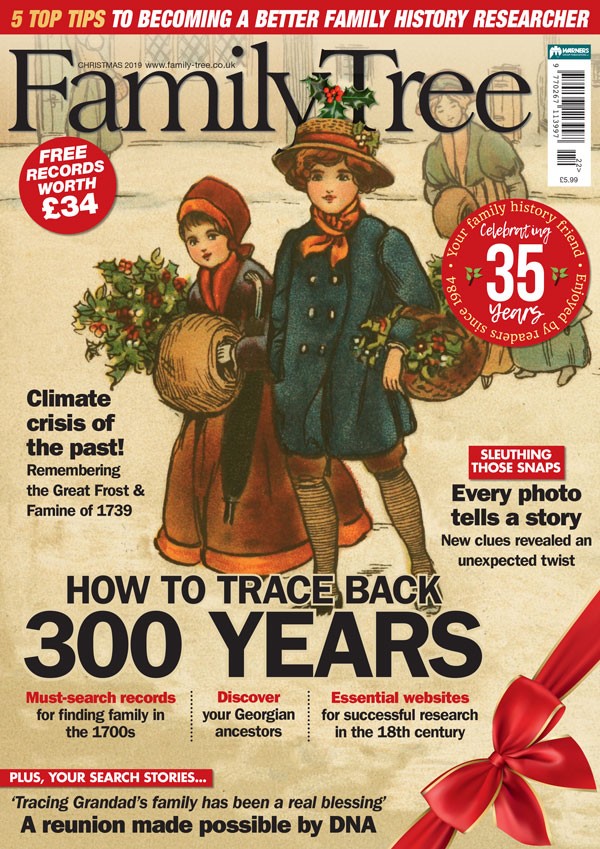
New York based F&W Media, the firm behind the US based magazine Family Tree (not affiliated to the UK magazine of the same name), and its Family Tree University, has filed for bankruptcy, leaving many contributors unpaid. According to Roberta, when the firm made its application to the Court, "The court was provided with a list of creditors 542 pages in length, with 30 names per page, for a whopping total of 16,260 people or companies that they owe money."
The full story is outlined in Roberta's blog post, and also by Forbes magazine at https://www.forbes.com/sites/tonysilber/2019/03/11/fw-media-citing-debt-decline-and-mismanagement-files-for-bankruptcy-protection/#205649d84355.
Here's hoping that all who are owed money are paid in due course. There may be many free resources available online, but professional genealogists are not charities, and deserve to be paid as much as any other profession. And for those who worked on the editorial side of things, I suspect this is as big a shock for them - here's hoping they successfully find alternative work.
(With thanks to Roberta for sharing)
Chris
My next Scottish Research Online course starts March 11th 2019 - see www.pharostutors.com/details.php?coursenumber=102. Details of my genealogical research service are available at www.ScotlandsGreatestStory.co.uk. For my Scottish and Irish themed books, visit https://britishgenes.blogspot.com/p/my-books.html. Further news published daily on The GENES Blog Facebook page, and on Twitter @genesblog.
Friday, 15 February 2019
Discover Your Ancestors 8 now on sale
The eighth annual bookazine Discover Your Ancestors is now available for sale.
The 196 page bookazine contains new in-depth articles, research advice, social and general history, 'how to' features, case studies, places in focus, and much more! It is ideal for both experienced researchers and those just starting out.
NB: This edition includes articles by me on researching Scottish ancestors in times of crisis, and on researching Irish birth, marriage and death records - enjoy!
(With thanks to Andrew Chapman)
Chris
My next Scottish Research Online course starts March 11th 2019 - see www.pharostutors.com/details.php?coursenumber=102. Details of my genealogical research service are available at www.ScotlandsGreatestStory.co.uk. For my Scottish and Irish themed books, visit https://britishgenes.blogspot.com/p/my-books.html. Further news published daily on The GENES Blog Facebook page, and on Twitter @genesblog.
The 196 page bookazine contains new in-depth articles, research advice, social and general history, 'how to' features, case studies, places in focus, and much more! It is ideal for both experienced researchers and those just starting out.
- Fascinating features about life in the past
- Different types of records explored
- Explore Edward's Era - meet the Edwardians at home and at play
- How to research: Methodists & Dissenters, Scots criminals and family myths
- George Eliot: 200th Anniversary
- Celebrity genealogies: Emily Blunt and Michael Caine
- Over £170 of FREE resources! Including a 6 Month Gold Subscription to leading website TheGenealogist (worth £44.95!) and a 12 Month Subscription to the monthly online magazine, Discover Your Ancestors Periodical.
- Lots of other downloadable resources and much more!
NB: This edition includes articles by me on researching Scottish ancestors in times of crisis, and on researching Irish birth, marriage and death records - enjoy!
(With thanks to Andrew Chapman)
Chris
My next Scottish Research Online course starts March 11th 2019 - see www.pharostutors.com/details.php?coursenumber=102. Details of my genealogical research service are available at www.ScotlandsGreatestStory.co.uk. For my Scottish and Irish themed books, visit https://britishgenes.blogspot.com/p/my-books.html. Further news published daily on The GENES Blog Facebook page, and on Twitter @genesblog.
Tuesday, 8 January 2019
WDYTYA magazine announces Transcription Tuesday event
From Who Do You Think You Are? magazine:
Volunteers needed to transcribe an Edwardian book of railway accidents in a day
Researchers from the University of Portsmouth, the Modern Records Centre and the National Railway Museum (NRM) are looking for volunteers to help transcribe a book of railway worker accidents spanning 1901–1907 in just 24 hours. The project is one of three that have been chosen as part of Who Do You Think You Are? Magazine’s annual Transcription Tuesday event, which this year takes place on 5 February 2019.
Transcription Tuesday was launched in 2017 by Who Do You Think You Are? Magazine, to encourage family and local historians to get involved in transcription projects. “The internet has transformed family history,” said editor Sarah Williams, “but the documents that are going online need to be transcribed or indexed to make them searchable, and for many projects the only way that is going to happen is with the help of volunteers.”
One of the projects chosen for Transcription Tuesday this year is the Railway Work, Life and Death project (railwayaccidents.port.ac.uk), and its organisers have set a challenge to the Transcription Tuesday volunteers – to transcribe an entire 119-page volume of railway worker accidents in a day. Each page has, on average, 18 accidents reported, meaning that by the end of the day about 2,150 records could be available for future family historians to discover details of their railway worker ancestors.
“Accidents to railway workers were sadly common at the start of the 20th century, with around 15,000 deaths and injuries each year,” said Dr Mike Esbester of the University of Portsmouth, co-leader of the project. “This volume was created by the Amalgamated Society of Railway Servants, the biggest railway trade union [known today as the RMT], to record accidents and legal cases involving its members. Until Transcription Tuesday it was only available in hard copy, at the Modern Records Centre at the University of Warwick, which meant it was rarely consulted. Transcribing it will hugely increase its use.”
Other records being indexed on Transcription Tuesday are Warwickshire witness statements from the county’s quarter sessions with Warwickshire Bytes and a range of parish registers in association with FamilySearch. “This year we want to make Transcription Tuesday the biggest yet,” said Sarah Williams. “We hope to see hundreds, if not thousands, of volunteers from across the world join together and give something back to family history.”
To find out more about the day, the projects and how to get involved visit: www.whodoyouthinkyouaremagazine.com/transcriptiontuesday
Chris
For my genealogy guide books, visit http://britishgenes.blogspot.co.uk/p/my-books.html, whilst details of my research service are at www.ScotlandsGreatestStory.co.uk. Further content is also published daily on The GENES Blog Facebook page at www.facebook.com/BritishGENES.
Volunteers needed to transcribe an Edwardian book of railway accidents in a day
Researchers from the University of Portsmouth, the Modern Records Centre and the National Railway Museum (NRM) are looking for volunteers to help transcribe a book of railway worker accidents spanning 1901–1907 in just 24 hours. The project is one of three that have been chosen as part of Who Do You Think You Are? Magazine’s annual Transcription Tuesday event, which this year takes place on 5 February 2019.
Transcription Tuesday was launched in 2017 by Who Do You Think You Are? Magazine, to encourage family and local historians to get involved in transcription projects. “The internet has transformed family history,” said editor Sarah Williams, “but the documents that are going online need to be transcribed or indexed to make them searchable, and for many projects the only way that is going to happen is with the help of volunteers.”
One of the projects chosen for Transcription Tuesday this year is the Railway Work, Life and Death project (railwayaccidents.port.ac.uk), and its organisers have set a challenge to the Transcription Tuesday volunteers – to transcribe an entire 119-page volume of railway worker accidents in a day. Each page has, on average, 18 accidents reported, meaning that by the end of the day about 2,150 records could be available for future family historians to discover details of their railway worker ancestors.
“Accidents to railway workers were sadly common at the start of the 20th century, with around 15,000 deaths and injuries each year,” said Dr Mike Esbester of the University of Portsmouth, co-leader of the project. “This volume was created by the Amalgamated Society of Railway Servants, the biggest railway trade union [known today as the RMT], to record accidents and legal cases involving its members. Until Transcription Tuesday it was only available in hard copy, at the Modern Records Centre at the University of Warwick, which meant it was rarely consulted. Transcribing it will hugely increase its use.”
Other records being indexed on Transcription Tuesday are Warwickshire witness statements from the county’s quarter sessions with Warwickshire Bytes and a range of parish registers in association with FamilySearch. “This year we want to make Transcription Tuesday the biggest yet,” said Sarah Williams. “We hope to see hundreds, if not thousands, of volunteers from across the world join together and give something back to family history.”
To find out more about the day, the projects and how to get involved visit: www.whodoyouthinkyouaremagazine.com/transcriptiontuesday
Sample page from the railway accidents book that volunteers will
transcribe on
Transcription Tuesday 2019
(Modern Records Centre)
Chris
For my genealogy guide books, visit http://britishgenes.blogspot.co.uk/p/my-books.html, whilst details of my research service are at www.ScotlandsGreatestStory.co.uk. Further content is also published daily on The GENES Blog Facebook page at www.facebook.com/BritishGENES.
Thursday, 27 December 2018
Irish Lives Remembered issue 42/43
From Irish Lives Remembered (www.irishlivesremembered.com):
The Autumn/Winter Issue of Irish Lives Remembered is available to view now. This very special double edition focuses primarily, on World War I - to mark the Centenary of the Armistice last month.
Included articles:
Finding Records for Irish Soldiers and those involved in World War I by Brian Donovan;
The Fighting Irish - Military Records for Irish Genealogical Research by Michael Reynolds and Lorna Moloney;
The Irish Solider in 1918 by Lar Joye;
Revealing the Life Experiences of one of Cork City's World War I 'American War Brides' by Damian Shiels;
Died Not for Flag, Nor King, Nor Emperor - Why Irishman Thomas Duggan Fought in World War I by Fiona O'Mahony;
Armistice Day by Fiona Fitzsimons;
Ireland's World War I Dead: The Legacy - by Brian Donovan.
Away from the Great War there are articles on
The Irish Diaspora in the Far East before World War II - Discussion and a Request for Help by Patricia O'Sullivan;
If DNA be the Food of Love, Play On! by Maurice Gleeson;
Nelly Bly - Pioneering Journalist and Adventurer by Nathan Mannion;
Why the Blood on the Feast of St. Martin? by Eamonn 'Ned' Kelly;
Glory, Glamourand Gore - the Gruesome Tale of Vere St Leger Goold by Nathan Mannion;
The 1674 Suicide of Alderman Mark Quin, former Lord Mayor of Dublin. Why?
Black '47 Review + interview with the director by Brigit McCone
Excerpts from Gerard O'Rourke's Ancient Sweet Donoughmore: Life in an Irish Rural Parish
Discussion of the Irish Gothic book Sleeping with Lights On
Excerpt from Stacking the Coffins: Influenza, War and Revolution in Ireland 1918-19 by Ida Milne
There are also regular columns such as:
Ask Genie (Fiona Fitzsimons looks at three different reader's problems)
Photodetective (Jayne Shrimpton appraises two different Images)
Patrick's Page (Patrick Roycroft deals with a client at the Irish Family History Centre)
To aaccess the free magazine visit https://www.irishfamilyhistorycentre.com/store/859
Chris
For my genealogy guide books, visit http://britishgenes.blogspot.co.uk/p/my-books.html, whilst details of my research service are at www.ScotlandsGreatestStory.co.uk. Further content is also published daily on The GENES Blog Facebook page at www.facebook.com/BritishGENES.
The Autumn/Winter Issue of Irish Lives Remembered is available to view now. This very special double edition focuses primarily, on World War I - to mark the Centenary of the Armistice last month.
Included articles:
Finding Records for Irish Soldiers and those involved in World War I by Brian Donovan;
The Fighting Irish - Military Records for Irish Genealogical Research by Michael Reynolds and Lorna Moloney;
The Irish Solider in 1918 by Lar Joye;
Revealing the Life Experiences of one of Cork City's World War I 'American War Brides' by Damian Shiels;
Died Not for Flag, Nor King, Nor Emperor - Why Irishman Thomas Duggan Fought in World War I by Fiona O'Mahony;
Armistice Day by Fiona Fitzsimons;
Ireland's World War I Dead: The Legacy - by Brian Donovan.
Away from the Great War there are articles on
The Irish Diaspora in the Far East before World War II - Discussion and a Request for Help by Patricia O'Sullivan;
If DNA be the Food of Love, Play On! by Maurice Gleeson;
Nelly Bly - Pioneering Journalist and Adventurer by Nathan Mannion;
Why the Blood on the Feast of St. Martin? by Eamonn 'Ned' Kelly;
Glory, Glamourand Gore - the Gruesome Tale of Vere St Leger Goold by Nathan Mannion;
The 1674 Suicide of Alderman Mark Quin, former Lord Mayor of Dublin. Why?
Black '47 Review + interview with the director by Brigit McCone
Excerpts from Gerard O'Rourke's Ancient Sweet Donoughmore: Life in an Irish Rural Parish
Discussion of the Irish Gothic book Sleeping with Lights On
Excerpt from Stacking the Coffins: Influenza, War and Revolution in Ireland 1918-19 by Ida Milne
There are also regular columns such as:
Ask Genie (Fiona Fitzsimons looks at three different reader's problems)
Photodetective (Jayne Shrimpton appraises two different Images)
Patrick's Page (Patrick Roycroft deals with a client at the Irish Family History Centre)
To aaccess the free magazine visit https://www.irishfamilyhistorycentre.com/store/859
Chris
For my genealogy guide books, visit http://britishgenes.blogspot.co.uk/p/my-books.html, whilst details of my research service are at www.ScotlandsGreatestStory.co.uk. Further content is also published daily on The GENES Blog Facebook page at www.facebook.com/BritishGENES.
Sunday, 16 September 2018
Irish Lives Remembered issue 41 now available
The Summer Edition of Irish Lives Remembered is available to view now.
This issue, Fiona Fitzsimons and Stephen Peirce look at the Family History of John Cusack and we have lots more fantastic articles for you to enjoy, such as:
Paul McCotter on the O'Mahony surname;
Dr. Maurice Gleeson on genetic genealogy;
Ned Kelly on the Inauguration Stone of Mac Aonghusa;
Patrick Roycroft attends the Cambridge History of Ireland book launch;
Nathan Mannion on Sporting Royalty - the Casey's of Kerry;
Catherine McAuley lets us know what tales are in her attic;
Reader Ann Shelley tells the story of her Great-Great-Grandmother;
Niall Cullen from Findmypast lets us in on 6 unique FMP resources for finding your Irish Ancestors;
Writer Patricia O'Sullivan on Newmarket (Cork) and the Foundation of the Hong Kong Police Force;
Review of the Journal of the Medal Society of Ireland's 100th issue;
Jayne Shrimpton's Photo-Detective;
Patrick’s Page with Patrick Roycroft; and
Ask Genie, our family history agony aunt.
Access the magazine online at https://irishlivesremembered.ie.
(With thanks to Eneclann)
Chris
For my genealogy guide books, visit http://britishgenes.blogspot.co.uk/p/my-books.html, whilst details of my research service are at www.ScotlandsGreatestStory.co.uk. Further content is also published daily on The GENES Blog Facebook page at www.facebook.com/BritishGENES.
This issue, Fiona Fitzsimons and Stephen Peirce look at the Family History of John Cusack and we have lots more fantastic articles for you to enjoy, such as:
Paul McCotter on the O'Mahony surname;
Dr. Maurice Gleeson on genetic genealogy;
Ned Kelly on the Inauguration Stone of Mac Aonghusa;
Patrick Roycroft attends the Cambridge History of Ireland book launch;
Nathan Mannion on Sporting Royalty - the Casey's of Kerry;
Catherine McAuley lets us know what tales are in her attic;
Reader Ann Shelley tells the story of her Great-Great-Grandmother;
Niall Cullen from Findmypast lets us in on 6 unique FMP resources for finding your Irish Ancestors;
Writer Patricia O'Sullivan on Newmarket (Cork) and the Foundation of the Hong Kong Police Force;
Review of the Journal of the Medal Society of Ireland's 100th issue;
Jayne Shrimpton's Photo-Detective;
Patrick’s Page with Patrick Roycroft; and
Ask Genie, our family history agony aunt.
Access the magazine online at https://irishlivesremembered.ie.
(With thanks to Eneclann)
Chris
For my genealogy guide books, visit http://britishgenes.blogspot.co.uk/p/my-books.html, whilst details of my research service are at www.ScotlandsGreatestStory.co.uk. Further content is also published daily on The GENES Blog Facebook page at www.facebook.com/BritishGENES.
Tuesday, 4 September 2018
Scottish Burial Traditions
This is another article written a few years ago for the now dearly departed Discover my Past Scotland magazine, this time from July 2011 - enjoy!
Scottish Burial Traditions
Chris Paton describes the final journey to the afterlife in older times…
As much as with baptisms and marriages, Scottish funerals were surrounded heavily by tradition in the past. Today we tend to think of death as a private affair, and the subsequent funeral or cremation the occasion where close friends and family can say goodbye. In the past however, the death of a person in a parish was a much more public occasion, providing nothing short of a holiday for many. The deceased may in fact have already witnessed the mourners coming in for the occasion, his friends and families having been alerted in advance, and undoubtedly causing he or she additional suffering from the resultant disturbance.
Between death and burial, a key fear was for the soul; windows would be opened to allow it to escape (and quickly closed to stop it coming back!), mirrors were covered and clocks stopped, in order that the person’s soul would not be confused or distracted as it departed. To prevent food and whisky being ‘corrupted’, a piece of iron was driven in, such as a small nail. The women would then clean and ‘kistan’ the body (place it in a coffin), after which it would then be watched prior to the funeral in a ‘lyje-wake’ or ‘waukan’. This was sometimes a merry occasion and at other times sombre, where friends and relatives could convey their regards, and touch the body as a mark of respect. Furthermore, in the Highlands, ‘earth was laid upon the corpse’, a tradition whereby small amounts of earth and salt were placed on a wooden plate on the deceased’s chest, symbolising the corruptibility of the body and the incorruptibility of the soul.
In his “Traditions of Perth” in 1832, author George Penny notes that when a person died in the burghs, the bellman would announce it around the town, reciting “Men and brethren, I let you to wit, that our brother, A. B., departed this life on Thursday last, and is to be interred on Sunday evening… when the company of all his brethren is expected”, long before newspaper intimations and funeral letters took on the same function. Following the death a merchant’s family would stop all trade until after the funeral, whilst on the day itself groups of ‘mourners’ would walk around the streets in a mob, an action which George Penny recalls in Perth as being merely ‘for the love of show’.
The normal funeral tradition followed across most of the country, in both the burghs and the rural parishes, was to gather the mourners on the Sunday morning for prayers, although the burial itself would not happen until the afternoon or even the evening. In Dundonald, Ayrshire, the Old Statistical Account notes how every person attending was given a pipe and tobacco to help while away the hours until the burial began. The provision of hospitality to the guest was all part of providing the deceased with a ‘decent burial’, with whisky, oat bread and cheese laid on. Many a person’s greatest fear was death in poverty, with a burial in a pauper’s grave, and so great efforts were made to save in advance for the time of death, in order not to land a burden on the family. On many occasions an alternative way to pay for the occasion was to auction off the deceased’s procession afterwards at a ‘roup’.
At times however, this hospitality could be taken to extremes, costing a small fortune and driving the minister to despair. In Gargunnock the minister noted in the 1790s that after a meal and a drink 'not a few return to the dirge, and sometimes forget what they have been doing, and where they are'. The dirge was the great feast after the burial, also known as a ‘dredgy’, though in places such as Campsie, the mourners were regularly plied with drams and shortbread before the burial through a custom known as a ‘service’. Penny recalls an amusing incident at the funeral of an elderly lady in Perth who had left a considerable fortune to two sons. After much drinking he notes the consequence. 'Some one hinted that it was time to proceed, as they had a considerable way to ride. Orders were accordingly given to get out the horses; the company mounted and set out, and proceeded a couple of miles towards the place of interment, before it was discovered that they had left the lady behind'!
With the burial time approaching, the coffin would be lifted and carried to the burial plot, with the procession led by a person ringing the mort-bell, in an attempt to drive evil spirits away. The body or coffin itself was covered in a dark mortcloth, hired from the kirk for the payment of a fee known as ‘mort-money’, and many would show their respects by carrying it part of the way. In 1896 the minister of West Kilbride, the Reverend James Lamb, noted in his book 'Annals of an Ayrshire Parish' just how profitable the hiring out of a mortcloth could be for the kirk in the 1770s: '…three qualities were at one time kept, which were hired out at different dates at diverse rates. Thus, in 1771, the rates are five shillings for the best, and three shillings for the second; but these rates are afterwards raised to eight shillings for the best, and four shillings for the second, and three shillings for the third, in the case of an adult; and one shilling and eightpence and one shilling and tenpence for a child. In the case of a person of special wealth or importance, however, the Kirk Session knew how to apply the screw; in such instances we sometimes find ten shillings charged.' In the burghs, the guilds and incorporations often maintained their own mortcloth, which they would let out instead of the kirk. The poor were not charged, however, and children under the age of ten were usually buried without the use of one. For the wealthier a hearse would be employed, rather than the coffin carried, with the undertaker usually the local joiner operating in a dual role.
At the kirk the women would go no further, returning home instead to prepare the dredgy, whilst the men attended to the burial. There were many traditions surrounding the graveyard itself. In Newburgh in Fife it was believed that if a person who had committed suicide was taken through the gate of the kirkyard, a child subsequently being presented through the gate for baptism would be cursed to end his or her days by the same fate. In Monquhitter, Aberdeenshire, there was a belief that the soul of the departed was not in fact quite so departed, it remaining behind to keep watch at the gate until its replacement arrived from the next funeral. This led to the frequent problem, as described in the First Statistical Account, whereby two funerals happening on the same day would often end in violence. If the two funeral parties met at the gate 'the dead were thrown down till the living decided by blows which ghost should be condemned to porter it'.
Prior to the 19th century a great desire held by many was to be buried in the parish of their ancestors, rather than in the village or town where they later came to reside. In Borthwick, Midlothian, the practise was so common that the minister writing the First Statistical Account of the parish recalled how 'there are not two farmers in these bounds who bury in this place', whilst in Kirpatrick-Irongray, Kirkcudbrightshire, it was noted that 'there are more funerals here from other parishes than from the parish itself'. This is something that is always worth bearing in mind if you can’t find your ancestor where he or she is supposed to be!
For more on Scottish burial records, and on traditions surrounding death, my books Discover Scottish Church Records (2nd edition) and Down and Out in Scotland,: Researching Ancestral Crisis may help - further details can be found at https://britishgenes.blogspot.com/p/my-books.html.
Chris
For my genealogy guide books, visit http://britishgenes.blogspot.co.uk/p/my-books.html, whilst details of my research service are at www.ScotlandsGreatestStory.co.uk. Further content is also published daily on The GENES Blog Facebook page at www.facebook.com/BritishGENES.
Scottish Burial Traditions
Chris Paton describes the final journey to the afterlife in older times…
As much as with baptisms and marriages, Scottish funerals were surrounded heavily by tradition in the past. Today we tend to think of death as a private affair, and the subsequent funeral or cremation the occasion where close friends and family can say goodbye. In the past however, the death of a person in a parish was a much more public occasion, providing nothing short of a holiday for many. The deceased may in fact have already witnessed the mourners coming in for the occasion, his friends and families having been alerted in advance, and undoubtedly causing he or she additional suffering from the resultant disturbance.
Between death and burial, a key fear was for the soul; windows would be opened to allow it to escape (and quickly closed to stop it coming back!), mirrors were covered and clocks stopped, in order that the person’s soul would not be confused or distracted as it departed. To prevent food and whisky being ‘corrupted’, a piece of iron was driven in, such as a small nail. The women would then clean and ‘kistan’ the body (place it in a coffin), after which it would then be watched prior to the funeral in a ‘lyje-wake’ or ‘waukan’. This was sometimes a merry occasion and at other times sombre, where friends and relatives could convey their regards, and touch the body as a mark of respect. Furthermore, in the Highlands, ‘earth was laid upon the corpse’, a tradition whereby small amounts of earth and salt were placed on a wooden plate on the deceased’s chest, symbolising the corruptibility of the body and the incorruptibility of the soul.
In his “Traditions of Perth” in 1832, author George Penny notes that when a person died in the burghs, the bellman would announce it around the town, reciting “Men and brethren, I let you to wit, that our brother, A. B., departed this life on Thursday last, and is to be interred on Sunday evening… when the company of all his brethren is expected”, long before newspaper intimations and funeral letters took on the same function. Following the death a merchant’s family would stop all trade until after the funeral, whilst on the day itself groups of ‘mourners’ would walk around the streets in a mob, an action which George Penny recalls in Perth as being merely ‘for the love of show’.
The normal funeral tradition followed across most of the country, in both the burghs and the rural parishes, was to gather the mourners on the Sunday morning for prayers, although the burial itself would not happen until the afternoon or even the evening. In Dundonald, Ayrshire, the Old Statistical Account notes how every person attending was given a pipe and tobacco to help while away the hours until the burial began. The provision of hospitality to the guest was all part of providing the deceased with a ‘decent burial’, with whisky, oat bread and cheese laid on. Many a person’s greatest fear was death in poverty, with a burial in a pauper’s grave, and so great efforts were made to save in advance for the time of death, in order not to land a burden on the family. On many occasions an alternative way to pay for the occasion was to auction off the deceased’s procession afterwards at a ‘roup’.
At times however, this hospitality could be taken to extremes, costing a small fortune and driving the minister to despair. In Gargunnock the minister noted in the 1790s that after a meal and a drink 'not a few return to the dirge, and sometimes forget what they have been doing, and where they are'. The dirge was the great feast after the burial, also known as a ‘dredgy’, though in places such as Campsie, the mourners were regularly plied with drams and shortbread before the burial through a custom known as a ‘service’. Penny recalls an amusing incident at the funeral of an elderly lady in Perth who had left a considerable fortune to two sons. After much drinking he notes the consequence. 'Some one hinted that it was time to proceed, as they had a considerable way to ride. Orders were accordingly given to get out the horses; the company mounted and set out, and proceeded a couple of miles towards the place of interment, before it was discovered that they had left the lady behind'!
With the burial time approaching, the coffin would be lifted and carried to the burial plot, with the procession led by a person ringing the mort-bell, in an attempt to drive evil spirits away. The body or coffin itself was covered in a dark mortcloth, hired from the kirk for the payment of a fee known as ‘mort-money’, and many would show their respects by carrying it part of the way. In 1896 the minister of West Kilbride, the Reverend James Lamb, noted in his book 'Annals of an Ayrshire Parish' just how profitable the hiring out of a mortcloth could be for the kirk in the 1770s: '…three qualities were at one time kept, which were hired out at different dates at diverse rates. Thus, in 1771, the rates are five shillings for the best, and three shillings for the second; but these rates are afterwards raised to eight shillings for the best, and four shillings for the second, and three shillings for the third, in the case of an adult; and one shilling and eightpence and one shilling and tenpence for a child. In the case of a person of special wealth or importance, however, the Kirk Session knew how to apply the screw; in such instances we sometimes find ten shillings charged.' In the burghs, the guilds and incorporations often maintained their own mortcloth, which they would let out instead of the kirk. The poor were not charged, however, and children under the age of ten were usually buried without the use of one. For the wealthier a hearse would be employed, rather than the coffin carried, with the undertaker usually the local joiner operating in a dual role.
At the kirk the women would go no further, returning home instead to prepare the dredgy, whilst the men attended to the burial. There were many traditions surrounding the graveyard itself. In Newburgh in Fife it was believed that if a person who had committed suicide was taken through the gate of the kirkyard, a child subsequently being presented through the gate for baptism would be cursed to end his or her days by the same fate. In Monquhitter, Aberdeenshire, there was a belief that the soul of the departed was not in fact quite so departed, it remaining behind to keep watch at the gate until its replacement arrived from the next funeral. This led to the frequent problem, as described in the First Statistical Account, whereby two funerals happening on the same day would often end in violence. If the two funeral parties met at the gate 'the dead were thrown down till the living decided by blows which ghost should be condemned to porter it'.
Prior to the 19th century a great desire held by many was to be buried in the parish of their ancestors, rather than in the village or town where they later came to reside. In Borthwick, Midlothian, the practise was so common that the minister writing the First Statistical Account of the parish recalled how 'there are not two farmers in these bounds who bury in this place', whilst in Kirpatrick-Irongray, Kirkcudbrightshire, it was noted that 'there are more funerals here from other parishes than from the parish itself'. This is something that is always worth bearing in mind if you can’t find your ancestor where he or she is supposed to be!
For more on Scottish burial records, and on traditions surrounding death, my books Discover Scottish Church Records (2nd edition) and Down and Out in Scotland,: Researching Ancestral Crisis may help - further details can be found at https://britishgenes.blogspot.com/p/my-books.html.
Chris
For my genealogy guide books, visit http://britishgenes.blogspot.co.uk/p/my-books.html, whilst details of my research service are at www.ScotlandsGreatestStory.co.uk. Further content is also published daily on The GENES Blog Facebook page at www.facebook.com/BritishGENES.
Monday, 6 August 2018
The Family History Show - London
From Discover Your Ancestors magazine (https://discoveryourancestors.co.uk):
The Family History Show - London Saturday 22nd September
Don’t miss The Family History Show London, the major event of the genealogical calendar.
With many new features to help with your research, free lectures, and free parking. This year it’s taking place at the larger Surrey Hall at Sandown Park Racecourse in Esher, with more exhibitors and an additional lecture area.
It will be a packed day with the Keynote speech being given by the International Genealogy Blogger Dick Eastman on ‘The Future of Genealogy’.
Other speakers include Jane Shrimpton (Dating Photographs), Graham Walter, Chris Baker (Military), Keith Gregson (Social History), Mark Bayley (Research Techniques). Sponsored by TheGenealogist and organised by Discover Your Ancestors Magazine the show in York this June was a packed event pleasing both attendees and stallholders alike.
These events are attracting family history societies and companies from all over the UK and further afield. Including The Federation of Family History Societies, MOD, Local Record Offices, Archives, Guild of One Name Studies, Family History Book Publishers, Research Organisations, Genealogy Retailers, Online Services and more.
Our ‘Ask the Experts’ panel and the ‘Census Detectives’ will be there to help with your research, date photographs and identify medals.
There is plenty of free parking and refreshments are available all day.
Last year our advanced ticket allocation sold out and the visitor numbers were exceptional, we advise early booking to avoid disappointment.
Exhibitor numbers have increased with the keenly priced tables. If you wish to attend, space and the reasonably priced tables are rapidly running out. If you would like to book exhibitor’s space at the Family History Show London you can get the booking form here.
https://thefamilyhistoryshow.com/london/exhibit/#promo
Tickets - Buy One Get One Half Price!
Early Bird offer: Buy your tickets in advance for £5 a person or buy two for £7.50 door price will be £7 each, and don’t forget everyone gets a Goody Bag worth £8 on entrance!
To take advantage of this offer:
Go to www.TheFamilyHistoryShow.com/london
For more information contact: Paul at bookings@thefamilyhistoryshow.com
‘Discover Your Ancestors is both a critically acclaimed annual high quality print magazine and a monthly digital periodical. Launched in 2011 and well received by readers it is aimed at both those starting out in family history research as well as those more experienced family historians. Featuring case studies, social history articles and research advice, it is an informative and educational guide to help break down brick walls.
In 2017 it created the ‘Discover Your Ancestors’ Family History Show at York and London, these events have grown rapidly in size and a third show for the South West is planned for 2019.’
(With thanks to DYA)
Chris
For my genealogy guide books, visit http://britishgenes.blogspot.co.uk/p/my-books.html, whilst details of my research service are at www.ScotlandsGreatestStory.co.uk. Further content is also published daily on The GENES Blog Facebook page at www.facebook.com/BritishGENES.
The Family History Show - London Saturday 22nd September
Don’t miss The Family History Show London, the major event of the genealogical calendar.
With many new features to help with your research, free lectures, and free parking. This year it’s taking place at the larger Surrey Hall at Sandown Park Racecourse in Esher, with more exhibitors and an additional lecture area.
It will be a packed day with the Keynote speech being given by the International Genealogy Blogger Dick Eastman on ‘The Future of Genealogy’.
Other speakers include Jane Shrimpton (Dating Photographs), Graham Walter, Chris Baker (Military), Keith Gregson (Social History), Mark Bayley (Research Techniques). Sponsored by TheGenealogist and organised by Discover Your Ancestors Magazine the show in York this June was a packed event pleasing both attendees and stallholders alike.
These events are attracting family history societies and companies from all over the UK and further afield. Including The Federation of Family History Societies, MOD, Local Record Offices, Archives, Guild of One Name Studies, Family History Book Publishers, Research Organisations, Genealogy Retailers, Online Services and more.
Our ‘Ask the Experts’ panel and the ‘Census Detectives’ will be there to help with your research, date photographs and identify medals.
There is plenty of free parking and refreshments are available all day.
Last year our advanced ticket allocation sold out and the visitor numbers were exceptional, we advise early booking to avoid disappointment.
Exhibitor numbers have increased with the keenly priced tables. If you wish to attend, space and the reasonably priced tables are rapidly running out. If you would like to book exhibitor’s space at the Family History Show London you can get the booking form here.
https://thefamilyhistoryshow.com/london/exhibit/#promo
Tickets - Buy One Get One Half Price!
Early Bird offer: Buy your tickets in advance for £5 a person or buy two for £7.50 door price will be £7 each, and don’t forget everyone gets a Goody Bag worth £8 on entrance!
To take advantage of this offer:
Go to www.TheFamilyHistoryShow.com/london
For more information contact: Paul at bookings@thefamilyhistoryshow.com
‘Discover Your Ancestors is both a critically acclaimed annual high quality print magazine and a monthly digital periodical. Launched in 2011 and well received by readers it is aimed at both those starting out in family history research as well as those more experienced family historians. Featuring case studies, social history articles and research advice, it is an informative and educational guide to help break down brick walls.
In 2017 it created the ‘Discover Your Ancestors’ Family History Show at York and London, these events have grown rapidly in size and a third show for the South West is planned for 2019.’
(With thanks to DYA)
Chris
For my genealogy guide books, visit http://britishgenes.blogspot.co.uk/p/my-books.html, whilst details of my research service are at www.ScotlandsGreatestStory.co.uk. Further content is also published daily on The GENES Blog Facebook page at www.facebook.com/BritishGENES.
Tuesday, 10 July 2018
Latest edition of Irish Lives Remembered online
From Eneclann:
The Spring Edition of Irish Lives Remembered is available to view now. Our cover star is Mark Hamill, aka Luke Skywalker! We also have:
Paul McCotter on the Dunne surname;
Dr. Maurice Gleeson on genetics and surnames;
Ned Kelly on Treasure Trove;
Brian Mitchell on Derry/Londonderry records;
Maureen Wlodarczyk on Francis Kilkenny and the Irish Home-Going Assoication
Lorna Moloney and Kealan McCormack on Knowing Nenagh
Michèle Castiaux on the Irish Geological Association Archive Project
An update on Findmypast and the Catholic Heritage Archive with Niall Cullen
Nathan Mannion on Zambia's Grandfather of Education
Fiona Fitzsimons reviews Ships from Ireland to E
arly America 1623–1850
A Book Excerpt from Damian Shiels The Forgotten Irish: Irish Emigrant Experiences in America
Jayne Shrimpton's Photo-Detective;
Patrick’s Page with Patrick Roycroft; and
Ask Genie, our family history agony aunt.
To freely access the magazine visit https://irishlivesremembered.ie/latest-edition/.
Chris
For my genealogy guide books, visit http://britishgenes.blogspot.co.uk/p/my-books.html, whilst details of my research service are at www.ScotlandsGreatestStory.co.uk. Further content is also published daily on The GENES Blog Facebook page at www.facebook.com/BritishGENES.
The Spring Edition of Irish Lives Remembered is available to view now. Our cover star is Mark Hamill, aka Luke Skywalker! We also have:
Paul McCotter on the Dunne surname;Dr. Maurice Gleeson on genetics and surnames;
Ned Kelly on Treasure Trove;
Brian Mitchell on Derry/Londonderry records;
Maureen Wlodarczyk on Francis Kilkenny and the Irish Home-Going Assoication
Lorna Moloney and Kealan McCormack on Knowing Nenagh
Michèle Castiaux on the Irish Geological Association Archive Project
An update on Findmypast and the Catholic Heritage Archive with Niall Cullen
Nathan Mannion on Zambia's Grandfather of Education
Fiona Fitzsimons reviews Ships from Ireland to E
arly America 1623–1850
A Book Excerpt from Damian Shiels The Forgotten Irish: Irish Emigrant Experiences in America
Jayne Shrimpton's Photo-Detective;
Patrick’s Page with Patrick Roycroft; and
Ask Genie, our family history agony aunt.
To freely access the magazine visit https://irishlivesremembered.ie/latest-edition/.
Chris
For my genealogy guide books, visit http://britishgenes.blogspot.co.uk/p/my-books.html, whilst details of my research service are at www.ScotlandsGreatestStory.co.uk. Further content is also published daily on The GENES Blog Facebook page at www.facebook.com/BritishGENES.
Tuesday, 26 June 2018
Society of Genealogists supports Family Tree Live
From Warner Group Publications, news on Family Tree Live (see http://britishgenes.blogspot.com/2018/05/family-tree-live-genealogy-event.html):
Society of Genealogists supports Family Tree Live
Family Tree Live, in partnership with the Federation of Family History Societies
Alexandra Palace, London – 26 and 27 April 2019
The team behind the new family history show Family Tree Live are delighted to announce the Society of Genealogists (SoG) as an Associate Sponsor of the event.
In addition to the sponsorship, SoG will also be sponsoring the ‘Society of Genealogists Lecture Theatre’ at the two-day London event and will be giving visitors help and advice from the SoG stand.
Else Churchill, Genealogist at SoG, said: ‘Genealogy education and learning is at the heart of the Society’s foundation and hence we are delighted to be sponsoring a lecture theatre at Family Tree Live. Additionally, on the SoG stand you can meet our members and experts who are on hand to offer help and advice with your research and show how the Society’s library and remarkable research collections can take your family history further.’
Family Tree Live is set to become the UK’s most popular family history event. The major exhibition will feature lectures, workshops, displays and stands and will be suitable for all levels of family history experience.
Helen Tovey, Editor of Family Tree magazine, said: ‘It’s fantastic to be working with the Society of Genealogists, and their support fits perfectly with the strong learning aspect of Family Tree Live. We’re excited with the range of lectures, workshops and hands-on activities to be offered over the two days, and delighted to welcome SoG as an associate sponsor, an exhibitor and the sponsor of the Society of Genealogists Lecture Theatre.’
(With thanks to Lauren Beharrell)
Chris
For my genealogy guide books, visit http://britishgenes.blogspot.co.uk/p/my-books.html, whilst details of my research service are at www.ScotlandsGreatestStory.co.uk. Further content is also published daily on The GENES Blog Facebook page at www.facebook.com/BritishGENES.
Society of Genealogists supports Family Tree Live
Family Tree Live, in partnership with the Federation of Family History Societies
Alexandra Palace, London – 26 and 27 April 2019
The team behind the new family history show Family Tree Live are delighted to announce the Society of Genealogists (SoG) as an Associate Sponsor of the event.
In addition to the sponsorship, SoG will also be sponsoring the ‘Society of Genealogists Lecture Theatre’ at the two-day London event and will be giving visitors help and advice from the SoG stand.
Else Churchill, Genealogist at SoG, said: ‘Genealogy education and learning is at the heart of the Society’s foundation and hence we are delighted to be sponsoring a lecture theatre at Family Tree Live. Additionally, on the SoG stand you can meet our members and experts who are on hand to offer help and advice with your research and show how the Society’s library and remarkable research collections can take your family history further.’
Family Tree Live is set to become the UK’s most popular family history event. The major exhibition will feature lectures, workshops, displays and stands and will be suitable for all levels of family history experience.
Helen Tovey, Editor of Family Tree magazine, said: ‘It’s fantastic to be working with the Society of Genealogists, and their support fits perfectly with the strong learning aspect of Family Tree Live. We’re excited with the range of lectures, workshops and hands-on activities to be offered over the two days, and delighted to welcome SoG as an associate sponsor, an exhibitor and the sponsor of the Society of Genealogists Lecture Theatre.’
(With thanks to Lauren Beharrell)
Chris
For my genealogy guide books, visit http://britishgenes.blogspot.co.uk/p/my-books.html, whilst details of my research service are at www.ScotlandsGreatestStory.co.uk. Further content is also published daily on The GENES Blog Facebook page at www.facebook.com/BritishGENES.
Wednesday, 6 June 2018
Family Tree magazine's 2019 European river cruise
From the UK's Family Tree magazine (https://www.family-tree.co.uk), news of an interesting new venture in September 2019:
We've teamed up with AMAWaterways (https://www.amawaterways.co.uk), a luxury River Cruise line to bring you a brand new 7-night Family History Cruise. The cruise begins in Amsterdam on Monday 9th September 2019 and ends in Basel, on Monday 16th September.
You’ll cruise aboard the 156-guest AmaMora, the new addition to AmaWaterways’ award-winning fleet. Known for their exquisite cuisine, active discovery tours and excursions, extensive complimentary amenities and personalised service, AmaWaterways’ ship AmaMora will provide the perfect setting for discovering your family history.
Sail with a family history expert, who will host several sessions and interactive activities throughout the cruise on topics including essential
records, information about DNA testing, how to use online resources,visiting archives and your next steps!
Where will you go?
9 Sep: Embark AMSTERDAM
10 Sep: AMSTERDAM
Amsterdam Canal cruise and city tour. Scenic cruising out of Amsterdam
11 Sep: COLOGNE
Walking tour and cathedral visit. Plus, enjoy a Cologne bike tour or Kölsch beer tasting
12 Sep: RHINE GORGE
“Castles along the Rhine” scenic cruising
RÜDESHEIM
Wine tasting, Gondola ride or Schloss Johannisberg bike tour. Plus, Siegfried’s Mechanical Music Museum or Rüdesheimer coffee
13 Sep: LUDWIGSHAFEN
“Romantic Heidelberg” excursionm, with Heidelberg Philosopher’s Path hike or “Secrets of Speyer” excursion
14 Sep: STRASBOURG
“The Gem of Alsace” tour or Strasbourg bike tour
15 Sep: BREISACH
Riquewihr walking tour, with Freiburg excursion, a Breisach wine country bike tour or Black Forest excursion
16 Sep: Disembark BASEL
Further details, inclusing the costs, are available at https://www.family-tree.co.uk/news-and-views/family-history-river-cruise-2019.
Chris
For my genealogy guide books, visit http://britishgenes.blogspot.co.uk/p/my-books.html, whilst details of my research service are at www.ScotlandsGreatestStory.co.uk. Further content is also published daily on The GENES Blog Facebook page at www.facebook.com/BritishGENES.
We've teamed up with AMAWaterways (https://www.amawaterways.co.uk), a luxury River Cruise line to bring you a brand new 7-night Family History Cruise. The cruise begins in Amsterdam on Monday 9th September 2019 and ends in Basel, on Monday 16th September.
You’ll cruise aboard the 156-guest AmaMora, the new addition to AmaWaterways’ award-winning fleet. Known for their exquisite cuisine, active discovery tours and excursions, extensive complimentary amenities and personalised service, AmaWaterways’ ship AmaMora will provide the perfect setting for discovering your family history.
Sail with a family history expert, who will host several sessions and interactive activities throughout the cruise on topics including essential
records, information about DNA testing, how to use online resources,visiting archives and your next steps!
Where will you go?
9 Sep: Embark AMSTERDAM
10 Sep: AMSTERDAM
Amsterdam Canal cruise and city tour. Scenic cruising out of Amsterdam
11 Sep: COLOGNE
Walking tour and cathedral visit. Plus, enjoy a Cologne bike tour or Kölsch beer tasting
12 Sep: RHINE GORGE
“Castles along the Rhine” scenic cruising
RÜDESHEIM
Wine tasting, Gondola ride or Schloss Johannisberg bike tour. Plus, Siegfried’s Mechanical Music Museum or Rüdesheimer coffee
13 Sep: LUDWIGSHAFEN
“Romantic Heidelberg” excursionm, with Heidelberg Philosopher’s Path hike or “Secrets of Speyer” excursion
14 Sep: STRASBOURG
“The Gem of Alsace” tour or Strasbourg bike tour
15 Sep: BREISACH
Riquewihr walking tour, with Freiburg excursion, a Breisach wine country bike tour or Black Forest excursion
16 Sep: Disembark BASEL
Further details, inclusing the costs, are available at https://www.family-tree.co.uk/news-and-views/family-history-river-cruise-2019.
Chris
For my genealogy guide books, visit http://britishgenes.blogspot.co.uk/p/my-books.html, whilst details of my research service are at www.ScotlandsGreatestStory.co.uk. Further content is also published daily on The GENES Blog Facebook page at www.facebook.com/BritishGENES.
Friday, 4 May 2018
Family Tree Live genealogy event announced for April 2019
From Family Tree magazine (https://www.family-tree.co.uk/):
SAVE THE DATE
Family Tree Live is coming!
Taking place on 26th & 27th April 2019 at London’s Alexandra Palace, you can expect two jam-packed days of family history fun for ALL!
The team from Family Tree Live would love you to join them for a brand new UK family history show – two days of lectures, workshops, displays and stands – suitable for all levels of family history experience.
Family Tree Live is brought to you by Family Tree in partnership with the Federation of Family History Societies and will provide visitors with a vast range of learning opportunities under one roof. From traditional lectures, to hands-on workshops, a DNA hub, advice stations, family-friendly activities and more.
Steve Manning, education officer at the Federation of Family History Societies: ‘The Federation is delighted to be supporting Family Tree Live. A national event like this provides visitors with the opportunity to find out about their ancestors wherever they came from, with local knowledge and expertise provided by our family history societies.’
Helen Tovey, editor of Family Tree magazine: ‘There’s nothing like the buzz you get from going to a family history show and our aim is that visitors to Family Tree Live will leave brimming with inspiration, information and ideas about doing their family history. We can’t wait for April 2019!’
To receive the latest show information please sign up to the e-newsletter at www.family-tree.co.uk
To enquire about exhibition space and sponsorship opportunities at Family Tree Live, please contact Sarah Hopton on email: sarah.hopton@warnersgroup.co.uk
If you have any other queries, please email lauren.beharrell@warnersgroup.co.uk
(With thanks to Helen Tovey)
Chris
For my genealogy guide books, visit http://britishgenes.blogspot.co.uk/p/my-books.html, whilst details of my research service are at www.ScotlandsGreatestStory.co.uk. Further content is also published daily on The GENES Blog Facebook page at www.facebook.com/BritishGENES.
SAVE THE DATE
Family Tree Live is coming!
Taking place on 26th & 27th April 2019 at London’s Alexandra Palace, you can expect two jam-packed days of family history fun for ALL!
The team from Family Tree Live would love you to join them for a brand new UK family history show – two days of lectures, workshops, displays and stands – suitable for all levels of family history experience.
Family Tree Live is brought to you by Family Tree in partnership with the Federation of Family History Societies and will provide visitors with a vast range of learning opportunities under one roof. From traditional lectures, to hands-on workshops, a DNA hub, advice stations, family-friendly activities and more.
Steve Manning, education officer at the Federation of Family History Societies: ‘The Federation is delighted to be supporting Family Tree Live. A national event like this provides visitors with the opportunity to find out about their ancestors wherever they came from, with local knowledge and expertise provided by our family history societies.’
Helen Tovey, editor of Family Tree magazine: ‘There’s nothing like the buzz you get from going to a family history show and our aim is that visitors to Family Tree Live will leave brimming with inspiration, information and ideas about doing their family history. We can’t wait for April 2019!’
To receive the latest show information please sign up to the e-newsletter at www.family-tree.co.uk
To enquire about exhibition space and sponsorship opportunities at Family Tree Live, please contact Sarah Hopton on email: sarah.hopton@warnersgroup.co.uk
If you have any other queries, please email lauren.beharrell@warnersgroup.co.uk
(With thanks to Helen Tovey)
Chris
For my genealogy guide books, visit http://britishgenes.blogspot.co.uk/p/my-books.html, whilst details of my research service are at www.ScotlandsGreatestStory.co.uk. Further content is also published daily on The GENES Blog Facebook page at www.facebook.com/BritishGENES.
Subscribe to:
Posts (Atom)


