For an update on Kirsty Wilkinson's new book, Finding Your Scottish Ancestors: Techniques for Solving Genealogy Problems, please visit Scottish GENES at https://scottishgenes.blogspot.com/2020/02/kirsty-wilkinsons-new-scottish-research.html.
* This blog will cease to carry news from February 14th, with Scottish GENES (https://scottishgenes.blogspot.com) taking over from then. You can subscribe to Scottish GENES for a daily email feed in the right hand column on the page, at the top.
Chris
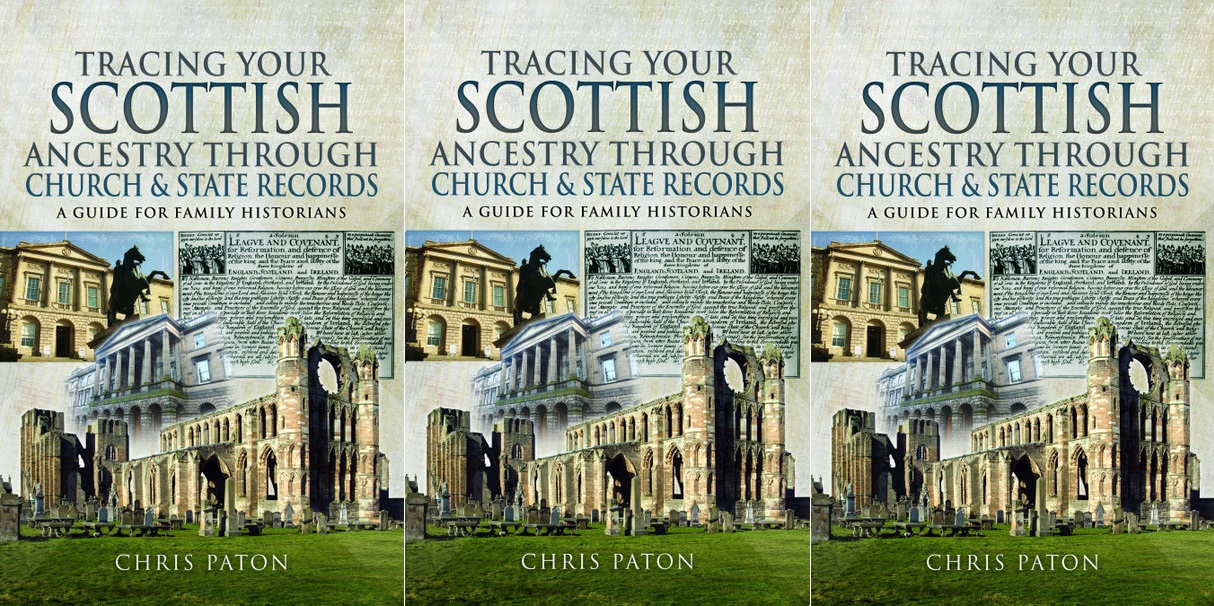
You can pre-order my new book, Tracing Your Scottish Family History on the Internet, at http://bit.ly/ChrisPaton-Scottish2 (out April). Also available, Tracing Your Irish Family History on the Internet (2nd ed) at http://bit.ly/ChrisPaton-Irish1 and Tracing Your Scottish Ancestry Through Church and State Records at http://bit.ly/ChrisPaton-Scotland1. Further news published daily on The GENES Blog Facebook page, and on Twitter @genesblog.
The GENES Blog (GEnealogy News and EventS) ceased publication on 14 FEB 2020. You will now find all the latest genealogy news and views on Scottish GENES at https://scottishgenes.blogspot.com. The GENES Blog archive will remain live, with a record of the genealogy news for Britain and Ireland from 2013-2020. Thank you!
Showing posts with label Scotland. Show all posts
Sunday, 2 February 2020
Friday, 24 January 2020
FindmyPast adds Lanarkshire and Angus records
Added to FindmyPast (www.findmypast.co.uk) this week:
Scotland, Poor Law & Poor Lists
Do have ancestors from Scotland that fell on hard times? Explore this collection of poor relief records to find out. Each record includes a transcript and original record (where available) that will reveal your ancestor’s level of poverty, family details, occupation, residence, denomination and the nature of the relief they received.
Scotland, Lanarkshire School Registers and Records
Search this collection of school registers and records to find out where and when your ancestor went to school. These images and transcripts may also reveal the child’s birth year and residence as well as the names and occupations of their parent’s.
Scotland, Dundee & Forfarshire (Angus) Births & Baptisms 1562-1855
Over 186,000 additional records covering all parishes have been added to the collection. Search these parish birth and baptism records and discover the date and location of your ancestor’s baptism, their residence, parent’s names and father’s occupation.
Scotland, Dundee & Forfarshire (Angus) Marriages & Banns 1562-1855
Over 92,000 new records covering all parishes are now available to search. These records may reveal when and where your relative’s banns where read, the date and location of their marriage, parent’s names, father’s occupation and corresponding details for their spouse.
Scotland, Dundee & Forfarshire (Angus) Deaths & Burials 1562-1855
Find out where your Dundee and Forfarshire ancestors were laid to rest with over 74,000 new additions covering all parishes. These transcripts may also reveal the deceased’s occupation, condition, residence, father’s name and next of kin.
British & Irish Newspaper Update
We have added six new Yorkshire titles this week including;
Otley News and West Riding Advertiser - 1867-1871, 1873-1888, 1890
Richmond & Ripon Chronicle - 1855, 1860-1864, 1866-1876, 1878-1888, 1890-1894
Scarborough Gazette - 1854, 1873-1875, 1877-1883, 1885-1892, 1894
Halifax Evening Courier - 1899, 1901-1909, 1911-1913, 1915-1921
Halifax Express - 1831-1834, 1838-1841
Farmer’s Friend and Freeman’s Journal - 1850-1855
West Bridgford Times & Echo - 1929-1939
Warrington Observer – 1889
We have also added additional years of coverage to the Brecon County Times, Leven Advertiser & Wemyss Gazette and the Sligo Independent.
Further details and links at https://www.findmypast.co.uk/blog/new/celebrate-burns-night-with-new-scottish-records
Chris
Order Tracing Your Irish Family History on the Internet (2nd ed) at https://www.pen-and-sword.co.uk/Tracing-Your-Irish-Family-History-on-the-Internet-Paperback/p/16483. and Tracing Your Scottish Ancestry Through Church and State Records at https://www.pen-and-sword.co.uk/Tracing-Your-Scottish-Ancestry-through-Church-and-State-Records-Paperback/p/16848. Further news published daily on The GENES Blog Facebook page, and on Twitter @genesblog.
Scotland, Poor Law & Poor Lists
Do have ancestors from Scotland that fell on hard times? Explore this collection of poor relief records to find out. Each record includes a transcript and original record (where available) that will reveal your ancestor’s level of poverty, family details, occupation, residence, denomination and the nature of the relief they received.
Scotland, Lanarkshire School Registers and Records
Search this collection of school registers and records to find out where and when your ancestor went to school. These images and transcripts may also reveal the child’s birth year and residence as well as the names and occupations of their parent’s.
Scotland, Dundee & Forfarshire (Angus) Births & Baptisms 1562-1855
Over 186,000 additional records covering all parishes have been added to the collection. Search these parish birth and baptism records and discover the date and location of your ancestor’s baptism, their residence, parent’s names and father’s occupation.
Scotland, Dundee & Forfarshire (Angus) Marriages & Banns 1562-1855
Over 92,000 new records covering all parishes are now available to search. These records may reveal when and where your relative’s banns where read, the date and location of their marriage, parent’s names, father’s occupation and corresponding details for their spouse.
Scotland, Dundee & Forfarshire (Angus) Deaths & Burials 1562-1855
Find out where your Dundee and Forfarshire ancestors were laid to rest with over 74,000 new additions covering all parishes. These transcripts may also reveal the deceased’s occupation, condition, residence, father’s name and next of kin.
British & Irish Newspaper Update
We have added six new Yorkshire titles this week including;
Otley News and West Riding Advertiser - 1867-1871, 1873-1888, 1890
Richmond & Ripon Chronicle - 1855, 1860-1864, 1866-1876, 1878-1888, 1890-1894
Scarborough Gazette - 1854, 1873-1875, 1877-1883, 1885-1892, 1894
Halifax Evening Courier - 1899, 1901-1909, 1911-1913, 1915-1921
Halifax Express - 1831-1834, 1838-1841
Farmer’s Friend and Freeman’s Journal - 1850-1855
West Bridgford Times & Echo - 1929-1939
Warrington Observer – 1889
We have also added additional years of coverage to the Brecon County Times, Leven Advertiser & Wemyss Gazette and the Sligo Independent.
Further details and links at https://www.findmypast.co.uk/blog/new/celebrate-burns-night-with-new-scottish-records
Chris
Order Tracing Your Irish Family History on the Internet (2nd ed) at https://www.pen-and-sword.co.uk/Tracing-Your-Irish-Family-History-on-the-Internet-Paperback/p/16483. and Tracing Your Scottish Ancestry Through Church and State Records at https://www.pen-and-sword.co.uk/Tracing-Your-Scottish-Ancestry-through-Church-and-State-Records-Paperback/p/16848. Further news published daily on The GENES Blog Facebook page, and on Twitter @genesblog.
Thursday, 23 January 2020
Pre-order my next book Tracing Your Scottish Family History on the Internet
My next book, Tracing Your Scottish Family History on the Internet, is now available to pre-order from publisher Pen and Sword www.pen-and-sword.co.uk/Tracing-Your-Scottish-Family-History-on-the-Internet-Paperback/p/17717. The book is scheduled for publication on April 30th 2020.
Here's the blurb!
Scotland is a land with a proud and centuries long history that far pre-dates its membership of Great Britain and the United Kingdom. Today in the 21st century it is also a land that has done much to make its historical records accessible, to help those with Caledonian ancestry trace their roots back to earlier times and a world long past.
In Tracing Scottish Family History on the Internet, Chris Paton expertly guides the family historian through the many Scottish records offerings available, but also cautions the reader that not every record is online, providing detailed advice on how to use web based finding aids to locate further material across the country and beyond. He also examines social networking and the many DNA platforms that are currently further revolutionising online Scottish research.
From the Scottish Government websites offering access to our most important national records, to the holdings of local archives, libraries, family history societies, and online vendors, Chris Paton takes the reader across Scotland, from the Highlands and Islands, through the Central Belt and the Lowlands, and across the diaspora, to explore the various flavours of Scottishness that have bound us together as a nation for so long.
As with all my books, I hope it proves to be useful!
Don't forget also that Tracing Your Scottish Ancestry Through Church and State Records is also now available at https://www.pen-and-sword.co.uk/Tracing-Your-Scottish-Ancestry-through-Church-and-State-Records-Paperback/p/16848 - I've just noticed that it is also now available to purchase in the United States on Amazon.com.
Chris
Order Tracing Your Irish Family History on the Internet (2nd ed) at https://www.pen-and-sword.co.uk/Tracing-Your-Irish-Family-History-on-the-Internet-Paperback/p/16483. and Tracing Your Scottish Ancestry Through Church and State Records at https://www.pen-and-sword.co.uk/Tracing-Your-Scottish-Ancestry-through-Church-and-State-Records-Paperback/p/16848. Further news published daily on The GENES Blog Facebook page, and on Twitter @genesblog.
Here's the blurb!
Scotland is a land with a proud and centuries long history that far pre-dates its membership of Great Britain and the United Kingdom. Today in the 21st century it is also a land that has done much to make its historical records accessible, to help those with Caledonian ancestry trace their roots back to earlier times and a world long past.
In Tracing Scottish Family History on the Internet, Chris Paton expertly guides the family historian through the many Scottish records offerings available, but also cautions the reader that not every record is online, providing detailed advice on how to use web based finding aids to locate further material across the country and beyond. He also examines social networking and the many DNA platforms that are currently further revolutionising online Scottish research.
From the Scottish Government websites offering access to our most important national records, to the holdings of local archives, libraries, family history societies, and online vendors, Chris Paton takes the reader across Scotland, from the Highlands and Islands, through the Central Belt and the Lowlands, and across the diaspora, to explore the various flavours of Scottishness that have bound us together as a nation for so long.
As with all my books, I hope it proves to be useful!
Don't forget also that Tracing Your Scottish Ancestry Through Church and State Records is also now available at https://www.pen-and-sword.co.uk/Tracing-Your-Scottish-Ancestry-through-Church-and-State-Records-Paperback/p/16848 - I've just noticed that it is also now available to purchase in the United States on Amazon.com.
Chris
Order Tracing Your Irish Family History on the Internet (2nd ed) at https://www.pen-and-sword.co.uk/Tracing-Your-Irish-Family-History-on-the-Internet-Paperback/p/16483. and Tracing Your Scottish Ancestry Through Church and State Records at https://www.pen-and-sword.co.uk/Tracing-Your-Scottish-Ancestry-through-Church-and-State-Records-Paperback/p/16848. Further news published daily on The GENES Blog Facebook page, and on Twitter @genesblog.
Wednesday, 8 January 2020
Paisley Poor Law indexes updated
Paisley Heritage Centre (www.renfrewshireleisure.com/heritage) has announced a significant update to its online Poor Law records indexes:
This important source of information for people researching their family history and Paisley and Renfrewshire’s social history is now much easier to search. The Heritage Centre has created an online version of the Paisley Poor Law Indexes to open up the collection to those with ancestors from this area.
We have recently completed indexing Series 14 of the Poor Law statements, which consists of an additional 100 volumes dating from 1930 to 1948. This adds approximately 15000 entries to our existing index.
To consult the index, visit https://libcat.renfrewshire.gov.uk/iguana/uploads/file/Website%20version%202019.pdf
(With thanks to the heritage centre)
Chris
Order Tracing Your Irish Family History on the Internet (2nd ed) at https://www.pen-and-sword.co.uk/Tracing-Your-Irish-Family-History-on-the-Internet-Paperback/p/16483. and Tracing Your Scottish Ancestry Through Church and State Records at https://www.pen-and-sword.co.uk/Tracing-Your-Scottish-Ancestry-through-Church-and-State-Records-Paperback/p/16848. Further news published daily on The GENES Blog Facebook page, and on Twitter @genesblog.
This important source of information for people researching their family history and Paisley and Renfrewshire’s social history is now much easier to search. The Heritage Centre has created an online version of the Paisley Poor Law Indexes to open up the collection to those with ancestors from this area.
We have recently completed indexing Series 14 of the Poor Law statements, which consists of an additional 100 volumes dating from 1930 to 1948. This adds approximately 15000 entries to our existing index.
To consult the index, visit https://libcat.renfrewshire.gov.uk/iguana/uploads/file/Website%20version%202019.pdf
(With thanks to the heritage centre)
Chris
Order Tracing Your Irish Family History on the Internet (2nd ed) at https://www.pen-and-sword.co.uk/Tracing-Your-Irish-Family-History-on-the-Internet-Paperback/p/16483. and Tracing Your Scottish Ancestry Through Church and State Records at https://www.pen-and-sword.co.uk/Tracing-Your-Scottish-Ancestry-through-Church-and-State-Records-Paperback/p/16848. Further news published daily on The GENES Blog Facebook page, and on Twitter @genesblog.
Tuesday, 7 January 2020
ScotlandsPeople updates birth, marriage and death record images
From ScotlandsPeople (www.scotlandspeople.gov.uk):
129,445 new online images have been released on the ScotlandsPeople website consisting of just over 207,000 birth, death and marriage register entries. You can search for, view and save images of these entries on ScotlandsPeople.
The update sees additions of images for historic records of births from 1919, marriages from 1944, and deaths from 1969. An article looking in particular at examples of the marriage records additions can be found at www.scotlandspeople.gov.uk/article/our-records-double-wedding-celebrations.
* For further information for the background to Scottish civil registration and the records generated, consult my new book Tracing Your Scottish Ancestry Through Church and State Records, available via https://www.pen-and-sword.co.uk/Tracing-Your-Scottish-Ancestry-through-Church-and-State-Records-Paperback/p/16848.
Have fun hunting through the new records!
Chris
Order Tracing Your Irish Family History on the Internet (2nd ed) at https://www.pen-and-sword.co.uk/Tracing-Your-Irish-Family-History-on-the-Internet-Paperback/p/16483. and Tracing Your Scottish Ancestry Through Church and State Records at https://www.pen-and-sword.co.uk/Tracing-Your-Scottish-Ancestry-through-Church-and-State-Records-Paperback/p/16848. Further news published daily on The GENES Blog Facebook page, and on Twitter @genesblog.
129,445 new online images have been released on the ScotlandsPeople website consisting of just over 207,000 birth, death and marriage register entries. You can search for, view and save images of these entries on ScotlandsPeople.
The update sees additions of images for historic records of births from 1919, marriages from 1944, and deaths from 1969. An article looking in particular at examples of the marriage records additions can be found at www.scotlandspeople.gov.uk/article/our-records-double-wedding-celebrations.
* For further information for the background to Scottish civil registration and the records generated, consult my new book Tracing Your Scottish Ancestry Through Church and State Records, available via https://www.pen-and-sword.co.uk/Tracing-Your-Scottish-Ancestry-through-Church-and-State-Records-Paperback/p/16848.
Have fun hunting through the new records!
Chris
Order Tracing Your Irish Family History on the Internet (2nd ed) at https://www.pen-and-sword.co.uk/Tracing-Your-Irish-Family-History-on-the-Internet-Paperback/p/16483. and Tracing Your Scottish Ancestry Through Church and State Records at https://www.pen-and-sword.co.uk/Tracing-Your-Scottish-Ancestry-through-Church-and-State-Records-Paperback/p/16848. Further news published daily on The GENES Blog Facebook page, and on Twitter @genesblog.
Monday, 6 January 2020
Learn Gaelic (Gàidhlig) on Duolingo!
If you fancy learning the Scottish Gaelic language (known in the language itself as Gàidhlig) as a way of trying to reconnect to your Scottish cultural heritage, then I can throughly recommend the Duolingo site at www.duolingo.com.
I've been both learning and using Gaelic on and off over the last 20 years, and have found the Duolingo course, launched just prior to St Andrew's Day last year, to be a fun way to revise and practice, as well as to pick up a few new words. The free version of the app (as accessed on my Android phone) offers daily lessons and challenges, although I have not found how to access the grammar notes which are easier to find on the website. There is a subscription version of the course also with a few more bells and whistles.
One thing I love about Duolingo's Gaelic course is that the website's grammar notes (accessible via the Tips button on each lesson tab) are wonderfully irreverant, with some fun observations. Haggis is described as 'Scotland's mystery mince', whilst at the end of the clothes section it notes with glee 'Congratulations, you have just learned how to tell people if they are wearing clothes or not!'
And here's the comment on the difference between using 'tapadh leat' and 'tapadh leibh' for 'thank you':
"You are very unlikely to offend anyone by choosing the wrong form, and even if you did they probably wouldn't have much craic anyway."
The addition of Gàidhlig to the Duolingo project at the end of last year has already led to 127,000 subscribers, more than twice the current number of fluent native speakers in Scotland (see www.theguardian.com/education/2020/jan/02/duolingo-sparks-gaelic-boom-as-young-scots-shrug-off-cringe-factor).
I recently started a Gaelic themed genealogy blog at https://gaelicgenealogist.blogspot.com, although I have only posted a couple of items so far due to a heavy workload at the end of last year, but I hope to carry on with it again soon. It's not perfect, but if you read it, you'll see that's the point of it!
Have fun - agus suas leis a' Ghàidhlig!
PS: Duolingo also has Welsh and Irish courses available, for a bit of Celtic variation. And if you wish to prepare for a changed world by the 23rd century, it also offers Klingon - Qapla' !
Chris
Order Tracing Your Irish Family History on the Internet (2nd ed) at https://www.pen-and-sword.co.uk/Tracing-Your-Irish-Family-History-on-the-Internet-Paperback/p/16483. and Tracing Your Scottish Ancestry Through Church and State Records at https://www.pen-and-sword.co.uk/Tracing-Your-Scottish-Ancestry-through-Church-and-State-Records-Paperback/p/16848. Further news published daily on The GENES Blog Facebook page, and on Twitter @genesblog.
I've been both learning and using Gaelic on and off over the last 20 years, and have found the Duolingo course, launched just prior to St Andrew's Day last year, to be a fun way to revise and practice, as well as to pick up a few new words. The free version of the app (as accessed on my Android phone) offers daily lessons and challenges, although I have not found how to access the grammar notes which are easier to find on the website. There is a subscription version of the course also with a few more bells and whistles.
One thing I love about Duolingo's Gaelic course is that the website's grammar notes (accessible via the Tips button on each lesson tab) are wonderfully irreverant, with some fun observations. Haggis is described as 'Scotland's mystery mince', whilst at the end of the clothes section it notes with glee 'Congratulations, you have just learned how to tell people if they are wearing clothes or not!'
And here's the comment on the difference between using 'tapadh leat' and 'tapadh leibh' for 'thank you':
"You are very unlikely to offend anyone by choosing the wrong form, and even if you did they probably wouldn't have much craic anyway."
The addition of Gàidhlig to the Duolingo project at the end of last year has already led to 127,000 subscribers, more than twice the current number of fluent native speakers in Scotland (see www.theguardian.com/education/2020/jan/02/duolingo-sparks-gaelic-boom-as-young-scots-shrug-off-cringe-factor).
I recently started a Gaelic themed genealogy blog at https://gaelicgenealogist.blogspot.com, although I have only posted a couple of items so far due to a heavy workload at the end of last year, but I hope to carry on with it again soon. It's not perfect, but if you read it, you'll see that's the point of it!
Have fun - agus suas leis a' Ghàidhlig!
PS: Duolingo also has Welsh and Irish courses available, for a bit of Celtic variation. And if you wish to prepare for a changed world by the 23rd century, it also offers Klingon - Qapla' !
Chris
Order Tracing Your Irish Family History on the Internet (2nd ed) at https://www.pen-and-sword.co.uk/Tracing-Your-Irish-Family-History-on-the-Internet-Paperback/p/16483. and Tracing Your Scottish Ancestry Through Church and State Records at https://www.pen-and-sword.co.uk/Tracing-Your-Scottish-Ancestry-through-Church-and-State-Records-Paperback/p/16848. Further news published daily on The GENES Blog Facebook page, and on Twitter @genesblog.
Sunday, 5 January 2020
Declaration of Arbroath Family History Project Exhibition
An exciting event for the 700th anniverary year of the Declaration of Arbroath:
Declaration of Arbroath Family History Project Exhibition
The exhibition will display biographies, genealogical charts and coats of arms of 16 individuals associated with the Declaration, as well as information on another 33 'signatories.' It will also present the findings of genetic genealogy research, using DNA test results and documentary evidence. The aim is to find living descendants of the 'signatories' who knew nothing about their medieval ancestry, and discover how DNA can reveal more about these unknown ancestries.
The research is being carried out by staff and postgraduate students of the University of Strathclyde's Genealogical Studies Postgraduate Programme and is funded by the Foundation for Medieval Genealogy.
(Source: https://arbroath2020.com/events/declaration-of-arbroath-family-history-project-exhibition/)
For more on the University of Strathclyde's Declaration of Arbroath project visit www.strath.ac.uk/studywithus/centreforlifelonglearning/genealogy/declarationofarbroathresearch/
Chris
Order Tracing Your Irish Family History on the Internet (2nd ed) at https://www.pen-and-sword.co.uk/Tracing-Your-Irish-Family-History-on-the-Internet-Paperback/p/16483. and Tracing Your Scottish Ancestry Through Church and State Records at https://www.pen-and-sword.co.uk/Tracing-Your-Scottish-Ancestry-through-Church-and-State-Records-Paperback/p/16848. Further news published daily on The GENES Blog Facebook page, and on Twitter @genesblog.
Declaration of Arbroath Family History Project Exhibition
The exhibition will display biographies, genealogical charts and coats of arms of 16 individuals associated with the Declaration, as well as information on another 33 'signatories.' It will also present the findings of genetic genealogy research, using DNA test results and documentary evidence. The aim is to find living descendants of the 'signatories' who knew nothing about their medieval ancestry, and discover how DNA can reveal more about these unknown ancestries.
The research is being carried out by staff and postgraduate students of the University of Strathclyde's Genealogical Studies Postgraduate Programme and is funded by the Foundation for Medieval Genealogy.
(Source: https://arbroath2020.com/events/declaration-of-arbroath-family-history-project-exhibition/)
For more on the University of Strathclyde's Declaration of Arbroath project visit www.strath.ac.uk/studywithus/centreforlifelonglearning/genealogy/declarationofarbroathresearch/
Chris
Order Tracing Your Irish Family History on the Internet (2nd ed) at https://www.pen-and-sword.co.uk/Tracing-Your-Irish-Family-History-on-the-Internet-Paperback/p/16483. and Tracing Your Scottish Ancestry Through Church and State Records at https://www.pen-and-sword.co.uk/Tracing-Your-Scottish-Ancestry-through-Church-and-State-Records-Paperback/p/16848. Further news published daily on The GENES Blog Facebook page, and on Twitter @genesblog.
Thursday, 26 December 2019
Scottish Jewish Heritage Centre Manager position advertised
A new post that may be of interest to the right candidate!
JOB DESCRIPTION: SCOTTISH JEWISH HERITAGE CENTRE MANAGER
Salary range £23,000 to £25,000, for 28 hours per week, depending on experience and qualifications. This is a permanent post.
Job purpose: The Heritage Centre Manager will take forward the launch of the Scottish
Jewish Heritage Centre (SJHC) including the Scottish Holocaust-era Study Centre and successfully establish the day-to-day running of the Centre and contribute to its ongoing development.
The SJHC is a partnership project by the Scottish Jewish Archives Centre (SJAC) and Garnethill Synagogue Preservation Trust (GSPT) designed to broaden and increase public access to the historic synagogue, to SJAC displays and to SJAC’s important Holocaust-era collections.
Location: The Heritage Centre Manager will be based in Garnethill Synagogue where an office is being created.
Employer: The Heritage Centre Manager will be employed by the SJHC, which will be managed by a SCIO set up by the project partners for this purpose. The SJHC line manager will be the chair of the SJHC SCIO. The SCIO will take on operational management following the launch of the SJHC.
In advance of the SCIO being in place, during the Delivery Phase, the Heritage Centre Manager will be recruited and employed by the project Working Group. In the initial stages the SJHC Manager will be line managed by the Delivery Phase Project Coordinator. In the initial stages the funding for the SJHC manager will be handled by SJAC Hon Treasurer who is managing the project funds.
Working hours: Working hours to be agreed are for 28 hours per week. Post holder working hours will exclude the Jewish Sabbath and Festivals, which will replace some statutory holidays. Post holder hours will include some Sundays and evenings which will be essential for the access of attendees at Weekend Events and Activities and other events and/or meetings.
For further details visit this link.
Chris
Order Tracing Your Irish Family History on the Internet (2nd ed) at https://www.pen-and-sword.co.uk/Tracing-Your-Irish-Family-History-on-the-Internet-Paperback/p/16483. and Tracing Your Scottish Ancestry Through Church and State Records at https://www.pen-and-sword.co.uk/Tracing-Your-Scottish-Ancestry-through-Church-and-State-Records-Paperback/p/16848. Further news published daily on The GENES Blog Facebook page, and on Twitter @genesblog.
JOB DESCRIPTION: SCOTTISH JEWISH HERITAGE CENTRE MANAGER
Salary range £23,000 to £25,000, for 28 hours per week, depending on experience and qualifications. This is a permanent post.
Job purpose: The Heritage Centre Manager will take forward the launch of the Scottish
Jewish Heritage Centre (SJHC) including the Scottish Holocaust-era Study Centre and successfully establish the day-to-day running of the Centre and contribute to its ongoing development.
The SJHC is a partnership project by the Scottish Jewish Archives Centre (SJAC) and Garnethill Synagogue Preservation Trust (GSPT) designed to broaden and increase public access to the historic synagogue, to SJAC displays and to SJAC’s important Holocaust-era collections.Location: The Heritage Centre Manager will be based in Garnethill Synagogue where an office is being created.
Employer: The Heritage Centre Manager will be employed by the SJHC, which will be managed by a SCIO set up by the project partners for this purpose. The SJHC line manager will be the chair of the SJHC SCIO. The SCIO will take on operational management following the launch of the SJHC.
In advance of the SCIO being in place, during the Delivery Phase, the Heritage Centre Manager will be recruited and employed by the project Working Group. In the initial stages the SJHC Manager will be line managed by the Delivery Phase Project Coordinator. In the initial stages the funding for the SJHC manager will be handled by SJAC Hon Treasurer who is managing the project funds.
Working hours: Working hours to be agreed are for 28 hours per week. Post holder working hours will exclude the Jewish Sabbath and Festivals, which will replace some statutory holidays. Post holder hours will include some Sundays and evenings which will be essential for the access of attendees at Weekend Events and Activities and other events and/or meetings.
For further details visit this link.
Chris
Order Tracing Your Irish Family History on the Internet (2nd ed) at https://www.pen-and-sword.co.uk/Tracing-Your-Irish-Family-History-on-the-Internet-Paperback/p/16483. and Tracing Your Scottish Ancestry Through Church and State Records at https://www.pen-and-sword.co.uk/Tracing-Your-Scottish-Ancestry-through-Church-and-State-Records-Paperback/p/16848. Further news published daily on The GENES Blog Facebook page, and on Twitter @genesblog.
Tuesday, 24 December 2019
Pre-order Finding Your Scottish Ancestors by Kirsty Wilkinson
A quick plug for a pal with a new book on the way!
Finding Your Scottish Ancestors: Techniques for Solving Genealogy Problems
Kirsty F Wilkinson
(Robert Hale Ltd, to be published 27 Jan. 2020)
Tracing family history has become increasingly popular over the last few decades and the availability of many records online means that those fortunate enough to have Scottish ancestors can easily access many of the sources they need to build their family tree. However, as research progresses, most family historians will eventually hit the dreaded 'brick wall' and find themselves unable to proceed further.
This book provides a wealth of information, advice and techniques to help solve these genealogy problems and gives family historians the tools they need to track down even the most elusive forebears. Contents include: sources for Scottish family history research, both traditional archives and online resources; techniques for searching and interpreting genealogical records; planning and recording research and, finally, common genealogy problems and their solutions.
The book is available to pre-order in the UK at www.amazon.co.uk/Finding-Your-Scottish-Ancestors-Techniques/dp/0719830532/
COMMENT: Kirsty is an expert genealogist based in Edinburgh who absolutely knows her stuff - I'm very much looking forward to seeing this when it comes out next month!
Chris
Order Tracing Your Irish Family History on the Internet (2nd ed) at https://www.pen-and-sword.co.uk/Tracing-Your-Irish-Family-History-on-the-Internet-Paperback/p/16483. and Tracing Your Scottish Ancestry Through Church and State Records at https://www.pen-and-sword.co.uk/Tracing-Your-Scottish-Ancestry-through-Church-and-State-Records-Paperback/p/16848. Further news published daily on The GENES Blog Facebook page, and on Twitter @genesblog.
Finding Your Scottish Ancestors: Techniques for Solving Genealogy Problems
Kirsty F Wilkinson
(Robert Hale Ltd, to be published 27 Jan. 2020)
Tracing family history has become increasingly popular over the last few decades and the availability of many records online means that those fortunate enough to have Scottish ancestors can easily access many of the sources they need to build their family tree. However, as research progresses, most family historians will eventually hit the dreaded 'brick wall' and find themselves unable to proceed further.
This book provides a wealth of information, advice and techniques to help solve these genealogy problems and gives family historians the tools they need to track down even the most elusive forebears. Contents include: sources for Scottish family history research, both traditional archives and online resources; techniques for searching and interpreting genealogical records; planning and recording research and, finally, common genealogy problems and their solutions.
The book is available to pre-order in the UK at www.amazon.co.uk/Finding-Your-Scottish-Ancestors-Techniques/dp/0719830532/
COMMENT: Kirsty is an expert genealogist based in Edinburgh who absolutely knows her stuff - I'm very much looking forward to seeing this when it comes out next month!
Chris
Order Tracing Your Irish Family History on the Internet (2nd ed) at https://www.pen-and-sword.co.uk/Tracing-Your-Irish-Family-History-on-the-Internet-Paperback/p/16483. and Tracing Your Scottish Ancestry Through Church and State Records at https://www.pen-and-sword.co.uk/Tracing-Your-Scottish-Ancestry-through-Church-and-State-Records-Paperback/p/16848. Further news published daily on The GENES Blog Facebook page, and on Twitter @genesblog.
Wednesday, 18 December 2019
Call and Response: The University Of Glasgow and Slavery
The University of Glasgow has published a blog post about its current exhibition, Call and Response: The University of Glasgow and Slavery, which continues until 31 JAN 2020:
In August this year, Call and Response: The University of Glasgow and Slavery opened in the University of Glasgow Chapel. The exhibition seeks to explore the unknown or unexpected ways collections can be related to racial slavery, and continues the conversation by widening the range of responses to these historic legacies. Call and Response centres around responses to items in collections held by Archives & Special Collections, the Hunterian Museum and the Library’s maps collection.
By opening this dialogue and extending the reach of the exhibition, it is important to acknowledge the histories of enslaved people and their role in the University’s story. This continues the conversation started in 2016 when the University of Glasgow acknowledged that despite the strong abolitionist stance in the eighteenth and nineteenth centuries, it continued to accept gifts and bequests from people who profited from slavery to further institutional goals. In September 2018, Professor Simon Newman and Dr Stephen Mullen published Slavery, Abolition and the University of Glasgow, a report which quantified those financial gains and recommended a programme of reparations.
Call and Response features responses to 12 items and can be viewed online as well as in person. It is free and open to all until 31st January 2020. Visit the exhibition and give your response to be part of this difficult but necessary conversation.
For further details and to view the online exhibits (see pic), visit https://universityofglasgowlibrary.wordpress.com/2019/12/17/call-and-response-the-university-of-glasgow-and-slavery/
Chris
Order Tracing Your Irish Family History on the Internet (2nd ed) at https://www.pen-and-sword.co.uk/Tracing-Your-Irish-Family-History-on-the-Internet-Paperback/p/16483. and Tracing Your Scottish Ancestry Through Church and State Records at https://www.pen-and-sword.co.uk/Tracing-Your-Scottish-Ancestry-through-Church-and-State-Records-Paperback/p/16848. Further news published daily on The GENES Blog Facebook page, and on Twitter @genesblog.
In August this year, Call and Response: The University of Glasgow and Slavery opened in the University of Glasgow Chapel. The exhibition seeks to explore the unknown or unexpected ways collections can be related to racial slavery, and continues the conversation by widening the range of responses to these historic legacies. Call and Response centres around responses to items in collections held by Archives & Special Collections, the Hunterian Museum and the Library’s maps collection.
By opening this dialogue and extending the reach of the exhibition, it is important to acknowledge the histories of enslaved people and their role in the University’s story. This continues the conversation started in 2016 when the University of Glasgow acknowledged that despite the strong abolitionist stance in the eighteenth and nineteenth centuries, it continued to accept gifts and bequests from people who profited from slavery to further institutional goals. In September 2018, Professor Simon Newman and Dr Stephen Mullen published Slavery, Abolition and the University of Glasgow, a report which quantified those financial gains and recommended a programme of reparations.
Call and Response features responses to 12 items and can be viewed online as well as in person. It is free and open to all until 31st January 2020. Visit the exhibition and give your response to be part of this difficult but necessary conversation.
For further details and to view the online exhibits (see pic), visit https://universityofglasgowlibrary.wordpress.com/2019/12/17/call-and-response-the-university-of-glasgow-and-slavery/
Chris
Order Tracing Your Irish Family History on the Internet (2nd ed) at https://www.pen-and-sword.co.uk/Tracing-Your-Irish-Family-History-on-the-Internet-Paperback/p/16483. and Tracing Your Scottish Ancestry Through Church and State Records at https://www.pen-and-sword.co.uk/Tracing-Your-Scottish-Ancestry-through-Church-and-State-Records-Paperback/p/16848. Further news published daily on The GENES Blog Facebook page, and on Twitter @genesblog.
Saturday, 14 December 2019
Scottish burial records added to FindmyPast
Just added to FindmyPast (www.findmypast.co.uk):
Scotland, Renfrewshire Death & Burial Index
Find out when your ancestors died and where they were laid to rest with over 83,000 new records covering 25 locations across Renfrewshire. Some records may also include occupations, residences and even cause of death.
Scotland, Stirlingshire & Perthshire Burials 1755-2019
Did your ancestor die in Stirlingshire or Perthshire? Search this index of more than 83,000 burials covering the years 1755 to 2019. From the index, you may learn your ancestors’ birth year, death and burial dates, age at death and burial place.
Yorkshire Memorial Inscriptions
Nearly 14,000 new records have been added to our collection of Yorkshire Memorial Inscriptions. These new additions cover churches in Coxwold, Easingwold, Foston, Halifax, Haxby & Wigginton and Holtby as well as King Cross Methodist Cemetery.
PERiodical Source Index - Update
Thousands of new images from the Ontario Genealogical Society can be explored online. The PERiodical Source Index (PERSI) enables you to easily locate key information about people and places. It provides a simple way to access articles, photos, and other material you might not find using traditional search methods.
British & Irish Newspaper Update
This week we have added 103,570 new pages to The Archive, with an impressive 6 brand new titles joining our collection. Our new titles include:
Mid-Lothian Journal 1884-1931
Midlothian Advertiser 1906-1949
Leith Burghs Pilot 1875, 1879-1891, 1900-1902
Caithness Courier 1875-1876, 1878, 1880-1881, 1883-1892
Ashby-de-la-Zouch Gazette 1876, 1878-1888
Fife News 1879-1880, 1888-1889
For further details and links, visit https://www.findmypast.co.uk/blog/new/nearly-14000-new-records-have-been-added-to-our-collection
Chris
Order Tracing Your Irish Family History on the Internet (2nd ed) at https://www.pen-and-sword.co.uk/Tracing-Your-Irish-Family-History-on-the-Internet-Paperback/p/16483. and Tracing Your Scottish Ancestry Through Church and State Records at https://www.pen-and-sword.co.uk/Tracing-Your-Scottish-Ancestry-through-Church-and-State-Records-Paperback/p/16848. Further news published daily on The GENES Blog Facebook page, and on Twitter @genesblog.
Scotland, Renfrewshire Death & Burial Index
Find out when your ancestors died and where they were laid to rest with over 83,000 new records covering 25 locations across Renfrewshire. Some records may also include occupations, residences and even cause of death.
Scotland, Stirlingshire & Perthshire Burials 1755-2019
Did your ancestor die in Stirlingshire or Perthshire? Search this index of more than 83,000 burials covering the years 1755 to 2019. From the index, you may learn your ancestors’ birth year, death and burial dates, age at death and burial place.
Yorkshire Memorial Inscriptions
Nearly 14,000 new records have been added to our collection of Yorkshire Memorial Inscriptions. These new additions cover churches in Coxwold, Easingwold, Foston, Halifax, Haxby & Wigginton and Holtby as well as King Cross Methodist Cemetery.
PERiodical Source Index - Update
Thousands of new images from the Ontario Genealogical Society can be explored online. The PERiodical Source Index (PERSI) enables you to easily locate key information about people and places. It provides a simple way to access articles, photos, and other material you might not find using traditional search methods.
British & Irish Newspaper Update
This week we have added 103,570 new pages to The Archive, with an impressive 6 brand new titles joining our collection. Our new titles include:
Mid-Lothian Journal 1884-1931
Midlothian Advertiser 1906-1949
Leith Burghs Pilot 1875, 1879-1891, 1900-1902
Caithness Courier 1875-1876, 1878, 1880-1881, 1883-1892
Ashby-de-la-Zouch Gazette 1876, 1878-1888
Fife News 1879-1880, 1888-1889
For further details and links, visit https://www.findmypast.co.uk/blog/new/nearly-14000-new-records-have-been-added-to-our-collection
Chris
Order Tracing Your Irish Family History on the Internet (2nd ed) at https://www.pen-and-sword.co.uk/Tracing-Your-Irish-Family-History-on-the-Internet-Paperback/p/16483. and Tracing Your Scottish Ancestry Through Church and State Records at https://www.pen-and-sword.co.uk/Tracing-Your-Scottish-Ancestry-through-Church-and-State-Records-Paperback/p/16848. Further news published daily on The GENES Blog Facebook page, and on Twitter @genesblog.
Friday, 29 November 2019
New Dundee and Angus records on FindmyPast
From FindmyPast (www.findmypast.co.uk):
Explore historical Dundee and Angus in vivid detail
Findmypast is proud to announce a new online collection spanning nearly five centuries of Dundee and Angus history. Published in association with Leisure and Culture Dundee, University of St Andrews Library and DC Thomson, this vast archive of historical documents and original photographs provides researchers worldwide with the opportunity to discover their connections to the City of Discovery in unprecedented detail, for the first time online.
Findmypast has scanned in full colour from paper originals where possible, and created a full name index. This new release brings together millions of complementary records from multiple institutions, which, when placed alongside existing Findmypast Scottish collections, forms one of the most comprehensive collections of genealogical records from any area of the UK online.
These records give names, dates, residences, occupations and document life events of the people of Dundee and Angus, also including photographic records of streets and people, a goldmine for social and family historians alike. They contain some of the oldest photographs in existence, taken in the 1840s and showing parts of the city long since lost to redevelopment.
A particular highlight is a set of 50 images of ‘Dundee Old & New’ commissioned by the Dundee Police after the Improvement Act of 1871. This photographic album illustrates the changing landscape of a Victorian burgh in the firm grip of the Industrial Revolution through a unique ‘then and now’ perspective even at that time. When used alongside tenancy and electoral records of the people who lived in these streets released at the same time and going back to as early as 1823, a detailed picture of the people of Dundee can be seen, rich and fertile ground for tracing ancestors who stood on those cobblestones.
These exciting new records include:
● Fully indexed images of more than 23,600 Obituaries from local Dundee newspapers ranging from 1869-2018, added to a national Scottish collection of over 600,000
● Almost 4 million Dundee & Forfarshire (Angus) Electoral Registers 1857-1939
● Hundreds of thousands of indexed records of baptism, marriage & burial from across Dundee & Angus 1562-1855
● Over 5,000 comprehensively indexed original photographs of Dundee & Angus dating 1844-2010
By improving access to these rich documents and making them searchable for the first time, Findmypast provides family historians from around the world with even more opportunities to discover their Dundee & Angus ancestors. Researchers can now uncover details of their families past and add new generations to their family tree with greater ease than ever before.
With today’s release building on existing records from The National Archives, Scottish Catholic Archives, British Library, Tay Valley Family History Society, and more from the area, together with the publication of almost 10 million records from Scotland since January, (many exclusive and nowhere else online), Findmypast is cementing their reputation as the home of British & Irish family history, creating one of the most useful genealogical resources online for Scottish research.
(Source: https://www.findmypast.co.uk/blog/new/over-6-million-new-scottish-records-available-to-search)
COMMENT: Relevant collection titles
Chris
Order Tracing Your Irish Family History on the Internet (2nd ed) at https://www.pen-and-sword.co.uk/Tracing-Your-Irish-Family-History-on-the-Internet-Paperback/p/16483. and Tracing Your Scottish Ancestry Through Church and State Records at https://www.pen-and-sword.co.uk/Tracing-Your-Scottish-Ancestry-through-Church-and-State-Records-Paperback/p/16848. Further news published daily on The GENES Blog Facebook page, and on Twitter @genesblog.
Explore historical Dundee and Angus in vivid detail
Findmypast is proud to announce a new online collection spanning nearly five centuries of Dundee and Angus history. Published in association with Leisure and Culture Dundee, University of St Andrews Library and DC Thomson, this vast archive of historical documents and original photographs provides researchers worldwide with the opportunity to discover their connections to the City of Discovery in unprecedented detail, for the first time online.
Findmypast has scanned in full colour from paper originals where possible, and created a full name index. This new release brings together millions of complementary records from multiple institutions, which, when placed alongside existing Findmypast Scottish collections, forms one of the most comprehensive collections of genealogical records from any area of the UK online.
These records give names, dates, residences, occupations and document life events of the people of Dundee and Angus, also including photographic records of streets and people, a goldmine for social and family historians alike. They contain some of the oldest photographs in existence, taken in the 1840s and showing parts of the city long since lost to redevelopment.
A particular highlight is a set of 50 images of ‘Dundee Old & New’ commissioned by the Dundee Police after the Improvement Act of 1871. This photographic album illustrates the changing landscape of a Victorian burgh in the firm grip of the Industrial Revolution through a unique ‘then and now’ perspective even at that time. When used alongside tenancy and electoral records of the people who lived in these streets released at the same time and going back to as early as 1823, a detailed picture of the people of Dundee can be seen, rich and fertile ground for tracing ancestors who stood on those cobblestones.
These exciting new records include:
● Fully indexed images of more than 23,600 Obituaries from local Dundee newspapers ranging from 1869-2018, added to a national Scottish collection of over 600,000
● Almost 4 million Dundee & Forfarshire (Angus) Electoral Registers 1857-1939
● Hundreds of thousands of indexed records of baptism, marriage & burial from across Dundee & Angus 1562-1855
● Over 5,000 comprehensively indexed original photographs of Dundee & Angus dating 1844-2010
By improving access to these rich documents and making them searchable for the first time, Findmypast provides family historians from around the world with even more opportunities to discover their Dundee & Angus ancestors. Researchers can now uncover details of their families past and add new generations to their family tree with greater ease than ever before.
With today’s release building on existing records from The National Archives, Scottish Catholic Archives, British Library, Tay Valley Family History Society, and more from the area, together with the publication of almost 10 million records from Scotland since January, (many exclusive and nowhere else online), Findmypast is cementing their reputation as the home of British & Irish family history, creating one of the most useful genealogical resources online for Scottish research.
(Source: https://www.findmypast.co.uk/blog/new/over-6-million-new-scottish-records-available-to-search)
COMMENT: Relevant collection titles
- Scotland, Newspaper Death Reports & Obituaries
- Scotland, Dundee & Forfarshire (Angus) Electoral Registers 1857-1939
- Scotland, Dundee & Forfarshire (Angus) Births & Baptisms 1562-1855
- Scotland, Dundee & Forfarshire (Angus) Marriages 1562-1855
- Scotland, Dundee & Forfarshire (Angus) Deaths & Burials 1562-1855
- Scotland, Dundee & Forfarshire (Angus) Photographic Collection
Chris
Order Tracing Your Irish Family History on the Internet (2nd ed) at https://www.pen-and-sword.co.uk/Tracing-Your-Irish-Family-History-on-the-Internet-Paperback/p/16483. and Tracing Your Scottish Ancestry Through Church and State Records at https://www.pen-and-sword.co.uk/Tracing-Your-Scottish-Ancestry-through-Church-and-State-Records-Paperback/p/16848. Further news published daily on The GENES Blog Facebook page, and on Twitter @genesblog.
Thursday, 21 November 2019
Tracing Your Scottish Ancestry Through Church and State Records - out now!
I'm delighted to announce that my latest book from Pen and Sword, Tracing Your Scottish Ancestry Through Church and State Records has now been published and is available to buy via https://www.pen-and-sword.co.uk/Tracing-Your-Scottish-Ancestry-through-Church-and-State-Records-Paperback/p/16848 and other retailers.
Here is the blurb and the contents list:
Tracing Your Scottish Ancestry through Church and State Records: A Guide for Family Historians
Despite its Union with England and Wales in 1707, Scotland remained virtually independent from its partners in many ways, retaining its own legal system, its own state church, and its own education system.
In Tracing Scottish Ancestry Through Church and State Records, genealogist Chris Paton examines the most common records used by family historians in Scotland, ranging from the vital records kept by the state and the various churches, the decennial censuses, tax records, registers of land ownership and inheritance, and records of law and order.
Through precepts of clare constat and ultimus haeres records, feudalism and udal tenure, to irregular marriages, penny weddings and records of sequestration, Chris Paton expertly explores the unique concepts and language within many Scottish records that are simply not found elsewhere within the British Isles. He details their purpose and the information recorded, the legal basis by which they were created, and where to find them both online and within Scotland's many archives and institutions.
Contents
Glossary
Introduction
Chapter 1 – Research Resources
- National Records of Scotland
- ScotlandsPeople Centre
- Court of the Lord Lyon
- National Library of Scotland
- Historic Environment Scotland
- Registers of Scotland
- Scottish Council on Archives
- Scottish Archive Network
- National Register of Archives for Scotland
- FamilySearch Family History Centres
- Scottish Association of Family History Societies
- Commercial websites
- Handwriting
- Languages
Chapter 2 – Civil registration
- Establishment of Civil Registration
- Registration of Births
- Illegitimacy
- Locating Birth Records
- Minor Records of Births
- Stillbirths
- Adoption
- Vaccination
- Locating Vaccination Records
- Marriage
- Registration of Regular Marriages
- Irregular and Civil Marriages
- Locating Marriage Records
- Minor Records of Marriage
- Divorce
- Registration of Deaths
- Locating Death Records
- Minor Records of Death
- Register of Corrected Entries
Chapter 3 – Church of Scotland records
- Background
- Old Parish Registers (OPRs)
- Baptisms
- Naming patterns
- Foundlings
- Stillbirths in parish records
- Missing baptisms
- Marriages
- Marriage customs
- Irregular marriages
- Deaths and Burials
- Finding the records
- Kirk Session records
- Locating Kirk Session Records
- Presbytery, Synod and General Assembly
- Heritors
Chapter 4 – Other churches
- Switching churches
- Finding dissenter records
- Other Church Denominations
- Scottish Episcopal Church
- Locating Episcopal church records
- Roman Catholicism
- Locating the CPRs
- Smaller denominations
Chapter 5 - Where were they?
- Census records
- National Identity Register
- Electoral Registers
- Valuation Rolls
- Burgh assessment rolls
- Poor law records
- Tax records
- Inland Revenue Field Books
- Forfeited estates
- Maps
- The Statistical Accounts of Scotland
- Other gazetteers
Chapter 6 – Land tenure
- Scotland
- Feudalism
- Royal burghs
- Charters
- Instruments of Sasine
- The Registers of Sasines
- Liferents and Trusts
- Registers of Scotland
- Registers of Deeds
- Estate papers
- Tacksmen
- The end of feudalism
- Udal tenure
- Other forms of tenure
Chapter 7 – Inheritance
- Moveable estate
- Testaments
- Calendars of Confirmations and Inventories
- Heritable estate
- The Services of Heirs
- Precepts of Clare Constat
- Trust dispositions and settlements
- Types of Heir
- Ultimus haeres records
Chapter 8 – Law and Order
- Scots Law
- Sheriff Courts
- Privy Council
- Criminal prosecution
- Case Study: The Mount Stewart Murder
- Fatal Accident Enquiries
- Court of Session
- Debt
- Case Study: Matthew Campbell of Waterhaughs
- Bankruptcy
- Case study: John Brownlie MacFarlane
- Commissary Courts
- Franchise and burgh courts
- Trade incorporations
- Justices of the Peace
- Admiralty Court
- Court of the Lord Lyon
- Police and prison records
- Transportation
- Capital punishment
Bibliography / Further Reading
Index
Enjoy!
Chris
Order Tracing Your Irish Family History on the Internet (2nd ed) at https://www.pen-and-sword.co.uk/Tracing-Your-Irish-Family-History-on-the-Internet-Paperback/p/16483. My next Scotland 1750-1850: Beyond the OPRs course starts 4 November 2019 - see https://www.pharostutors.com/details.php?coursenumber=302. Further news published daily on The GENES Blog Facebook page, and on Twitter @genesblog.
Here is the blurb and the contents list:
Tracing Your Scottish Ancestry through Church and State Records: A Guide for Family Historians
Despite its Union with England and Wales in 1707, Scotland remained virtually independent from its partners in many ways, retaining its own legal system, its own state church, and its own education system.In Tracing Scottish Ancestry Through Church and State Records, genealogist Chris Paton examines the most common records used by family historians in Scotland, ranging from the vital records kept by the state and the various churches, the decennial censuses, tax records, registers of land ownership and inheritance, and records of law and order.
Through precepts of clare constat and ultimus haeres records, feudalism and udal tenure, to irregular marriages, penny weddings and records of sequestration, Chris Paton expertly explores the unique concepts and language within many Scottish records that are simply not found elsewhere within the British Isles. He details their purpose and the information recorded, the legal basis by which they were created, and where to find them both online and within Scotland's many archives and institutions.
Contents
Glossary
Introduction
Chapter 1 – Research Resources
- National Records of Scotland
- ScotlandsPeople Centre
- Court of the Lord Lyon
- National Library of Scotland
- Historic Environment Scotland
- Registers of Scotland
- Scottish Council on Archives
- Scottish Archive Network
- National Register of Archives for Scotland
- FamilySearch Family History Centres
- Scottish Association of Family History Societies
- Commercial websites
- Handwriting
- Languages
Chapter 2 – Civil registration
- Establishment of Civil Registration
- Registration of Births
- Illegitimacy
- Locating Birth Records
- Minor Records of Births
- Stillbirths
- Adoption
- Vaccination
- Locating Vaccination Records
- Marriage
- Registration of Regular Marriages
- Irregular and Civil Marriages
- Locating Marriage Records
- Minor Records of Marriage
- Divorce
- Registration of Deaths
- Locating Death Records
- Minor Records of Death
- Register of Corrected Entries
Chapter 3 – Church of Scotland records
- Background
- Old Parish Registers (OPRs)
- Baptisms
- Naming patterns
- Foundlings
- Stillbirths in parish records
- Missing baptisms
- Marriages
- Marriage customs
- Irregular marriages
- Deaths and Burials
- Finding the records
- Kirk Session records
- Locating Kirk Session Records
- Presbytery, Synod and General Assembly
- Heritors
Chapter 4 – Other churches
- Switching churches
- Finding dissenter records
- Other Church Denominations
- Scottish Episcopal Church
- Locating Episcopal church records
- Roman Catholicism
- Locating the CPRs
- Smaller denominations
Chapter 5 - Where were they?
- Census records
- National Identity Register
- Electoral Registers
- Valuation Rolls
- Burgh assessment rolls
- Poor law records
- Tax records
- Inland Revenue Field Books
- Forfeited estates
- Maps
- The Statistical Accounts of Scotland
- Other gazetteers
Chapter 6 – Land tenure
- Scotland
- Feudalism
- Royal burghs
- Charters
- Instruments of Sasine
- The Registers of Sasines
- Liferents and Trusts
- Registers of Scotland
- Registers of Deeds
- Estate papers
- Tacksmen
- The end of feudalism
- Udal tenure
- Other forms of tenure
Chapter 7 – Inheritance
- Moveable estate
- Testaments
- Calendars of Confirmations and Inventories
- Heritable estate
- The Services of Heirs
- Precepts of Clare Constat
- Trust dispositions and settlements
- Types of Heir
- Ultimus haeres records
Chapter 8 – Law and Order
- Scots Law
- Sheriff Courts
- Privy Council
- Criminal prosecution
- Case Study: The Mount Stewart Murder
- Fatal Accident Enquiries
- Court of Session
- Debt
- Case Study: Matthew Campbell of Waterhaughs
- Bankruptcy
- Case study: John Brownlie MacFarlane
- Commissary Courts
- Franchise and burgh courts
- Trade incorporations
- Justices of the Peace
- Admiralty Court
- Court of the Lord Lyon
- Police and prison records
- Transportation
- Capital punishment
Bibliography / Further Reading
Index
Enjoy!
Chris
Order Tracing Your Irish Family History on the Internet (2nd ed) at https://www.pen-and-sword.co.uk/Tracing-Your-Irish-Family-History-on-the-Internet-Paperback/p/16483. My next Scotland 1750-1850: Beyond the OPRs course starts 4 November 2019 - see https://www.pharostutors.com/details.php?coursenumber=302. Further news published daily on The GENES Blog Facebook page, and on Twitter @genesblog.
Wednesday, 6 November 2019
Moving house shortly
After seventeen years based in the Ayrshire town of Largs, I will be leaving and moving half an hour down the road to the wonderful town of Irvine on November 14th, still within North Ayrshire (just!).
From a work point of view, this means I will be much closer to the Burns Monument Centre in Kilmarnock (which hosts the ScotlandsPeople computer system), and the various branches of Ayrshire Archives in Irvine, Auchincruive and Kilmarnock, as well as other major libraries in Kilmarnock and Ayr.
I will update all my contact details on this blog and my research site in due course, but as I am sure you can appreciate, I have a hell of a lot of packing to do, so posting may be a little infrequent over the next week or so!
Below are a few pictures from Largs - it's well worth a visit, and we'll be back regularly (my son will still be attending school here!).
Onwards and upwards!
Chris
Order Tracing Your Irish Family History on the Internet (2nd ed) at https://www.pen-and-sword.co.uk/Tracing-Your-Irish-Family-History-on-the-Internet-Paperback/p/16483. My next Scotland 1750-1850: Beyond the OPRs course starts 4 November 2019 - see https://www.pharostutors.com/details.php?coursenumber=302. Further news published daily on The GENES Blog Facebook page, and on Twitter @genesblog.
From a work point of view, this means I will be much closer to the Burns Monument Centre in Kilmarnock (which hosts the ScotlandsPeople computer system), and the various branches of Ayrshire Archives in Irvine, Auchincruive and Kilmarnock, as well as other major libraries in Kilmarnock and Ayr.
I will update all my contact details on this blog and my research site in due course, but as I am sure you can appreciate, I have a hell of a lot of packing to do, so posting may be a little infrequent over the next week or so!
Below are a few pictures from Largs - it's well worth a visit, and we'll be back regularly (my son will still be attending school here!).
Onwards and upwards!
Chris
Order Tracing Your Irish Family History on the Internet (2nd ed) at https://www.pen-and-sword.co.uk/Tracing-Your-Irish-Family-History-on-the-Internet-Paperback/p/16483. My next Scotland 1750-1850: Beyond the OPRs course starts 4 November 2019 - see https://www.pharostutors.com/details.php?coursenumber=302. Further news published daily on The GENES Blog Facebook page, and on Twitter @genesblog.
Monday, 4 November 2019
Book launch: Tracing Your Ancestors Using DNA
From the University of Strathclyde:
DNA research is one of the most important and rapidly advancing areas in modern science and the practical use of DNA testing in genealogy is one of its most exciting applications. Yet there is no recent British publication in this field. That is why this accessible, wide-ranging introduction is so valuable. It offers a clear and practical way into the subject, explaining the scientific discoveries and techniques and illustrating with case studies how it can be used by genealogists to gain an insight into their ancestry.
The subject is complex and perhaps difficult for traditional genealogists to understand but, with the aid of this book, novices who are keen to take advantage of it will be able to interpret test results and use them to help answer genealogical questions which cannot be answered by documentary evidence alone. It will also appeal to those with some experience in the field because it places the practical application of genetic genealogy within a wider context, highlighting its role as a genealogical tool and suggesting how it can be made more effective.
BOOK LAUNCH:
THURSDAY 14 NOVEMBER, 19.00 - 21.00
ROOM 748,
CENTRE FOR LIFE LONG LEARNING,
UNIVERSITY OF STRATHCLYDE,
GRAHAM HILLS BUILDING,
40 GEORGE STREET,
GLASGOW,
G1 1QE.
COMMENT: It's a great book! You can read my review at https://britishgenes.blogspot.com/2019/07/review-tracing-your-ancestors-using-dna.html
(With thanks to Linda Kerr, via the Scottish Genealogy Network)
Chris
Order Tracing Your Irish Family History on the Internet (2nd ed) at https://www.pen-and-sword.co.uk/Tracing-Your-Irish-Family-History-on-the-Internet-Paperback/p/16483. My next Scotland 1750-1850: Beyond the OPRs course starts 4 November 2019 - see https://www.pharostutors.com/details.php?coursenumber=302. Further news published daily on The GENES Blog Facebook page, and on Twitter @genesblog.
DNA research is one of the most important and rapidly advancing areas in modern science and the practical use of DNA testing in genealogy is one of its most exciting applications. Yet there is no recent British publication in this field. That is why this accessible, wide-ranging introduction is so valuable. It offers a clear and practical way into the subject, explaining the scientific discoveries and techniques and illustrating with case studies how it can be used by genealogists to gain an insight into their ancestry.
The subject is complex and perhaps difficult for traditional genealogists to understand but, with the aid of this book, novices who are keen to take advantage of it will be able to interpret test results and use them to help answer genealogical questions which cannot be answered by documentary evidence alone. It will also appeal to those with some experience in the field because it places the practical application of genetic genealogy within a wider context, highlighting its role as a genealogical tool and suggesting how it can be made more effective.
BOOK LAUNCH:
THURSDAY 14 NOVEMBER, 19.00 - 21.00
ROOM 748,
CENTRE FOR LIFE LONG LEARNING,
UNIVERSITY OF STRATHCLYDE,
GRAHAM HILLS BUILDING,
40 GEORGE STREET,
GLASGOW,
G1 1QE.
COMMENT: It's a great book! You can read my review at https://britishgenes.blogspot.com/2019/07/review-tracing-your-ancestors-using-dna.html
(With thanks to Linda Kerr, via the Scottish Genealogy Network)
Chris
Order Tracing Your Irish Family History on the Internet (2nd ed) at https://www.pen-and-sword.co.uk/Tracing-Your-Irish-Family-History-on-the-Internet-Paperback/p/16483. My next Scotland 1750-1850: Beyond the OPRs course starts 4 November 2019 - see https://www.pharostutors.com/details.php?coursenumber=302. Further news published daily on The GENES Blog Facebook page, and on Twitter @genesblog.
Friday, 1 November 2019
Irvine Burgh Archive Collection now available to consult
From North Ayrshire Council:
An additional 2000 records of historical importance have now been made available to the public for the first time at Irvine’s Townhouse after Ayrshire Archives launched the Irvine Burgh Archive Collection on Tuesday, October 24.
North Ayrshire Provost Ian Clarkson and Elected Members were among guests at the celebration event, where they heard more about one of the oldest and most complete Burgh archive collections in Scotland.
They also enjoyed an exhibition of archives dating from 1322 to 1975 from the collection, which included a rare opportunity to view the Irvine Charter of King Robert the Bruce, dated 1322, the Irvine Charter of King Robert II, dated 1372, and a Charter granted by Mary, Queen of Scots, from 1545.
Ayrshire Archives was established in 1996 to provide the archive service for North Ayrshire, East Ayrshire and South Ayrshire councils. Collections are located across Ayrshire, including at the Burns Monument Centre in Kilmarnock and Ayrshire Archives HQ at Auchincruive.
The archive service looks after and provides access to irreplaceable records of historical importance belonging to all three authorities and their predecessors, as well as private records that relate to the historical development of Ayrshire and Arran.
The collection can be used for research, learning and legal purposes, offering an insight into the history and development of families and individuals, communities, buildings and the physical environment, social and economic landscape and politics of the past.
Provost Ian Clarkson said: “What a truly fascinating collection of records we have at Irvine Townhouse. It was a treat to see these important Irvine Charter documents dating back to the 14th century.
“The Irvine Burgh Archive is a real treasure trove for anyone researching specific aspects of the town’s history, with trained staff able to help you along the way.
“Along with our Family History Service, which is also based at the venue, this is an extremely valuable resource for the people of North Ayrshire.”
For more information on how to trace your ancestors using North Ayrshire Council’s Family History service, click here.
Appointments to view the Irvine Burgh Archives are available at Irvine Townhouse on Thursdays between 9.30am and 1pm, then from 2pm to 4pm. To book, or for more information on Ayrshire Archives and collections relating to North Ayrshire, click here. You can also follow Ayrshire Archives on Facebook and Twitter
(Source: https://www.north-ayrshire.gov.uk/news/Irvine-Burgh-Archive-Collection-is-launched-at-Townhouse.aspx)
COMMENT: for more on Ayrshire Archives's burgh records holdings visit https://ayrshirearchives.wordpress.com/the-catalogues/burgh-records/.
And very soon, I just might be able to do some look-ups for you - all being well, I am moving to Irvine in a fortnight's time!
Chris
Order Tracing Your Irish Family History on the Internet (2nd ed) at https://www.pen-and-sword.co.uk/Tracing-Your-Irish-Family-History-on-the-Internet-Paperback/p/16483. My next Scotland 1750-1850: Beyond the OPRs course starts 4 November 2019 - see https://www.pharostutors.com/details.php?coursenumber=302. Further news published daily on The GENES Blog Facebook page, and on Twitter @genesblog.
North Ayrshire Provost Ian Clarkson and Elected Members were among guests at the celebration event, where they heard more about one of the oldest and most complete Burgh archive collections in Scotland.
They also enjoyed an exhibition of archives dating from 1322 to 1975 from the collection, which included a rare opportunity to view the Irvine Charter of King Robert the Bruce, dated 1322, the Irvine Charter of King Robert II, dated 1372, and a Charter granted by Mary, Queen of Scots, from 1545.
Ayrshire Archives was established in 1996 to provide the archive service for North Ayrshire, East Ayrshire and South Ayrshire councils. Collections are located across Ayrshire, including at the Burns Monument Centre in Kilmarnock and Ayrshire Archives HQ at Auchincruive.
The archive service looks after and provides access to irreplaceable records of historical importance belonging to all three authorities and their predecessors, as well as private records that relate to the historical development of Ayrshire and Arran.
The collection can be used for research, learning and legal purposes, offering an insight into the history and development of families and individuals, communities, buildings and the physical environment, social and economic landscape and politics of the past.
Provost Ian Clarkson said: “What a truly fascinating collection of records we have at Irvine Townhouse. It was a treat to see these important Irvine Charter documents dating back to the 14th century.
“The Irvine Burgh Archive is a real treasure trove for anyone researching specific aspects of the town’s history, with trained staff able to help you along the way.
“Along with our Family History Service, which is also based at the venue, this is an extremely valuable resource for the people of North Ayrshire.”
For more information on how to trace your ancestors using North Ayrshire Council’s Family History service, click here.
Appointments to view the Irvine Burgh Archives are available at Irvine Townhouse on Thursdays between 9.30am and 1pm, then from 2pm to 4pm. To book, or for more information on Ayrshire Archives and collections relating to North Ayrshire, click here. You can also follow Ayrshire Archives on Facebook and Twitter
(Source: https://www.north-ayrshire.gov.uk/news/Irvine-Burgh-Archive-Collection-is-launched-at-Townhouse.aspx)
COMMENT: for more on Ayrshire Archives's burgh records holdings visit https://ayrshirearchives.wordpress.com/the-catalogues/burgh-records/.
And very soon, I just might be able to do some look-ups for you - all being well, I am moving to Irvine in a fortnight's time!
Chris
Order Tracing Your Irish Family History on the Internet (2nd ed) at https://www.pen-and-sword.co.uk/Tracing-Your-Irish-Family-History-on-the-Internet-Paperback/p/16483. My next Scotland 1750-1850: Beyond the OPRs course starts 4 November 2019 - see https://www.pharostutors.com/details.php?coursenumber=302. Further news published daily on The GENES Blog Facebook page, and on Twitter @genesblog.
Saturday, 26 October 2019
Scotland 1750-1850: Beyond the OPRs course starts soon
A reminder that my next Scotland 1750-1850: Beyond the OPRs course kicks off in just over a week's time, from November 4th, and for five weeks. Here's the blurb:
This is an intermediate level course in Scottish family history for those who are going back beyond 1850. You should have some experience with research in the Old Parochial Registers of the Church of Scotland and in using major websites for Scottish research. This course discusses sources that fill the gap when the OPRs are uninformative or missing; for example, records of parish and town administration, occupations, land transfer and taxation. Using these records involves several different locations. You will learn how to check online finding aids and how to find the most effective way to obtain records that may be online, in print, on CD or microfilm. This is the second course on Scottish research. If you have not taken Scottish Research Online please check its description.
Lesson Headings:
* Kirk Sessions records and parish poor
* Burgh records and town poor
* Occupations, taxation and early lists
* Land transfer and the value of sasines
* Land, inheritance and estates
Each lesson includes exercises and activities; a minimum of 1 one-hour chat session per week. See How the Courses Work.
STUDENTS SAID: "well structured chats with opportunities for questions as well"
Relevant Countries: Scotland
Course Length: 5 Weeks
Start Date: 4 Nov 2019
Cost: £49.99
The following video also gives a bit more of a flavour about what to expect:
(Available also at https://youtu.be/1vX6GZtwZJ0)
For further details, and to sign up, please visit https://www.pharostutors.com/details.php?coursenumber=302.
I'll hopefully see you there!
Chris
Order Tracing Your Irish Family History on the Internet (2nd ed) at https://www.pen-and-sword.co.uk/Tracing-Your-Irish-Family-History-on-the-Internet-Paperback/p/16483. My next Scotland 1750-1850: Beyond the OPRs course starts 4 November 2019 - see https://www.pharostutors.com/details.php?coursenumber=302. Further news published daily on The GENES Blog Facebook page, and on Twitter @genesblog.
Lesson Headings:
* Kirk Sessions records and parish poor
* Burgh records and town poor
* Occupations, taxation and early lists
* Land transfer and the value of sasines
* Land, inheritance and estates
Each lesson includes exercises and activities; a minimum of 1 one-hour chat session per week. See How the Courses Work.
STUDENTS SAID: "well structured chats with opportunities for questions as well"
Relevant Countries: Scotland
Course Length: 5 Weeks
Start Date: 4 Nov 2019
Cost: £49.99
The following video also gives a bit more of a flavour about what to expect:
(Available also at https://youtu.be/1vX6GZtwZJ0)
For further details, and to sign up, please visit https://www.pharostutors.com/details.php?coursenumber=302.
I'll hopefully see you there!
Chris
Order Tracing Your Irish Family History on the Internet (2nd ed) at https://www.pen-and-sword.co.uk/Tracing-Your-Irish-Family-History-on-the-Internet-Paperback/p/16483. My next Scotland 1750-1850: Beyond the OPRs course starts 4 November 2019 - see https://www.pharostutors.com/details.php?coursenumber=302. Further news published daily on The GENES Blog Facebook page, and on Twitter @genesblog.
Friday, 25 October 2019
FindmyPast adds Norfolk and Dundee records
The latest additions to FindmyPast (www.findmypast.co.uk):
New Norfolk Parish Records
More than 1.4 million new Norfolk parish registers are now available to search. Published online in association with the Norfolk Record Office, these new records span more than 500 years (1464 to 1993) of Norfolk history and add more than 500 new parishes to our existing collection of Norfolk records.
Created from over 2,500 original handwritten registers.
Scotland, Forfarshire (Angus), Dundee Trade & Postal Directories 1783-1842
Explore nine Scottish trade and postal directories from Dundee spread over 1783 to 1842. Directories are a valuable source for your family history research, revealing your ancestor’s trade or occupation and address.
British & Irish Newspapers
This week we have added 130,418 new pages to The Archive, including one brand new title the Strathearn Herald.
We have also updated six of our existing Scottish titles including the Arbroath Guide, the Aberdeen Press and Journal and the Aberdeen Evening Express, the West Lothian Courier, the North British Daily Mail and the Staffordshire Sentinel.
For further information and links visit https://www.findmypast.co.uk/blog/new/new-norfolk-records-covering-500-parishes
Chris
Order Tracing Your Irish Family History on the Internet (2nd ed) at https://www.pen-and-sword.co.uk/Tracing-Your-Irish-Family-History-on-the-Internet-Paperback/p/16483. My next Scotland 1750-1850: Beyond the OPRs course starts 4 November 2019 - see https://www.pharostutors.com/details.php?coursenumber=302. Further news published daily on The GENES Blog Facebook page, and on Twitter @genesblog.
New Norfolk Parish Records
More than 1.4 million new Norfolk parish registers are now available to search. Published online in association with the Norfolk Record Office, these new records span more than 500 years (1464 to 1993) of Norfolk history and add more than 500 new parishes to our existing collection of Norfolk records.
Created from over 2,500 original handwritten registers.
Scotland, Forfarshire (Angus), Dundee Trade & Postal Directories 1783-1842
Explore nine Scottish trade and postal directories from Dundee spread over 1783 to 1842. Directories are a valuable source for your family history research, revealing your ancestor’s trade or occupation and address.
British & Irish Newspapers
This week we have added 130,418 new pages to The Archive, including one brand new title the Strathearn Herald.
We have also updated six of our existing Scottish titles including the Arbroath Guide, the Aberdeen Press and Journal and the Aberdeen Evening Express, the West Lothian Courier, the North British Daily Mail and the Staffordshire Sentinel.
For further information and links visit https://www.findmypast.co.uk/blog/new/new-norfolk-records-covering-500-parishes
Chris
Order Tracing Your Irish Family History on the Internet (2nd ed) at https://www.pen-and-sword.co.uk/Tracing-Your-Irish-Family-History-on-the-Internet-Paperback/p/16483. My next Scotland 1750-1850: Beyond the OPRs course starts 4 November 2019 - see https://www.pharostutors.com/details.php?coursenumber=302. Further news published daily on The GENES Blog Facebook page, and on Twitter @genesblog.
Tuesday, 22 October 2019
Thanks to Glasgow and West of Scotland FHS
Thanks again to Glasgow and West of Scotland FHS (www.gwsfhs.org.uk) for its warm reception last night, at my second Irish themed talk this year to the society. I gave a short talk about the history of an Irish farm within my wife's ancestry, followed by a forty minute Q&A section, with some very diverse enquriies on both Scottish and Irish family history themed issues.
The venue was at Kelvinside Academy, and bizarrely when I turned up last night the exterior had been dressed by a BBC film production, which was also filming there. Fortunately, I only have a face for radio, so there was no big Hollywood discovery moment!!!
Chris
Order Tracing Your Irish Family History on the Internet (2nd ed) at https://www.pen-and-sword.co.uk/Tracing-Your-Irish-Family-History-on-the-Internet-Paperback/p/16483. My next Scotland 1750-1850: Beyond the OPRs course starts 4 November 2019 - see https://www.pharostutors.com/details.php?coursenumber=302. Further news published daily on The GENES Blog Facebook page, and on Twitter @genesblog.
The venue was at Kelvinside Academy, and bizarrely when I turned up last night the exterior had been dressed by a BBC film production, which was also filming there. Fortunately, I only have a face for radio, so there was no big Hollywood discovery moment!!!
Chris
Order Tracing Your Irish Family History on the Internet (2nd ed) at https://www.pen-and-sword.co.uk/Tracing-Your-Irish-Family-History-on-the-Internet-Paperback/p/16483. My next Scotland 1750-1850: Beyond the OPRs course starts 4 November 2019 - see https://www.pharostutors.com/details.php?coursenumber=302. Further news published daily on The GENES Blog Facebook page, and on Twitter @genesblog.
Sunday, 20 October 2019
Thanks to Manchester and Lancashire FHS
A huge thank you to the Anglo-Scottish branch of the Manchester and Lancashire Family History Society for its hospitality yesterday (Saturday), when I travelled down from Scotland to give atalk on being Down and Out in Scotland: Researching Ancestral Crisis.
It was my first time to Manchester in six years, following the death of my mother there in 2013, and it was great to see the place buzzing as much as normal, and to see so many folk attend the talk in the superb Central Library building.
For more on the society, visit https://www.mlfhs.org.uk.
(With thanks to Yvonne and Michael!)
Chris
Order Tracing Your Irish Family History on the Internet (2nd ed) at https://www.pen-and-sword.co.uk/Tracing-Your-Irish-Family-History-on-the-Internet-Paperback/p/16483. My next Scotland 1750-1850: Beyond the OPRs course starts 4 November 2019 - see https://www.pharostutors.com/details.php?coursenumber=302. Further news published daily on The GENES Blog Facebook page, and on Twitter @genesblog.
It was my first time to Manchester in six years, following the death of my mother there in 2013, and it was great to see the place buzzing as much as normal, and to see so many folk attend the talk in the superb Central Library building.
For more on the society, visit https://www.mlfhs.org.uk.
(With thanks to Yvonne and Michael!)
Chris
Order Tracing Your Irish Family History on the Internet (2nd ed) at https://www.pen-and-sword.co.uk/Tracing-Your-Irish-Family-History-on-the-Internet-Paperback/p/16483. My next Scotland 1750-1850: Beyond the OPRs course starts 4 November 2019 - see https://www.pharostutors.com/details.php?coursenumber=302. Further news published daily on The GENES Blog Facebook page, and on Twitter @genesblog.
Subscribe to:
Posts (Atom)